

Victoria’s fire alert has knocked Australians out of complacency. Under climate change, catastrophic bushfires can strike any time
- Written by: David Bowman, Professor of Pyrogeography and Fire Science, University of Tasmania
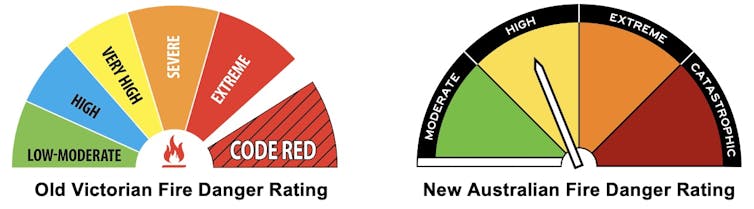
Victorians were braced for the worst on Wednesday amid soaring temperatures and gusty winds, creating the state’s worst fire conditions in years. Authorities have declared a “catastrophic” fire risk in some parts of the state.
At the time of writing, the Bayindeen bushfire near Ballarat was still burning out of control, almost a week after it began. It had razed 21,300 hectares, destroyed six homes and killed livestock. And more than 30,000 people in high-risk areas between Ballarat and Ararat had reportedly been told to leave their homes.
This statewide emergency is noteworthy for several reasons. First, it represent a big test of Australia’s updated fire danger rating system. The new version adopted in 2022 dictates that if a fire takes hold under catastrophic conditions, people should leave an area rather than shelter in place or stay defend their homes.
The second point to note is the timing: late February, when many Australians probably thought the worst of the bushfire season was over. Climate change is bringing not just more frequent and severe fires, but longer fire seasons. That means we must stay on heightened alert for much longer than in the past.
Under catastrophic conditions, leave
The current Australian Fire Danger Rating System was implemented in September 2022. It’s a nationally consistent system based on the latest scientific research.
Authorities hope the system will more accurately predict fire danger. It was also designed to more clearly communicate the danger rating to the public. For example, it involves just four danger ratings, compared to the previous six under the old Victorian regime.
“Catastrophic” fire danger – previously “code red” in Victoria – represents the worst conditions. The main message for the public under these conditions is:
If a fire starts and takes hold, lives are likely to be lost. For your survival leave bushfire risk areas.
Under catastrophic conditions, people are advised to move to a safer location early in the morning or even the day before. Authorities warn “homes cannot withstand fires in these conditions. You may not be able to leave, and help may not be available”.
Lessons from Black Saturday
Australia’s previous fire danger rating system was developed in the 1960s and was formally known as the McArthur Forest Fire Danger Index. It initially comprised five risk levels ranging from low-moderate to extreme. However, states were free to adapt the system to their needs, including adding extra categories.
The devastating 2009 Black Saturday bushfires in Victoria killed 173 people. Many people died after staying to defend their properties.
The tragedy prompted scrutiny of the fire danger ratings system in Victoria, and the “code red” category was added. The message under those conditions was that those living in a bushfire-prone area should leave. The first code red was declared in 2010, then another in 2019.
That system was replaced by the national system in 2022.
Read more: Our planet is burning in unexpected ways - here’s how we can protect people and nature
Don’t stay and defend
Under the current fire danger rating system, catastrophic conditions mean everyone should leave an area. The leave orders currently issued in Victoria cover many thousands of people, and represent a big test of this advice.
We don’t yet know how many people will heed the advice of authorities. However, at least some people have reportedly decided to stay and defend their properties.
If thousands of others do flee, what will result? Will rural roads be blocked? Do we have the infrastructure to temporarily house all those evacuees? Whether or not the fire situation escalates on Wednesday, there will be much to learn about how we deal with such threats.
Certainly, it’s prudent for people in high-risk areas to leave. In hot, windy conditions, a fire could erupt and take hold in minutes. The collapse of electricity transmission towers in Victoria last week showed the vulnerability of such infrastructure in high winds. It doesn’t take long for downed power lines to ignite the surrounding bush.
Is there a potential alternative to the mass relocation of people in response to a major fire risk? Yes: building communities that are sufficiently fire-proofed to withstand catastrophic fire weather.
This could be achieved through adaptation measures such as building fire bunkers and specially-designed houses. It would also involve carefully managed bushland and creating fire breaks by planting non-flammable plants. It may also include targeted cultural burning by Traditional Owners. These options require further discussion and research.
Our fire seasons are getting longer
The current emergency in Victoria shows how Australia’s fire seasons are changing.
It’s late February and summer is almost over. The kids are back at school and the adults are back at work. It seemed southeast Australia had escaped the bad fire summer that many had feared. Few people expected this late-season emergency.
But as climate change escalates, we must expect the unexpected. In a fire-prone continent such as Australia, we can never relax in a warming world. We must be in a constant, heightened state of preparedness.
That means know your risk and prepare your home. Draw up a bushfire survival plan – think about details such as what to do with pets and who will check on vulnerable neighbours. And please, heed the advice of authorities.
Authors: David Bowman, Professor of Pyrogeography and Fire Science, University of Tasmania


















