

Think all chemicals are bad? From our food to your phone, modern life relies on them
- Written by: Timothy Schmidt, Professor of Chemistry, UNSW Sydney
The icebreaker of many a barbeque conversation is something like “what do you do for a crust?”
“I teach chemistry at university,” is what we usually reply. Then silence. Our new friend will usually go on to say they either hated or did terribly in chemistry at school.
Or, depending on what’s been in the news lately, they might start talking about parabens in shampoo, or BPA in plastic poisoning our dogs, or the “forever chemicals” PFAS in everything.
Chemistry, it must be admitted, has an image problem.
Chemistry’s image problem
By the age of six, many children already have negative feelings about the word “chemical”.
Ask the average person what a chemical is, and they’re likely to tell you it’s something bad. Products advertise themselves as “chemical-free” – an assertion that makes no scientific sense (since everything in the world is made of chemicals) but resonates with the consumer.
The media often doesn’t help chemistry’s image. Positive news stories about science are often about a breakthrough cure for some disease, years before it might eventually be approved for use in patients, or the latest nifty-looking thing we’ve noticed up in space.
Stories about chemistry, on the other hand, are often negative: toxic chemical spill from train derailment; ammonia leak sparks evacuation; residents told to stay inside as warehouse fire spreads toxic smoke.
The modern world is built on chemistry
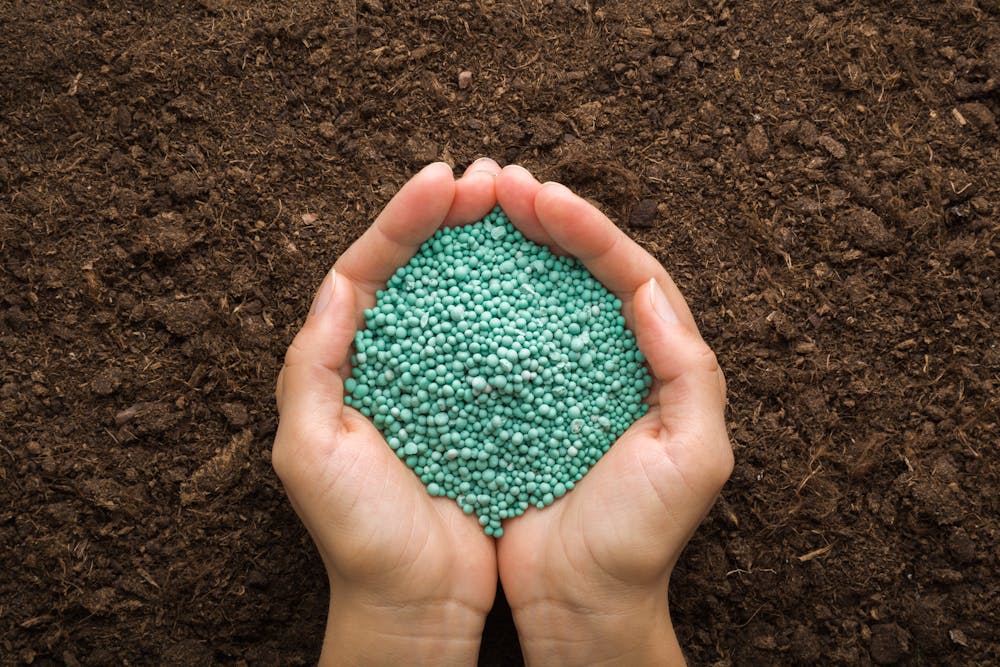
However, everyone in the world owes much of their present standard of living to advances made by chemists. Without the Haber-Bosch process for creating fertiliser from nitrogen in the air, half the world’s population would not have enough to eat. All modern medicines, from aspirin to RNA vaccines, owe their discovery to chemistry.
The lithium batteries that enable so many portable electronic devices – yep, chemistry. We could go on.
And indeed we will.
The materials that allow the manufacture of just about everything you see were developed by chemists. The isolation of metals from ore is chemistry. The synthesis of lightweight plastics, polymers and composites is chemistry. The purification of silicon, enabling the computer and internet revolution, not to mention solar panels, is chemistry. Energy-efficient lighting due to white LEDs owes its development to yet more chemistry.
Chemistry has itself been enabled by advances in other disciplines, notably physics. The discovery of quantum mechanics in the early twentieth century advanced our theoretical understanding of chemistry, and many chemical reactions and behaviours can now be predicted using sophisticated computer programs.
At the same time, chemists’ study of molecules and atoms provided crucial data to physicists looking for that deeper understanding.
Chemistry and the future
Chemists are also working on solutions for the future.
Take batteries. The lithium on which today’s rechargeable batteries run is a scarce element. It is difficult to isolate, and its extraction is not without environmental drawbacks. Many chemists are working on alternatives. The batteries of the future might be based on sodium, for example, or some other chemistry yet to be developed.
The next generation of solar cells needs new materials. These are being synthesised by chemists, and rapidly tested in devices. Chemists have discovered materials that can work with silicon to pull more usable energy from sunlight, and that can make solar cells extremely lightweight and flexible.
Read more: Green chemistry is key to reducing waste and improving sustainability
If we are to produce hydrogen as a clean fuel, we will need new catalysts to make the required chemical reactions faster.
Chemists continue to work hand in hand with clinicians on solutions to treating diseases, from rare conditions to unfortunately common cancers. We are developing new antibiotics, and antimicrobial coatings for medical devices.
Chemists also study the natural world, and how we affect it. Climate change might have its roots in chemical reactions releasing CO₂ into the atmosphere, but stabilising the climate will also require chemists to invent new ways to capture and store CO₂, or convert it to something else.
The central science
Even leaving aside the countless crucial applications of chemistry, fundamental chemical research born from pure curiosity is of vital importance. This work leads to solutions for problems we don’t yet know we are going to have.
Chemistry is sometimes seen as an “old” science: one that’s taught in high school but doesn’t prepare students for jobs in the real world. At best, chemistry is often seen as something that will get you a job in a horribly polluting industry.
But not always. At a kid’s birthday party the other day, a couple of GPs asked one of us what we did. Instead of the usual response to the mention of chemistry, the reply came as a pleasant surprise: “You enable the whole field of medicine,” they said.
As we have seen, chemistry is a subject that is at the core of past and future advances in society. It is still the central science.
Authors: Timothy Schmidt, Professor of Chemistry, UNSW Sydney


















