

Want to breastfeed? These five things will make it easier
- Written by: Alyce Wilson, Senior Research Officer at Burnet Institute, Lecturer at Faculty of Medicine, Dentistry and Health Sciences, University of Melbourne, Medical Doctor at Royal Women's Hospital, Burnet Institute
More than 90% of Australian women start breastfeeding soon after the birth of their baby, but only 15% are exclusively breastfeeding at six months, despite national and international recommendations.
The World Health Organisation recommends infants begin breastfeeding within one hour of birth and continue to breastfeed exclusively until six months old. After this, nutritious complementary foods can be added to the baby’s diet, with recommendations to continue to breastfeed for up to two years or beyond.
But for new mothers, establishing and continuing breastfeeding can be challenging. Here are five things mums can do to make it easier.
Read more: 'Nipple Nazis' vs overwrought mums: the breastfeeding debate
1. Talk to your partner and family early about your desire to breastfeed
Women who have a partner who is informed, supportive and encouraging are more likely to start breastfeeding and breastfeed for longer. Before the baby is born, talk to your partner and family about your desire to breastfeed, why it might be important to you and what support you might need.
You and your partner can prepare by learning as much as you can about breastfeeding, what to expect in the first few weeks, common challenges and where to go for help. The Australian Breastfeeding Association (ABA) holds regular breastfeeding education classes and can provide ongoing support. Talking to your midwife or health-care provider during pregnancy visits about what to expect in the first hours and days can be helpful.
Having emotional, practical and physical support from partners helps create a supportive breastfeeding environment and enriches the breastfeeding experience for both parents.
Your partner and family members can help with cooking, washing, performing other household chores and looking after other children. This will leave you with the space you need to rest and feel cared for, as you learn about your baby and become confident in the breastfeeding process.
 Many women want to breastfeed but struggle.
from www.shutterstock.com
Many women want to breastfeed but struggle.
from www.shutterstock.com
2. Reach out early and often
Breastfeeding can take time to learn and does not always “just happen”. The first few days after birth are important for getting attachment of your baby on the breast right and finding good feeding positions. Most newborn babies want to feed often, especially in the first weeks. This is important as it will help to establish an adequate milk supply and the time between feeds will settle over time.
You may be given conflicting advice and you need to work out what’s right for you. Trust your instincts and if something doesn’t seem right, seek help early and often. While in hospital, ask your midwife to help with attachment and positioning and if you need more assistance, a lactation consultant may help.
When you are home, you can get support from your maternal and child health nurse, the 24/7 national breastfeeding helpline (1800 686 268) or find a local ABA support group. There are many useful resources available on the ABA website and the Australian Parenting Website, Raising Children.
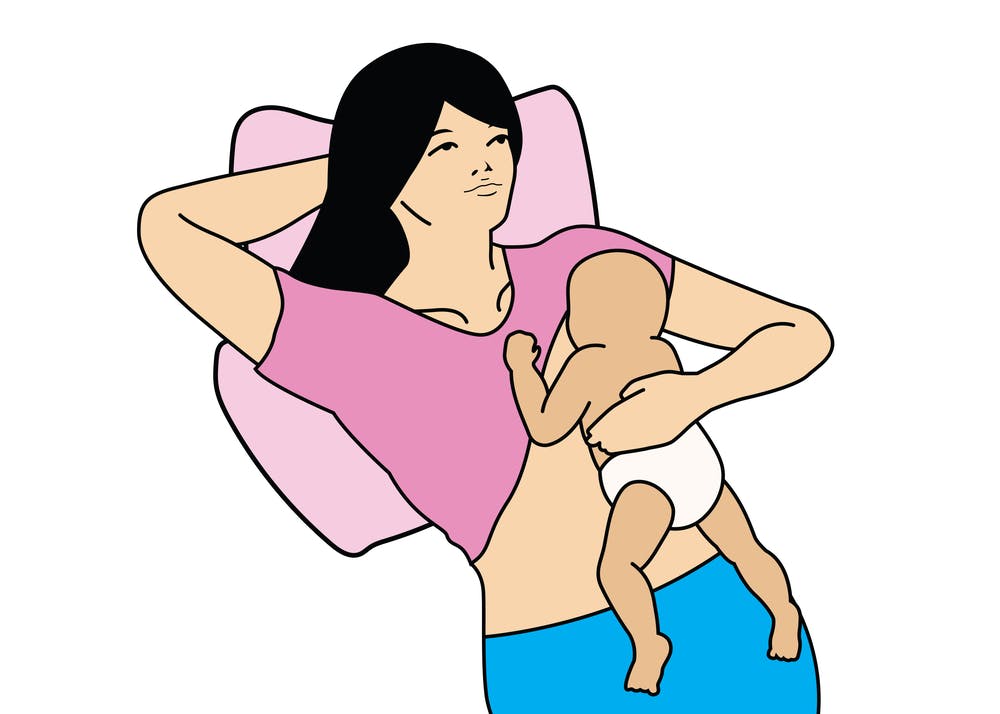 A laid back/reclining position helps with breastfeeding.
from ww.shutterstock.com
A laid back/reclining position helps with breastfeeding.
from ww.shutterstock.com
Read more: My baby is crying. Is it colic? How can I help?
3. Eat and drink well
Breastfeeding is thirsty work for you and your baby! A healthy diet is always important and especially so when breastfeeding. Eat plenty of wholegrain breads and cereals, fruit and vegetables, milk, cheese and yoghurt and iron-rich foods such as red meat, chicken, fish, legumes, nuts and green leafy vegetables.
Choose nutrient-rich ready-to-eat snacks such as fruit, yoghurt, hard boiled eggs, nuts, crackers with cheese or avocado, vegetables and cans of fish or beans. Eat according to your appetite and aim for steady weight loss back to your pre-pregnancy weight. Drinking plenty of water is very important, especially during hot weather.
4. Make it practical
Breastfeeding means you also need to think about practical things such as what you might want to wear and what other supports you need around you. Wear breastfeeding friendly clothes, maternity bras, and find a comfortable position for feeding, such as a laid back or reclining position. Imagine you’re leaning back in a deck chair with the baby supported by your body, rather than sitting upright or hunching forward and needing to support the baby on a pillow or your arm.
When at home, practise skin-to-skin contact by placing your baby directly on your bare chest covered with a warm blanket. Skin-to-skin contact stimulates the release of oxytocin which not only helps with “milk let down” but it can also “prime” the following breastfeeding interaction.
When preparing to return to work and breastfeeding, encourage your workplace to provide a private space to feed or express, have a small fridge where milk can be stored and ask for scheduled lactation breaks.
Read more: Feeding frenzy: public breastfeeding is good for us all
5. Know your rights
Women can breastfeed anytime, anywhere. Australian federal and local laws explicitly state women are legally supported to breastfeed or express milk in public.
You have the right to feed your baby whenever and wherever they need to be fed. You wouldn’t expect someone to eat their lunch in the toilet so why should your baby? We can all help to make our communities breastfeeding friendly.
Authors: Alyce Wilson, Senior Research Officer at Burnet Institute, Lecturer at Faculty of Medicine, Dentistry and Health Sciences, University of Melbourne, Medical Doctor at Royal Women's Hospital, Burnet Institute
Read more http://theconversation.com/want-to-breastfeed-these-five-things-will-make-it-easier-109507


















