

who are the Uyghurs and why is the Chinese government detaining them?
- Written by: Anna Hayes, Senior Lecturer in Politics and International Relations, James Cook University
The Uyghurs are Turkic-speaking Muslims from the Central Asian region. The largest population live in China’s autonomous Xinjiang region, in the country’s north-west. The Uyghurs are one of a number of persecuted Muslim minorities in Xinjiang, including the Kazakhs, Uzbeks, Tajiks, Kyrgyz and Hui.
The region’s name suggests the Uyghurs have autonomy and self-governance. But similar to Tibet, Xinjiang is a tightly controlled region of China.
Many Uyghur communities also live in countries neighbouring China, such as Uzbekistan, Kyrgyzstan and Kazakhstan. An estimated 3,000 Uyghurs live in Australia.
China’s President Xi Jinping has overseen a hardline approach towards Muslim minorities living in Xinjiang, especially the Uyghurs. In recent years, the government has installed sophisticated surveillance technology across the region, and there has been a surge in police numbers.
Muslim minorities are being arbitrarily arrested and imprisoned. It’s estimated around one million Uyghurs have been detained in what China calls “vocational training centres”.
These are purpose-built detention centres, some of which resemble high-security jails. A recent ABC investigation found 28 detention camps had expanded across Xinjiang as part of China’s program of subjugation.
There is growing evidence of human rights violations inside the centres as well as reports of deaths in custody and forced labour.
Members of the Uyghur diaspora have been reported as requesting “proof of life” from Beijing over disappeared family members back in Xinjiang. The Guardian recently reported an estimate that 80% of Uyghurs in Australia would have a relative who has disappeared into the camps.
Read more: What China's censors don't want you to read about the Uyghurs
History of discrimination
The People’s Republic of China annexed Xinjiang in 1949. At this time, it was estimated the Uyghur numbered around 76% of the region’s population. Han Chinese – the country’s majority ethnic group – accounted for just 6.2%, with other minority groups making up the remaining total.
Since 1949, Han migration to the region has diluted the ethnic ratio. Official statistics show the population is now made up of 42% Uyghurs and 40% Han.
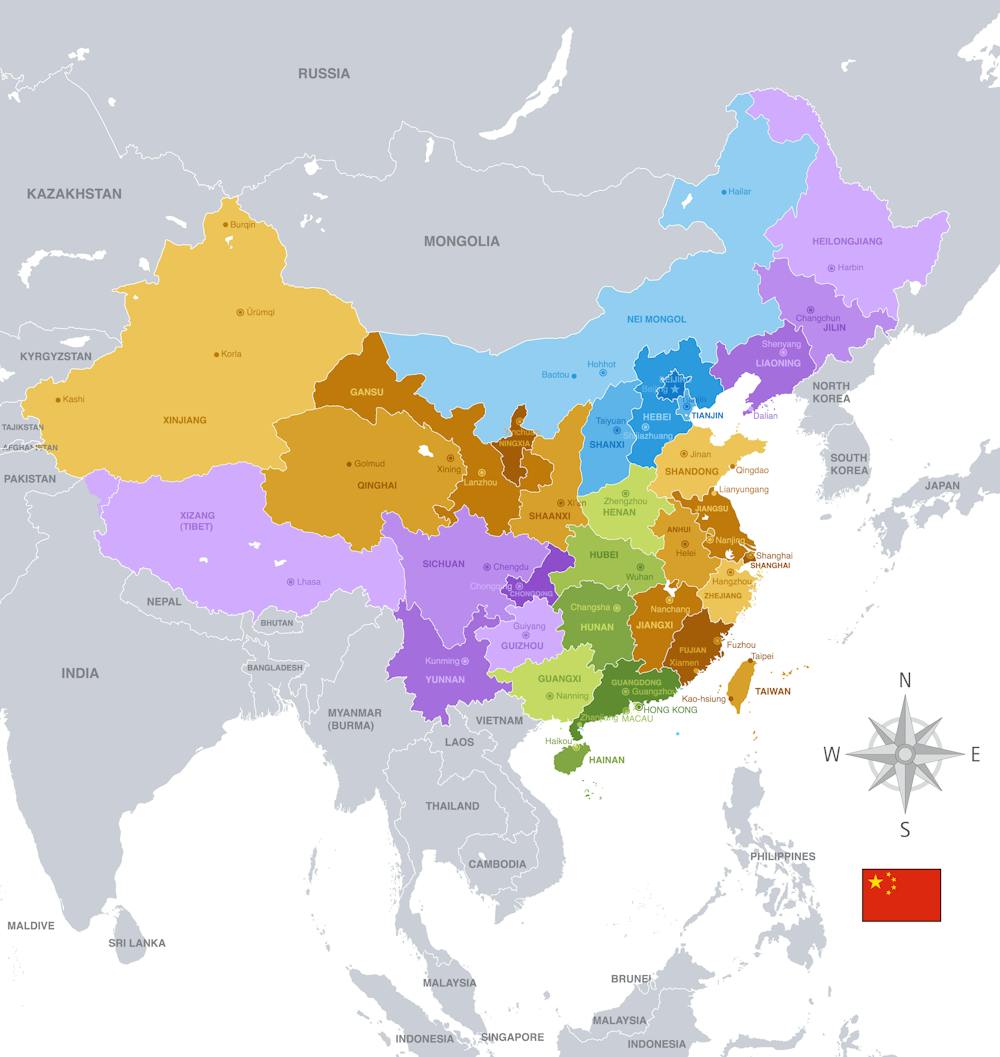 The largest population of Uyghurs live in China’s Xinjiang province, in the country’s north-west.
from shutterstock.com
The largest population of Uyghurs live in China’s Xinjiang province, in the country’s north-west.
from shutterstock.com
Beijing does not recognise the region as a colony. But the 1949 annexation represents colonisation to Xinjiang’s Muslim minorities and segments of the population have resisted Beijing’s rule. Many refuse to speak Mandarin, while others campaign for independence.
Beijing regards any discontent or criticism of the Chinese Communist Party to be threatening. Minority dissent is treated as a danger to state security. This is even if it involves moderate voices calling for improvements in health, education and employment.
To Beijing, territorial integrity is of utmost importance. It does not tolerate any expression contrary to the official position that Xinjiang has always been part of China.
Beijing has long considered Xinjiang and the Muslim minorities such as the Uyghurs to be “backward”. During the Communist Party’s Great Leap Forward (1958-1962), ethnicity and religion were singled out as both “obstacles to progress” and “backwards custom”.
Brutal crackdowns in the 1980s and 90s led to significant numbers of Uyghurs fleeing China to seek asylum.
Read more: China's Uyghur re-education centres in Xinjiang will not produce a loyal and obedient population
Current situation
Repeated attempts at rapid and forced assimilation, discriminatory and oppressive policies, and a cycle of what commentators have labelled “repression-violence-repression” have led to periodic protests across Xinjiang.
In extreme cases, acts of terrorism – such as the Kunming train station attack – have been carried out both inside Xinjiang and in other parts of China.
In recent decades, Beijing has recast the Uyghur ethnic group as a terrorist collective. This has allowed Beijing to justify its transformation of Xinjiang into a surveillance state. There has also been a marked rise of Islamophobia across China.
Some Uyghurs have been employed by the state to spy on other Uyghurs, reporting any suspicious or illegal behaviour. This includes if someone has given up smoking, refuses to drink alcohol or even if a Uyghur refuses to watch Chinese news broadcasts.
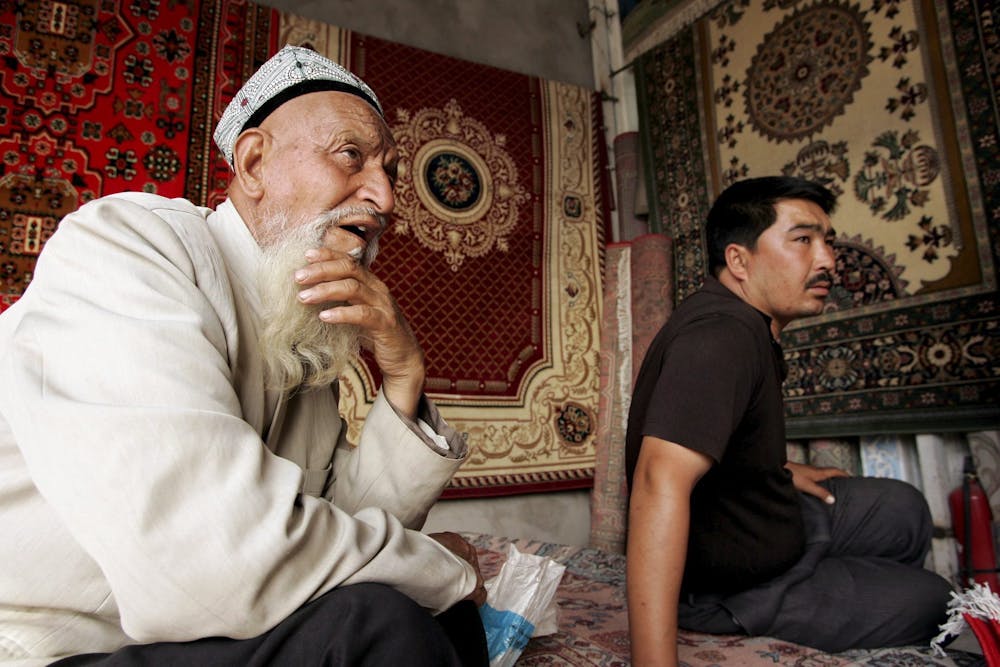 The Chinese government is intolerant of the religion and other traditions of minorities, particularly the Uyghurs.
MICHAEL REYNOLDS/AAP
The Chinese government is intolerant of the religion and other traditions of minorities, particularly the Uyghurs.
MICHAEL REYNOLDS/AAP
Beijing’s surveillance includes face and voice recognition, iris scanners, DNA sampling and 3D identification imagery of Uyghurs. These were introduced following Xi’s 2016 appointment of Chen Quanguo as Xinjiang Party Chief. Chen’s previous appointment was in Tibet, where he implemented similar control measures over the Buddhist population.
Beijing claims the detention centres across Xinjiang are for “vocational training”, but a US Congressional hearing on the camps and subsequent report characterised them as “political re-education” centres. The education involves daily indoctrination into Communist ideology and attempts at eradicating minority culture, language and religion.
Read more: Patriotic songs and self-criticism: why China is 're-educating' Muslims in mass detention camps
Recent reports have identified more than 100 Uyghur intellectuals including writers, poets, journalists and university professors are now among those detained. The persecution of intellectuals, who speak out against oppression, and continue traditional practice, occurs even if they are moderate in their views and working towards reconciliation.
In 2014, Beijing arrested Ilham Tohti, an economics professor who rejected separatism and promoted reconciliation in Xinjiang. He is currently serving a life sentence after being falsely accused of being a separatist.
Pressuring the Chinese government
Xinjiang is geographically important to China’s Belt and Road initiative – a development strategy involving infrastructure and investments in Europe, Asia and Africa. This could provide an avenue for the international community to apply diplomatic pressure in the way of sanctions. Another option is suspension of, or withdrawal from, existing Belt and Road agreements.
Outside countries have a duty to intervene and force Beijing to comply with international human rights.
Authors: Anna Hayes, Senior Lecturer in Politics and International Relations, James Cook University


















