

From net zero to Indigenous knowledge, Australia has finally set new science priorities. How can we meet them?
- Written by: Kylie Walker, Visiting Fellow, National Centre for the Public Awareness of Science, Australian National University
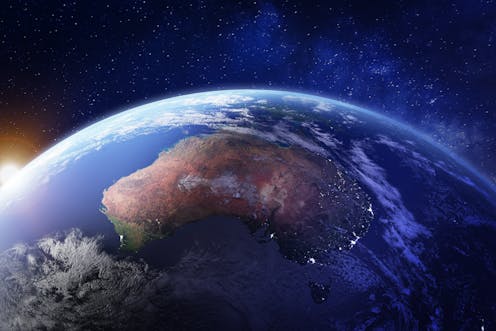
The Australian government has updated the nation’s science and research priorities, and released a National Science Statement. This marks the first wholesale update on Australia’s vision and plan for the future of science and technology in nearly a decade, with the last set of priorities being handed down by the Abbott government in 2015, and the last science statement in 2017.
Minister for Industry and Science Ed Husic has announced five key priorities:
- transitioning to net zero
- support for healthy and thriving communities
- elevating Aboriginal and Torres Strait Islander knowledge systems
- protection and restoration of Australia’s environment
- building a secure and resilient nation.
Given the policy impact of these commitments, it’s worth examining what they mean – and how they should guide Australia’s progress on a number of fronts.
1. Transitioning to a net zero future
While Australia’s emissions per person have been falling, we still emit more than double the carbon dioxide of comparable countries such as the United Kingdom or New Zealand.
Australia is a research leader in battery technology, solar cell technologies and green metals. However, our overall investment in clean energy research, already behind our peers, is falling.
Focused investment in green energy research is needed to cut emissions in hard-to-decarbonise sectors, such as air transport and agriculture.

2. Supporting healthy and thriving communities
Australia is a world leader in medical discoveries – anyone who’s been given the “green whistle” pain reliever by paramedics has felt the effects of Australian medical research. But too often Australian discoveries don’t stay here for development.
Researchers often find they need to move their discoveries to the United States or the European Union to get them into production and into hospitals, ambulances and pharmacies.
Australian health and medical researchers need more support to apply and commercialise their findings here at home. More work is also needed on preventative care, so we can stop illnesses before they start.
Of course, “thriving communities” need more than the best available medical care. They also need connection and resilience. This too can be supported by research – such as findings that show what helps communities bounce back after devastating bushfires.
3. Elevating Aboriginal and Torres Strait Islander knowledge systems
Historically, and to everyone’s detriment, Australia has not done well at recognising, respecting and celebrating the knowledge systems of its First Nations peoples.
But Australia has much to gain by fully embracing Traditional Knowledge as part of its science. This must be done with respect and equity at the forefront: our next steps in weaving together knowledge systems must be led with and bring empowerment to, Aboriginal and Torres Strait Islander peoples and communities.
One recent example is the collaboration between Nyikina Mangala man John Watson and Professor Ron Quinn, who have been turning bark from the Mudjala tree into natural treatments for severe pain.
4. Protecting and restoring Australia’s environment
Australia’s lands and waters are home to an estimated 700,000 native species. Many of these remain undiscovered and many are at risk of extinction.
The last 20 years has seen threatened plant populations decline by 72%, and populations of threatened mammals and birds fall by 38% and 52% respectively.
We need to stop this decline and protect Australia’s natural inheritance, through science-informed measures such as conservation reserves, controlling invasive species, restoring degraded ecosystems and breeding endangered plants and animals.
5. Building a secure and resilient nation
Security and resilience come in many forms. It means protecting our crucial digital infrastructure from cyber attacks. It also means making sure our buildings, roads and energy systems can survive disasters and a changing climate. Protecting our agriculture from pests and diseases also falls under this heading.
Focusing on this priority means broad investment in research across disciplines, bringing together industry and academia.
So, how do we put these priorities into practice?
To meet these priorities, Australia will need greater investment in science and research across the board. While international collaborations are fantastic, we can’t rely on other countries to do this vital research for us.
We’ll need more highly skilled people to do this research – people bringing unique perspectives, ideas and training with them. That means bringing people into STEM (science, technology, engineering and mathematics) careers from more diverse backgrounds.
Unfortunately, we are still conditioning girls to have lower confidence in science than boys. They’re more likely to avoid subjects such as physics and engineering.
In 2021, only 0.5% of Aboriginal and Torres Strait Islander people had a STEM degree, compared with 4.9% of the Australian population, according to the recent Diversity in STEM Review. This needs to change if we are to advance our science and research priorities.
We’ll also need more long-term investment in research infrastructure, and in STEM education and training.
 One of the new priorities is protecting and restoring Australia’s natural environment.
LisaMartin/AAP
One of the new priorities is protecting and restoring Australia’s natural environment.
LisaMartin/AAP
Making a future in Australia
The national science priorities dovetail with the government’s Future Made in Australia initiatives in modern manufacturing, renewable energy and more.
Pulling this off will require partnerships between industry, education and governments. To properly harness the ideas and innovations of researchers, we need to make it easy for them to move from academia to industry and back again.
A review of Australia’s research and development funding was announced in this year’s federal budget.
The government could use this to put Australia on a path towards investing 3% of our GDP into Australian research and development – something countries such as the United States, Germany and Japan already do.
Sustained investment in Australian research and development can make the ambitious goals of the new national science statement a reality.
Authors: Kylie Walker, Visiting Fellow, National Centre for the Public Awareness of Science, Australian National University


















