

‘You can’t murder a people and walk away scot-free.’ In The Voyage Home, Pat Barker explores morality in war
- Written by: Jen Webb, Distinguished Professor of Creative Practice, Faculty of Arts and Design, University of Canberra
The first volume of Pat Barker’s trilogy of the Trojan conflict starts with an epigraph taken from Philip Roth’s The Human Stain: “All of European literature springs from a fight”.
This reduction of the conventional view of war to a mere “fight” acts as a coda for the whole series, establishing an iconoclastic view of war; one that largely ignores the guts-and-glory narratives.
Review: The Voyage Home – Pat Barker (Penguin Random House)
In Barker’s two war trilogies (the Regeneration series, 1991–1995; the Trojan War series, 2019–2024), there is no glory. These books are characterised by accounts of horror, the stupidity of leadership, and blind self-aggrandisement. At the same time, she persuasively depicts the lives of everyday people caught up in war: the tactics they employ to survive, and to retain what they can of ethics and dignity and compassion; or to end their lives on their own terms.
In volumes 1 and 2 of this trilogy (The Silence of the Girls; The Women of Troy) we meet the women and girls who are the spoils of war. Their role is to be what in World War II were called “comfort women”; and/or to be the cooks, cleaners, and nurses for the men who slaughtered their loved ones, and burned their homes to the ground.

 Goodreads
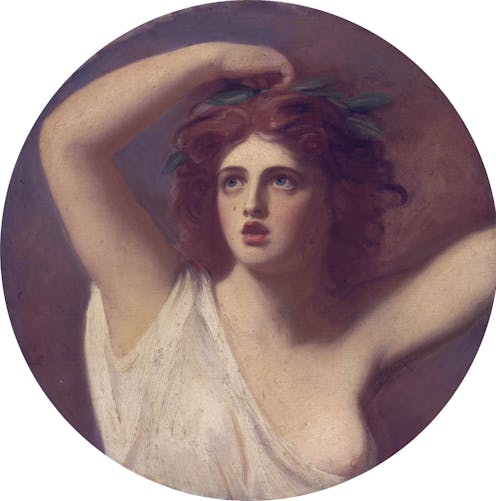
Or perhaps Cassandra should be described as an ex-priestess: she has been claimed as a prize of war, and is now only a slave, though she continues to squabble with the god Apollo, and to prophesy the future, in wild behaviour that is described as “divine frenzy”.
Ritsa coolly notes, “there was nothing ‘divine’ about it”; that with her yellow eyes “like a sea eagle”, Cassandra is “as mad as a box of snakes”. But, as her slave, Ritsa is bound to her, and her fate.
Cassandra is wonderfully written. She is precisely as annoying as Ritsa suggests in the opening pages: she refuses to manage herself or be managed, and infuriates Ritsa by her refusal to eat, dress, sleep, wash.
She is sharp tongued, entitled, and often unkind; and upsets Ritsa with her “bloody prophecy” that the voyage “home” (home only for the conquerors) will end with her death. But she’s also darkly funny: for instance, when Ritsa urges her not to wear a damp dress on the grounds that “you’ll catch your death”, Cassandra replies, “I won’t need to run very fast”.
While Ritsa and Cassandra are being loaded on board a boat to travel back to Agamemnon’s kingdom, the narrative shifts to Greece, and to Clytemnestra, Agamemnon’s queen. She haunts the palace and its surrounds, bitterly grieving for her child Iphigenia, who was slaughtered by Agamemnon to encourage the gods to provide swift passage to Troy.
The palace is also haunted by the ghosts of children slaughtered by Agamemnon’s father, Atreus. He had killed his own brother’s children: cooked them and fed them to their father in an act of spite. The children’s hand-prints appear all over the walls and skirting boards, and their little voices can be heard singing menacing nursery rhymes in the shadows.
Mycenae itself, Agamemnon’s seat, is haunted by the tomb of Iphigenia, which Clytemnestra had built in full sight of any approaching ships. It pulses with the demand for vengeance; and with the death cult that threads itself through the culture – the same cult that threads itself through any warrior culture.
‘A river of blood’
The story unfolds as it must. The ship carrying Agamemnon and his men, and Cassandra and Ritsa, reaches Mycenae, and he is welcomed ashore. This welcome has an undercurrent of resentment: their husbands and brothers and sons have finally returned, but many are lost, or wounded, or traumatised, and ten years of family life has been lost. The economy too has been ground down by the expense of supporting that war.
Moreover, Agamemnon has returned old, and unsteady, and sometimes confused. He has moments of empathy – for example, instructing Clytemnestra to “be kind” to Cassandra, because “no one chooses the life of a slave”. But when he turns to enter his palace, treading on the sacred red fabrics he has looted from the temples of Troy, he sees himself as a god.
What Ritsa sees is not a god, but an act of sacrilege – a king “wading into his palace through a river of blood”.
Goodreads
Or perhaps Cassandra should be described as an ex-priestess: she has been claimed as a prize of war, and is now only a slave, though she continues to squabble with the god Apollo, and to prophesy the future, in wild behaviour that is described as “divine frenzy”.
Ritsa coolly notes, “there was nothing ‘divine’ about it”; that with her yellow eyes “like a sea eagle”, Cassandra is “as mad as a box of snakes”. But, as her slave, Ritsa is bound to her, and her fate.
Cassandra is wonderfully written. She is precisely as annoying as Ritsa suggests in the opening pages: she refuses to manage herself or be managed, and infuriates Ritsa by her refusal to eat, dress, sleep, wash.
She is sharp tongued, entitled, and often unkind; and upsets Ritsa with her “bloody prophecy” that the voyage “home” (home only for the conquerors) will end with her death. But she’s also darkly funny: for instance, when Ritsa urges her not to wear a damp dress on the grounds that “you’ll catch your death”, Cassandra replies, “I won’t need to run very fast”.
While Ritsa and Cassandra are being loaded on board a boat to travel back to Agamemnon’s kingdom, the narrative shifts to Greece, and to Clytemnestra, Agamemnon’s queen. She haunts the palace and its surrounds, bitterly grieving for her child Iphigenia, who was slaughtered by Agamemnon to encourage the gods to provide swift passage to Troy.
The palace is also haunted by the ghosts of children slaughtered by Agamemnon’s father, Atreus. He had killed his own brother’s children: cooked them and fed them to their father in an act of spite. The children’s hand-prints appear all over the walls and skirting boards, and their little voices can be heard singing menacing nursery rhymes in the shadows.
Mycenae itself, Agamemnon’s seat, is haunted by the tomb of Iphigenia, which Clytemnestra had built in full sight of any approaching ships. It pulses with the demand for vengeance; and with the death cult that threads itself through the culture – the same cult that threads itself through any warrior culture.
‘A river of blood’
The story unfolds as it must. The ship carrying Agamemnon and his men, and Cassandra and Ritsa, reaches Mycenae, and he is welcomed ashore. This welcome has an undercurrent of resentment: their husbands and brothers and sons have finally returned, but many are lost, or wounded, or traumatised, and ten years of family life has been lost. The economy too has been ground down by the expense of supporting that war.
Moreover, Agamemnon has returned old, and unsteady, and sometimes confused. He has moments of empathy – for example, instructing Clytemnestra to “be kind” to Cassandra, because “no one chooses the life of a slave”. But when he turns to enter his palace, treading on the sacred red fabrics he has looted from the temples of Troy, he sees himself as a god.
What Ritsa sees is not a god, but an act of sacrilege – a king “wading into his palace through a river of blood”.
 A gold death-mask, known as the Mask of Agamemnon, found in a grave in Mycenae, dating to the 16th century BC. National Archaeological Museum of Athens.
Wikimedia Commons
All three novels in this trilogy are about women’s experience of war, and their relationships with one another. In many cases, it’s a matter of women binding with other women, finding the sisterhood that emerges when you realise you have become prey.
In other cases, it’s a matter of women squabbling with other women, testing out the fragments of power they acquire by virtue of connection to powerful men. And in all cases, it’s a matter of women becoming aware that, like it or lump it, they are all in the same boat – that the daughter of King Priam is now worth no more than the slave who used to wash her feet.
The Voyage Home is a moral tale. It lays out the contingency of power: how fickle it is, how readily it ditches its host and moves elsewhere. It lays out both the banality of evil, and the grace that appears in the lives of everyday people.
It reminds us that the Furies – the goddesses of vengeance – are always watching, and that abuses of power and assaults on ethical behaviour will be punished (as Cassandra had insisted, “You can’t murder a people and walk away scot-free”).
And it observes that those who enmesh themselves in blood, who kill children, and who raze cities to the ground will not, finally, walk away scot-free.
It is a tale for our time.
Authors: Jen Webb, Distinguished Professor of Creative Practice, Faculty of Arts and Design, University of Canberra
A gold death-mask, known as the Mask of Agamemnon, found in a grave in Mycenae, dating to the 16th century BC. National Archaeological Museum of Athens.
Wikimedia Commons
All three novels in this trilogy are about women’s experience of war, and their relationships with one another. In many cases, it’s a matter of women binding with other women, finding the sisterhood that emerges when you realise you have become prey.
In other cases, it’s a matter of women squabbling with other women, testing out the fragments of power they acquire by virtue of connection to powerful men. And in all cases, it’s a matter of women becoming aware that, like it or lump it, they are all in the same boat – that the daughter of King Priam is now worth no more than the slave who used to wash her feet.
The Voyage Home is a moral tale. It lays out the contingency of power: how fickle it is, how readily it ditches its host and moves elsewhere. It lays out both the banality of evil, and the grace that appears in the lives of everyday people.
It reminds us that the Furies – the goddesses of vengeance – are always watching, and that abuses of power and assaults on ethical behaviour will be punished (as Cassandra had insisted, “You can’t murder a people and walk away scot-free”).
And it observes that those who enmesh themselves in blood, who kill children, and who raze cities to the ground will not, finally, walk away scot-free.
It is a tale for our time.
Authors: Jen Webb, Distinguished Professor of Creative Practice, Faculty of Arts and Design, University of Canberra 

















