

Crackles, clicks and pops – now we can monitor the ‘heartbeat’ of soil
- Written by: Jake M Robinson, Ecologist and Researcher, Flinders University
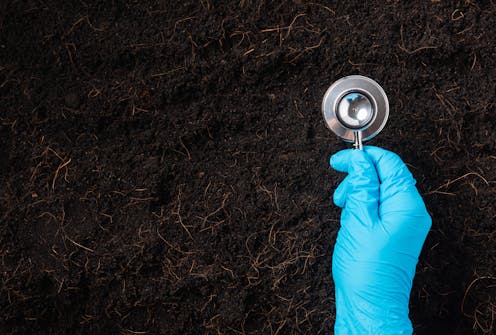
Healthy soil is teeming with life. An astonishing 59% of Earth’s species live in soil. They play crucial roles in maintaining soil health and, by extension, the health of our planet.
But this vital resource is under threat. Currently, 75% of the world’s soils are damaged. This figure could rise to 90% by 2050 due to deforestation, overgrazing, urbanisation and other destructive practices.
Such degradation poses significant risks, not only to biodiversity but also to the ecosystem services humans rely on, such as food production. But traditional methods of detecting and measuring soil life are often costly, time-consuming and intrusive. Enter “ecoacoustics”, an innovative and non-destructive approach that could transform soil health monitoring.
Our research team has developed a simple way to use sound to monitor life in the soil, which could help improve soil health worldwide. We discovered that healthy soils, rich in different animals, exhibit distinct acoustic profiles or “soundscapes”. A mixture of lively and intricate sounds, such as delicate crackles, clicks and pops, can be found underground.
Flinders University researchers are listening to the sounds of the underground – healthy soil is where the party’s at.What is ecoacoustics?
Ecoacoustics is the study of sounds produced by communities of animals, plants and their environment. This relatively new science, enabled by technology, has been widely used to monitor ecosystems on land and water.
You can now hang an audio recorder the size of credit card on a tree to record sounds made by animals. Several days or weeks later, the device can be collected and the recordings analysed.
So far, scientists have captured acoustic signals from animals such as bats, birds, frogs and insects. These sounds provide valuable insights into biodiversity and ecosystem dynamics.
The same principles and tools are now being applied to soil. Researchers are beginning to explore the sounds of soil, using recorders and specialised microphones attached to probes in the ground. These devices record the acoustic vibrations produced by soil-dwelling organisms as they move through the underground world.
There are audible crackles, clicks and pops. Healthy soils tend to have a greater diversity of these sounds than damaged soils, which are generally quieter due to less animal activity. You can think of poor soil like a lifeless party. But thriving soil? That’s where you’ll find the good vibes and chatter.
The recorded sounds are analysed to glean insights into the abundance, diversity and potentially the behaviour of soil animal communities. And when we say “communities”, we’re talking about earthworms, beetles, spiders, ants and other animals that each have important ecological roles.
Early trials and insights
All living organisms produce sounds. This may be deliberate, such as birds singing to attract mates and bats echolocating to skilfully hunt their prey. Or it might be incidental, such as earthworms moving through the soil.
These incidental sounds can reveal much about the health of the soil ecosystem.
Our initial trials involved placing microphones in soil-filled buckets to capture the sounds of soil life. We then processed these recordings to derive sound patterns.
We’re interested in quantifying soundscapes by measuring frequency, loudness and patterns over time, which enable us to assess soil health. In healthy soils, the animals are active and produce a rich array of sounds.
Our new research in Australian forests, published today in the Journal of Applied Ecology, shows soil ecoacoustics effectively reflects the abundance and activity of soil animals and predicts whether soil is damaged or restored.
We found a greater diversity of crackles, clicks and pops in the restored soils. We linked this to a higher a number of invertebrates moving around. If the soil sounds quiet, it’s a sign it’s not healthy.
We’re also developing an innovative sound detection device to identify invertebrates moving on the surface. Preliminary results suggest different types of animals (worms, snails, ants, millipedes, and so on) exhibit different sound profiles based on their activity, shape, appendages and size.
It makes sense: a millipede with its many tiny legs gently tapping on the floor makes a different sound to a snail with its slow and slimy glide.
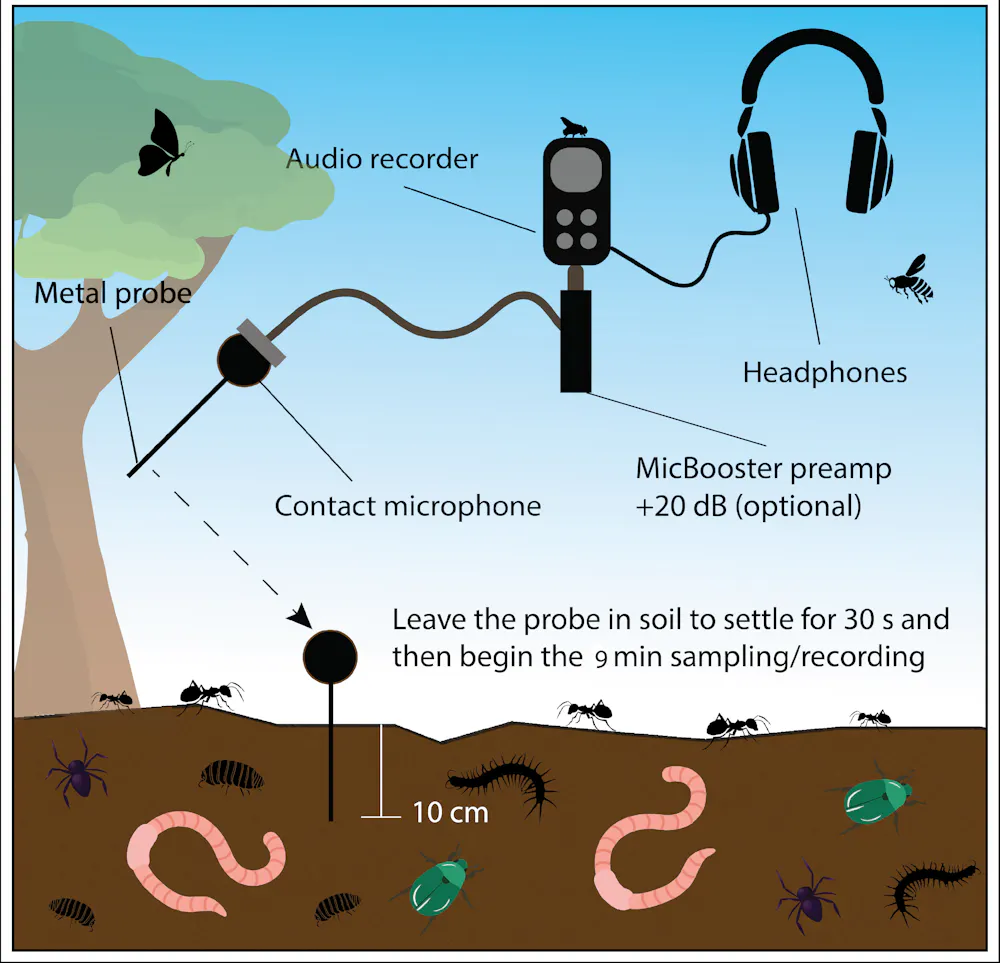
Practical applications
Soil ecoacoustics offers numerous practical applications. It can be used to monitor the effectiveness of soil restoration efforts, helping land managers and farmers assess the health of their soils without too much disturbance. For instance, it could identify areas with deficient earthworm populations, crucial for soil aeration and nutrient cycling.
This method is ecologically akin to a doctor using a stethoscope and listening to a patient’s heartbeat to assess their health. By listening to the “heartbeat” of the soil (the soundscape), we can gain insights into its condition and the success of restoration interventions.
The future of soil health monitoring
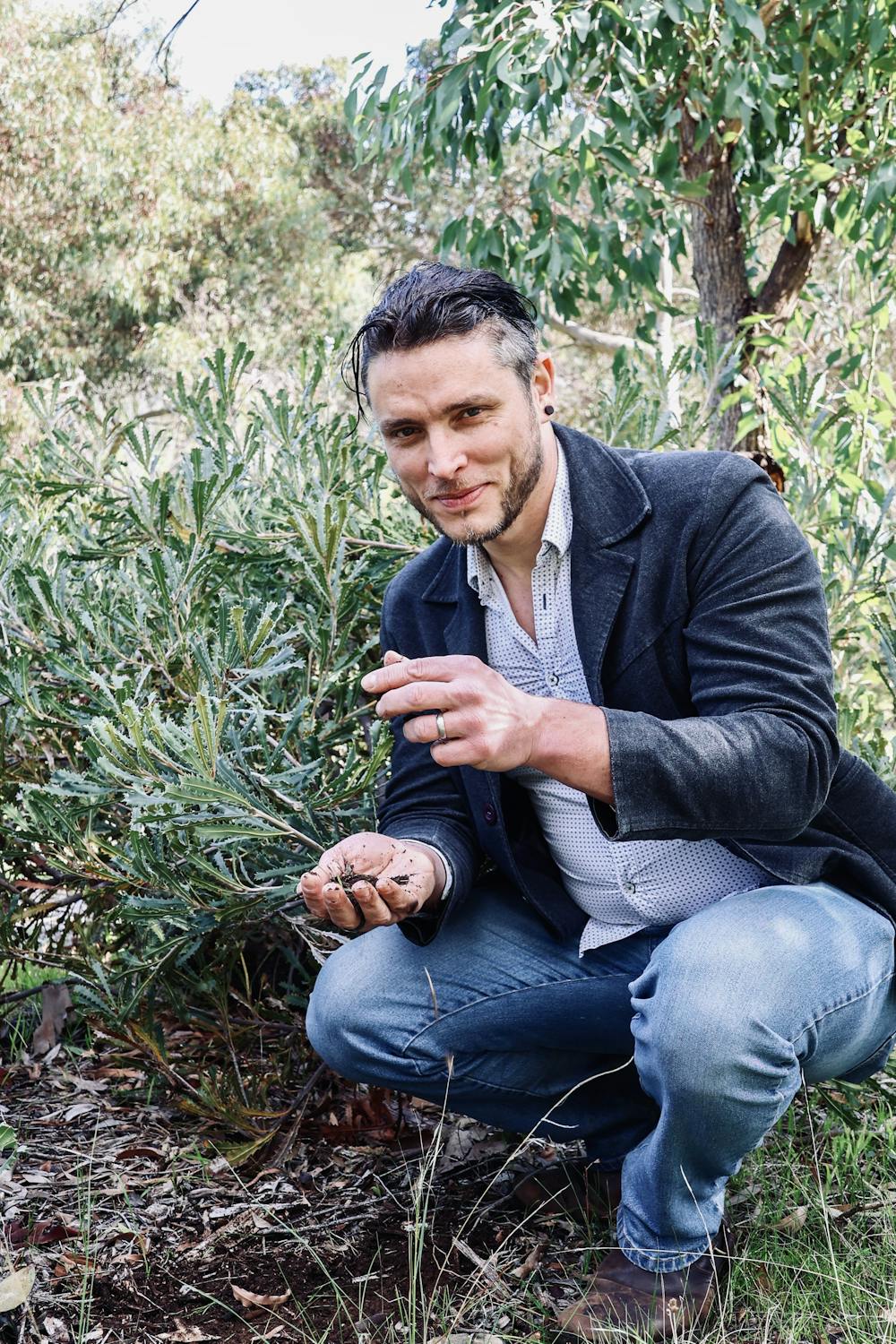 The author, Jake Robinson, in the field.
Flinders University
The author, Jake Robinson, in the field.
Flinders University
While still in its early stages, soil ecoacoustics holds great promise for improving our understanding and monitoring of soil biodiversity. A recent paper on global biodiversity conservation issues identified soil ecoacoustics as an emerging priority, highlighting its potential to transform soil health assessments.
As we continue to develop and refine these techniques, we hope to democratise the process, allowing people around the world to use their own “stethoscopes” to improve the health of the precious ecosystem beneath their feet.
Authors: Jake M Robinson, Ecologist and Researcher, Flinders University
Read more https://theconversation.com/crackles-clicks-and-pops-now-we-can-monitor-the-heartbeat-of-soil-235865


















