

solitary carnivores outkill group hunters
- Written by: Luke Emerson, PhD Candidate in ecology, Deakin University
Earth’s majestic “apex predators” are some of the most prolific hunters in the world. But which ones kill the most?
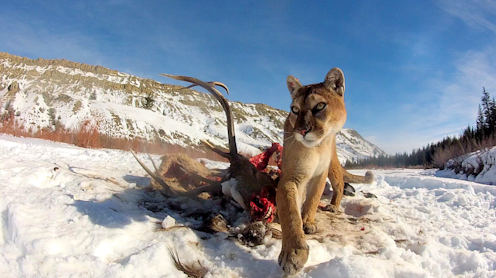
Our new research showed solitary hunters such as bears, tigers and Eurasian lynx have higher individual kill rates than social predators such as wolves and lions. And smaller species, such as cheetahs and pumas, tend to kill relatively more prey because their kills are often stolen by more dominant carnivores.
Such information allows us to better understand how different predators affect their environment. It can also guide hunting quotas and help evaluate how humans affect carnivores.
These apex predators perform vital roles in ecosystems. Yet tragically they are among the world’s most threatened animals. Carnivores frequently come into conflict with humans, particularly over livestock and public safety.
Our approach
Our research was a systematic, world-first literature review into the predatory behaviour of large land-based carnivores. In particular, we examined carnivore “kill rates” – the number of prey killed over time. We did this to better understand their foraging and impacts on prey populations and ecosystems.
We examined 196 papers that either quantified large mammal carnivore kill rates, or reported data we could use to calculate the rates ourselves.
We focused on the large land-based carnivores weighing 15 kg or more. We also searched for kill rate studies on four smaller species — coyote, wolverine, fossa (a cat-like predator found in Madagascar) and the Tasmanian Devil — as they’re all considered apex predators in certain regions and ecosystems.
We only found kill rate estimates for 17 (55%) of the 31 carnivore species included in our review. Studies came from 27 countries across five continents.
Carnivores hunt in different ways
We found kill rates differ between carnivores with different social structures and hunting strategies.
Social predators, such as wolves and lions, tend to kill fewer animals per carnivore than solitary hunters such as bears, tigers and Eurasian lynx. For example, on average grey wolves made a kill every 27 days per wolf, compared with every four days per Eurasian lynx.
Larger wolf packs can bring down large animals such as bison more easily. Similarly, groups of cheetahs can tackle larger prey than solitary cheetahs. This could mean they don’t need to hunt as often.
Working as a team may also reduce losses to scavengers, as groups can better defend their kills through sheer numbers. Or they might be better at scavenging and stealing (“kleptoparasitism”) from others.
Canine predators such as wolves and African wild dogs often rely on high-energy pursuits over long distances. For example, grey wolves can pursue prey for more than 20km. In contrast, cats rely on stealth, using an ambush hunting strategy. This saves energy.
Solitary large carnivores such as tigers, leopards and Eurasian lynx, which mainly hunt hooved mammals, have similar kill rates regardless of body mass. This suggests large land-based carnivores are compelled to hunt prey closer to their own size or larger, to compensate for the energy used in the hunt.
Smaller carnivores such as cheetahs, pumas and African wild dogs often kill more prey than their larger counterparts, but only consume about half of what they kill.
This behaviour benefits other species such as lions, bears and wolves and is likely a consequence of having to compensate for the theft and loss of food. Pumas are thought to provide more than 1.5 million kilograms of carrion a day across North and South America.
If you’ve seen the Lion King movie, you’d be forgiven for thinking hyenas largely steal and scavenge their food. But that’s not the case. Lions often steal from hyenas, as well as from other carnivores such as cheetahs and African wild dogs.
Making a kill is the first challenge, avoiding having it stolen by more dominant predators is also difficult.Bias in kill rate research
More than half (55%) of all kill rate studies have been conducted in North America. Africa follows with almost a quarter (24%), then Europe (12.5%).
Asia was a long way behind with 7% of all kill rate studies. That’s just 13 studies covering six species. This is despite being the largest continent, home to 17 (55%) of the 31 large carnivore species included in our review.
No reliable kill rate studies have been published from Australia.
A third (33%) of all kill rate studies focused on grey wolves, followed by pumas (20%), lions (12%) and Eurasian lynx (8%). This means we know little about the predatory behaviour and roles of other large carnivores.
Grey wolves are considered a threat to livestock and wildlife that humans value. This has prompted significant investment in research to understand their predatory behaviour and that of other large North American carnivores.
Such work has subsequently been used to inform appropriate management and conservation of these predators and their prey.

Carnivores bring benefits
Kill rate studies provide more than just a tally of carnivore behaviour. They offer deeper insights into the relationships between predators and prey, and their effects on ecosystems.
Large carnivores shape ecosystems by scaring and killing prey, which can change their behaviour, distribution and abundance. They also supply food to other species, affecting the flow of nutrients and energy.
In many ways, large carnivores also help people. They can reduce the risk of vehicle collisions, by killing deer that might otherwise wander onto roads. They may limit the spread of disease by preying on sick animals, and control herbivores, aiding livestock producers.
Yet carnivores, including Australia’s dingo, are still widely persecuted. We need to do all we can to maintain their pride of place at the pinnacle of Earth’s ecosystems.
Of course, if you really want to know which species is the biggest killer, it’s humans. We are the dominant predator across Earth.
Authors: Luke Emerson, PhD Candidate in ecology, Deakin University
Read more https://theconversation.com/the-power-of-one-solitary-carnivores-outkill-group-hunters-238235


















