

How do ecosystems collapse? Our study shows evolution plays a role – and can delay a disaster
- Written by: Christopher Blake, PhD Student, Monash University
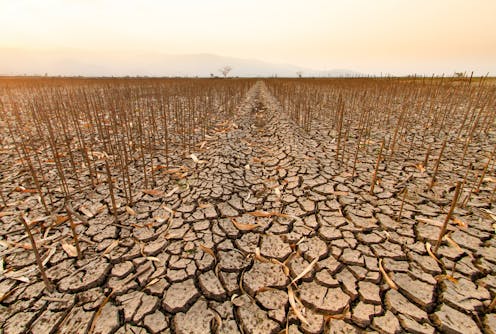
Dying coral reefs, rainforests transforming into savannas, grasslands turning into deserts – these are ecosystem “tipping points”, boundary lines we’re desperate not to cross.
In dynamic systems filled with life, these critical thresholds aren’t set in stone. Since organisms can evolve, the tipping points within these ecosystems might evolve too.
Most of us think of evolution as a glacial process, too slow to witness in a single lifetime. But evolution, especially in the microbial world, can happen very quickly. Consider antibiotic-resistant bacteria that emerge within years, or the COVID-causing virus evolving new variants in mere months. When the conditions are just right, evolution can go into overdrive — although that’s usually not good for us.
Our latest research, published today in Nature Ecology and Evolution, reveals the first experimental evidence that tipping point behaviour can indeed evolve, and evolve quickly. This raises an exciting prospect: could understanding the evolution of tipping points help us steer ecosystems away from collapse?
Equilibria, diversity and exclusion
Tipping points are critical thresholds where a small change in environmental conditions can lead to a dramatic and often irreversible shift in an ecosystem’s state. But what exactly does this mean?
An ecological community is a network of interacting species – plants, animals and microorganisms – that live in the same area and are interconnected through various relationships like predation, competition and symbiosis.
A healthy ecological community has a balanced mix of species that perform essential roles. They contribute to services like pollination, nutrient cycling, water purification and climate regulation.
When an ecosystem is pushed toward a tipping point due to stressors like climate change, habitat destruction or pollution, this balance is disrupted.
Crossing these thresholds often leads to less diverse communities that fail to perform essential functions. This results in species extinctions and a loss of vital ecosystem services.
Take coral reefs, for example. Corals have a symbiotic relationship with microscopic algae called zooxanthellae. Rising ocean temperatures push the ecosystem toward a tipping point: a critical thermal threshold beyond which corals expel the algae in a process known as coral bleaching.
If the stressful conditions persist, the ecosystem shifts from a vibrant, biodiverse reef to a barren underwater landscape. This can lead to the collapse of the entire reef ecosystem and the loss of marine life that relies on it.
So, we know tipping points are crucial for us to understand. But observing and mapping tipping point behaviour in these complex systems is extraordinarily difficult.
To explore how evolution might influence tipping points, we turned to the microscopic world.

Evolution in real time
Bacteria reproduce at astonishing speeds, allowing us to witness evolution as it happens. Over just 400 days, we guided a model microbial community of E. coli through 4,000 generations. This would be equivalent to about 100,000 years for humans.
One of the unique perks of working with microbes is our ability to freeze them, like biological snapshots in time. This means we can store the original “ancestral” community, and later revive it to compare with its evolved descendants.
By exposing both the ancestral and evolved communities to a range of environmental stresses, we could observe when they remained stable and when they collapsed.
We discovered that evolution can cut both ways.
As species co-evolved to become better adapted to benign conditions, they became more sensitive to stress. This had no impact until we exposed the community to adverse environmental conditions. This triggered unexpected destabilisation, bringing the tipping point closer, and causing collapse sooner than anticipated.
On the flip side, when we specifically evolved the community to withstand environmental stress, the species adapted in ways that allowed them to coexist under much harsher conditions. This effectively delayed the tipping point.
 The rod-shaped E. coli bacteria provide excellent model communities that can undergo fast evolution in the lab.
Arif Biswas/Shutterstock
The rod-shaped E. coli bacteria provide excellent model communities that can undergo fast evolution in the lab.
Arif Biswas/Shutterstock
A new model
To illustrate these ecological changes, we developed a mathematical model that can allow for tipping points.
By tweaking key factors like competition levels, stress resistance and species growth rates, we could simulate how different evolutionary changes affect an entire ecosystem’s trajectory.
If we want to forecast the stability of ecosystems, having a way to include evolution is a significant step.
On the one hand, our results indicate that “directed evolution” – with humans helping species adapt to environmental changes – could bolster ecosystem resilience and prevent collapse.
On the other hand, our research warns us evolution isn’t always a saviour. For example, evolutionary changes that increase the dependence, or impact, of one species on another species may speed up destabilisation, making tipping points arrive sooner than we’d like.
As we grapple with unprecedented environmental challenges, understanding evolution’s role in ecosystem stability becomes more critical than ever. Just as evolution can help harmful bacteria outsmart our antibiotics, it can also shift the tipping points of entire ecosystems, for better or worse.
Authors: Christopher Blake, PhD Student, Monash University


















