

The renewable energy hidden in our wastewater ponds – here’s how it could work
- Written by: Faith Jeremiah, Lecturer in Business Management (Entrepreneurship and Innovation), Lincoln University, New Zealand
New Zealand is confronting a perfect storm.
Its energy grid faces three pressing challenges at once: an unreliable electricity supply, strict emissions reduction targets and ongoing environmental issues related to wastewater ponds.
As the country prepares to meet growing energy demands, the variability of wind, solar and hydroelectric power has made year-round electricity generation hard to ensure.
Compounding the issue are New Zealand’s emissions targets and avoidable emissions from wastewater treatment plants.
We need immediate, practical solutions. One lies hidden within our wastewater systems.
Three challenges, one solution
In the search for viable renewable energy sources, one option is to install floating solar panels on wastewater ponds. However, the initial costs and environmental concerns related to manufacturing and disposal may pose temporary challenges.
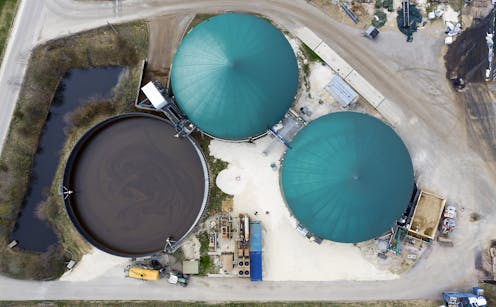
A more immediate and cost-effective solution is already available: biogas membrane covers.
These covers generate continuous energy at half the cost of solar while addressing environmental concerns such as methane emissions and algal growth.
Even greater efficiency and environmental benefits are possible through combining biogas covers with heat systems and floating solar panels. Together, these three technologies suggest a multi-pronged solution that could help stabilise the grid, meet emissions targets and improve wastewater management.
Biogas from wasterwater
Methane emissions from wastewater ponds are a major environmental concern, contributing significantly to New Zealand’s overall greenhouse gas footprint. By installing biogas membrane covers, this methane can be captured before it escapes into the atmosphere, and instead be used to generate electricity.
This creates a year-round, consistent energy supply – something traditional renewables such as wind, solar and hydro cannot always guarantee.
From a cost perspective, biogas systems are about 50% cheaper to install than solar power per kilowatt of energy produced. Also, because these systems produce energy continuously, they are ten times more cost-effective than solar panels, which suffer from intermittency issues.
But beyond energy production, these covers offer other environmental benefits. They limit harmful emissions and curb ongoing complaints about unpleasant odours in neighbourhoods near wastewater treatment plants.
Repurposing excess heat
While biogas systems have enormous potential, they do have one significant drawback. The heat generated during methane combustion can cause wastewater ponds to overheat, leading to operational challenges such as excessive algal growth.
This is where cogeneration or combined heat and power systems come into play.
These systems capture the excess heat from biogas combustion and convert it into additional electricity. This not only improves energy efficiency but also regulates the temperature of the wastewater ponds, helping to reduce algal growth and evaporation.
The third part of an integrated solution involves solar panels which can be installed on top of the biogas covers. While these are more expensive to install initially, they collectively contribute valuable gains. When installed on the surface of wastewater ponds, the panels generate additional renewable energy without taking up valuable land space.
Floating solar panels can also help manage the ponds themselves. By reducing sunlight penetration, they help limit the growth of algae.
Wastewater ponds as energy hubs
The beauty of an integrated approach is that it addresses several problems simultaneously.
By rethinking wastewater ponds as renewable energy hubs, New Zealand can turn an existing problem into a key part of the solution.
Biogas membrane covers provide immediate energy and emissions benefits. Combined heat and power systems boost efficiency by converting waste heat into electricity. And floating solar panels maximise renewable output while improving wastewater management.
Independently, these systems have been successful overseas. In Melbourne, methane from wastewater ponds is captured and converted into renewable energy, powering thousands of homes. Meanwhile, in parts of the United States, floating solar panels are increasingly being used to boost energy production while managing water systems.
The success of these projects provides a blueprint for New Zealand. By combining these technologies into cohesive systems, New Zealand could demonstrate how environmental challenges can be transformed into opportunities.
The future of renewable energy will require continued exploration and integration of emerging technologies, such as tandem solar cells capable of producing 60% more energy. These could be integrated into biogas membrane covers.
For now, though, an integration of biogas, heat and floating solar panels represents a significant step forward for New Zealand. It could generate enough power to supply about 27% of households with renewable energy from wastewater ponds, offering immediate relief from the electricity crisis while supporting emissions reduction targets.
Authors: Faith Jeremiah, Lecturer in Business Management (Entrepreneurship and Innovation), Lincoln University, New Zealand


















