

Tips to reduce your waste this Easter (but don't worry, you can still eat chocolate)
- Written by: Jenni Downes, Senior Research Consultant, Institute for Sustainable Futures, University of Technology Sydney
It has been two years since China banned Australia’s recycling imports and, according to the waste industry, we haven’t seen much progress.
Holiday celebrations like Easter can exacerbate this messy situation.
Large spikes in overall waste production, considerable amounts of food, unusual packaging and products enter our homes, leaving us with overflowing bins, less time to worry about recycling and what happens to it when it disappears on bin night.
Read more: The 'recycling crisis' may be here to stay
Although the jewel-coloured foil and plastic wrappers on Easter eggs may look pretty, their impact on the environment when they ends up in landfill, or when they contaminate our recycling, is not. Nor is the amount of energy and resources required to produce it all in the first place.
Just like at Christmas, many Australians are literally buying into the pressure to go “all out” at Easter. It’s creating a culture of excess and over-indulgence in our bid to celebrate with our families and create happy memories for our kids.
The star is, of course, chocolate. Consumption over the Easter weekend historically accounts for almost 4% of the nation’s total annual consumption, with A$210 million spent on chocolate last Easter.
What’s more, supermarket aisles overflow with disposable baskets, small plastic eggs, fluffy chicks and bunnies, and toys meant to break after one use. You can start to see how the waste will add up over the long weekend.
Read more: Easter eggs: hunting for a solution to excessive packaging
If this waste ends up in the wrong bin, our recycling crisis will be exacerbated this Easter.
More festivity, less environmental footprint
So what can you do to reduce your footprint this Easter without reducing the fun and festivity?
The first thing is to consider the “waste hierarchy” and do what you can to avoid waste from occurring in the first place.
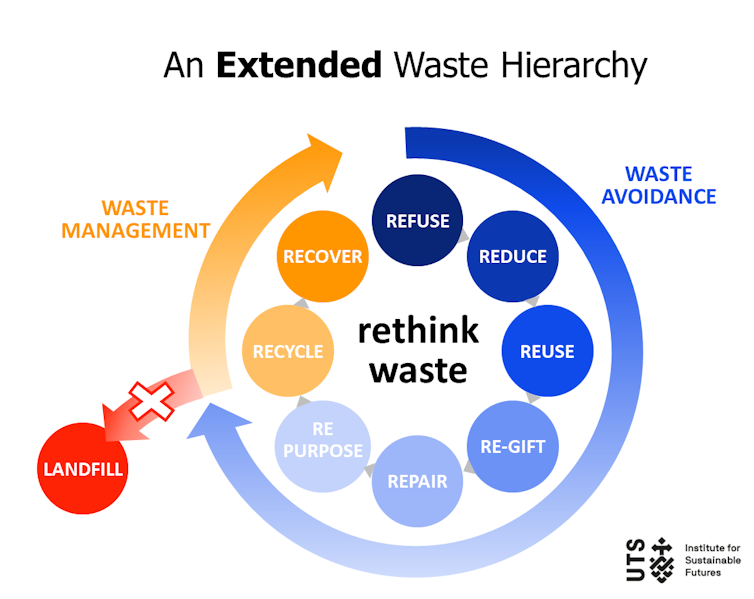 Waste hierarchy.
UTS Institute for Sustainable Futures, provided by author
Waste hierarchy.
UTS Institute for Sustainable Futures, provided by author
Refuse
As much as you can, refuse to buy into the commercialised paraphernalia, and reuse, repurpose or make your own decorations, Easter baskets and even chocolate eggs and hot cross buns.
Reduce
When buying festive food, try to reduce the amount of packaging. You’re paying a premium for fancier packaging, and don’t be too egg-sessive!
It’s also important to plan ahead to reduce unnecessary food waste. Planning meals in advance, getting portion sizes right and making use of the leftovers can all reduce waste – and save you money
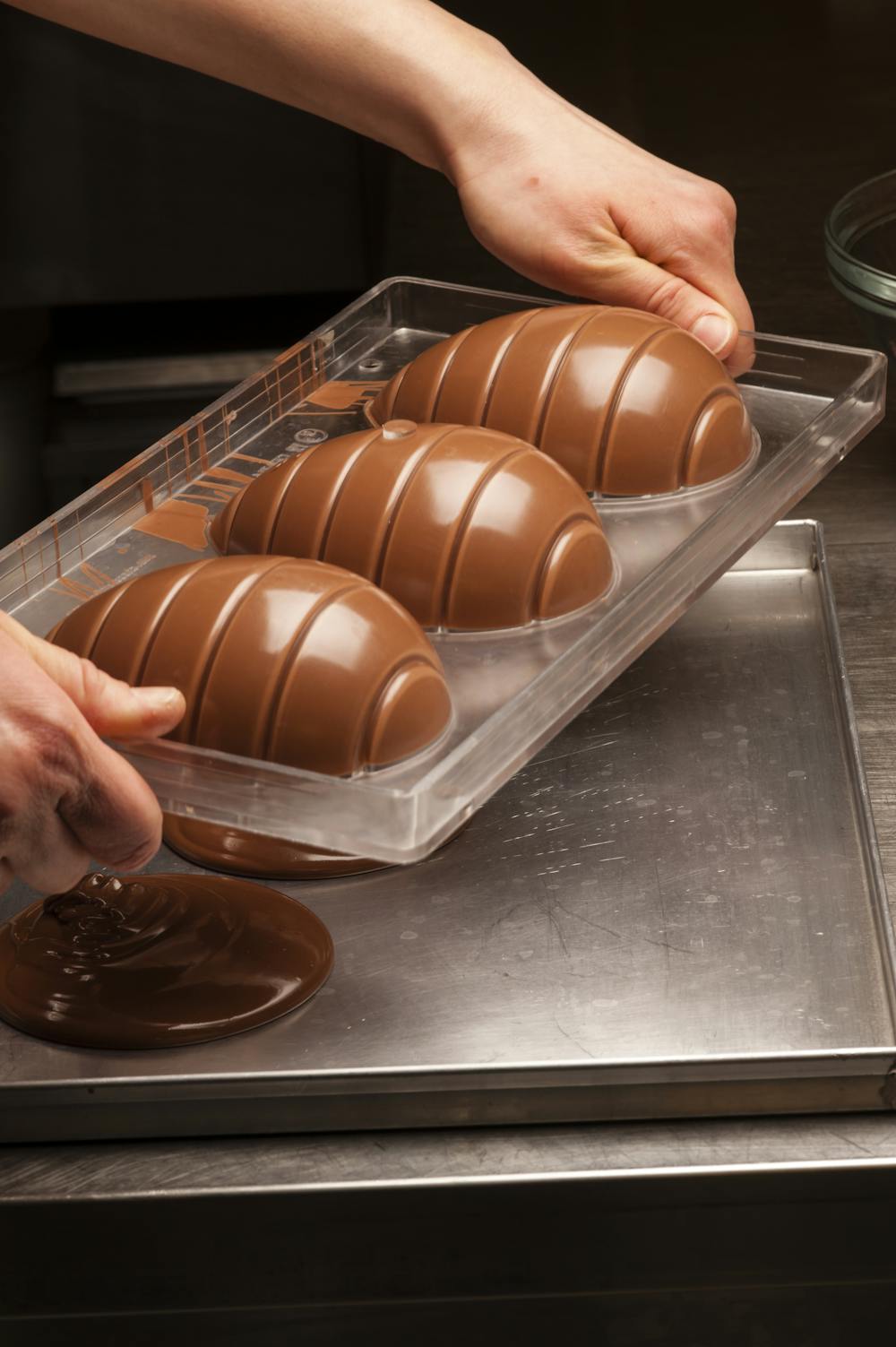 Make memories, not waste this Easter.
Shutterstock
Make memories, not waste this Easter.
Shutterstock
Reuse
Look for products and packaging made from recycled material, and buy decorations second-hand from charity op shops. Opting for reusable alternatives over disposable single-use products can greatly reduce your waste footprint.
Repurpose
Be creative with unwanted packaging: repurpose leftover boxes, containers or fruit punnets to package eggs or gifts, and moulded plastic packaging to make your own chocolate gifts.
And, if you’re embellishing real egg shells (with natural dyes of course!), make sure the egg goes into an omelette or frittata, not down the drain.
Onyalife, a website specialising in reusable products, says the “magic” of Easter is creating beautiful lasting memories with your family and friends. And this could include starting your own new zero waste traditions where you spend time, not money.
What could be more magical than baking hot cross buns together, or piping molten chocolate into an egg-shaped mould?
Recycle (as a last resort)
Despite our best efforts, most of us will still end up with some waste.
Holidays may be a great time to sit back and unwind, but recycling rules don’t change over a long weekend.
Read more: Five golden rules to help solve your recycling dilemmas
It might be worth looking at your council’s website or Planet Ark’s RecyclingNearYou to brush up on all the details.
In the meantime, this infographic can help as a quick guide.
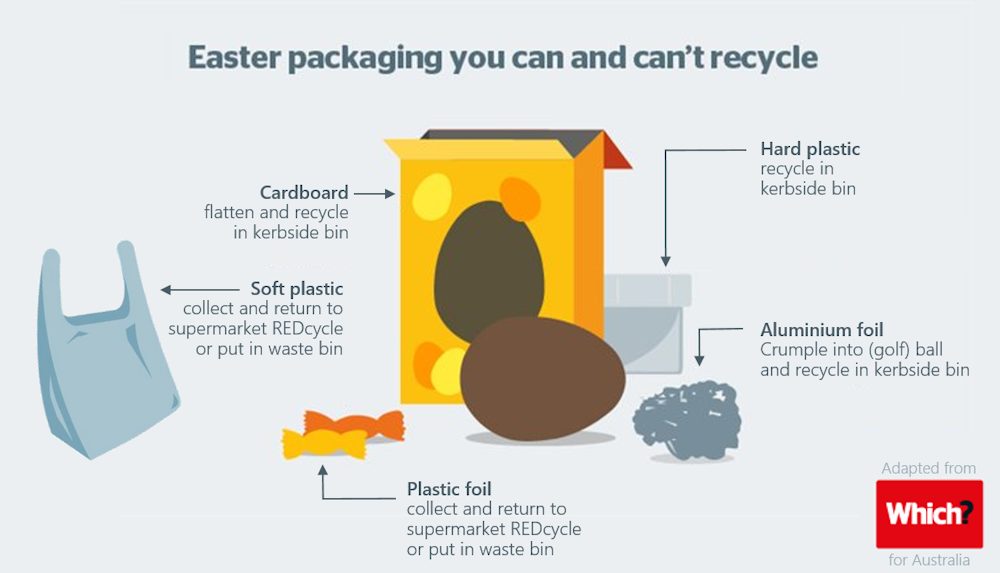 Which recycling Australia, Author provided (No reuse)
Australians have a recycling problem
Household rubbish is only a small piece of Australia’s overall waste pie, but what we put in our kerbside bins aggravates the current headache.
A big part of the problem is that Australia’s waste continues to grow by 6% over the decade from 2006/7 to 2016/17. This is, in part, due to our belief in the efficacy of recycling.
But what we think of “recycling” is actually simply collecting and sorting, ready for someone to use the recyclable material to make something new.
And Australia’s use of recycled material is particularly lacking.
This is partly because the quality of recycled material coming out of our sorting facilities isn’t that great, and also because there has traditionally been low demand for products made from recycled material.
So what’s causing the poor quality of our kerbside recycling?
Since recycling was introduced into Australia in the late 1970s and early 80s much has changed, including: how things are packaged, what is and isn’t acceptable, how we put out our recycling and what happens to it after collection.
Read more:
Recycling can be confusing, but it’s getting simpler
This has caused a great deal of confusion, with almost half of Aussies struggling to figure out what can and can’t be recycled, resulting in high levels of “contamination” (rubbish in our recycling bins).
Look for the new Australasian Recycling Label on the back of some packaging telling you what you can and can’t recycle, through your kerbside bin or elsewhere.
Woolworth’s hot cross buns, for instance, has a label telling you to collect the plastic bag along with other soft plastics and return them to your supermarket REDcycle bin.
Which recycling Australia, Author provided (No reuse)
Australians have a recycling problem
Household rubbish is only a small piece of Australia’s overall waste pie, but what we put in our kerbside bins aggravates the current headache.
A big part of the problem is that Australia’s waste continues to grow by 6% over the decade from 2006/7 to 2016/17. This is, in part, due to our belief in the efficacy of recycling.
But what we think of “recycling” is actually simply collecting and sorting, ready for someone to use the recyclable material to make something new.
And Australia’s use of recycled material is particularly lacking.
This is partly because the quality of recycled material coming out of our sorting facilities isn’t that great, and also because there has traditionally been low demand for products made from recycled material.
So what’s causing the poor quality of our kerbside recycling?
Since recycling was introduced into Australia in the late 1970s and early 80s much has changed, including: how things are packaged, what is and isn’t acceptable, how we put out our recycling and what happens to it after collection.
Read more:
Recycling can be confusing, but it’s getting simpler
This has caused a great deal of confusion, with almost half of Aussies struggling to figure out what can and can’t be recycled, resulting in high levels of “contamination” (rubbish in our recycling bins).
Look for the new Australasian Recycling Label on the back of some packaging telling you what you can and can’t recycle, through your kerbside bin or elsewhere.
Woolworth’s hot cross buns, for instance, has a label telling you to collect the plastic bag along with other soft plastics and return them to your supermarket REDcycle bin.
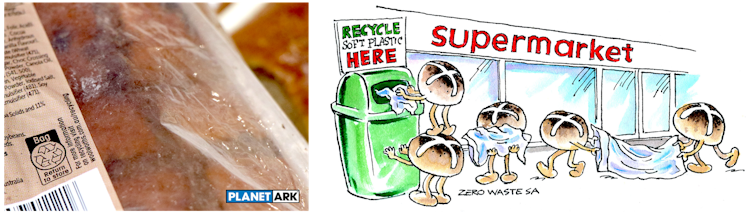 Hot cross buns.
Planet Ark and RecycleRightSA
If you’re still not sure, the golden rule is, “if in doubt, leave it out!”
Hot cross buns.
Planet Ark and RecycleRightSA
If you’re still not sure, the golden rule is, “if in doubt, leave it out!”
Authors: Jenni Downes, Senior Research Consultant, Institute for Sustainable Futures, University of Technology Sydney
&media=https://www.modernaustralian.com/https://images.theconversation.com/files/268817/original/file-20190411-44814-xm6eyj.png?ixlib=rb-1.1.0&q=45&auto=format&w=754&fit=clip&description=Tips%20to%20reduce%20your%20waste%20this%20Easter%20(but%20don't%20worry,%20you%20can%20still%20eat%20chocolate) "Pin It")

















