

Jamie Oliver wrote First Nations characters the wrong way. Non-Indigenous writers need to listen to Indigenous writers first
- Written by: Jeanine Leane, Associate Professor In Creative Writing, The University of Melbourne
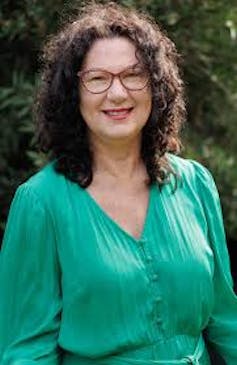
First Nations authored literature continues to excite and educate Australian readers. Non-Indigenous writers are grappling with how to craft inclusive fiction that does not impinge on Indigenous knowledge, beliefs and rights of self-representation. Inclusive fiction is central to a representative literary landscape. In settler colonies such as Australia, this comes with the danger of cultural appropriation.
British celebrity chef Jamie Oliver has brought this issue into the limelight with his attempt at crafting a First Nations Australian character in a children’s novel, which has just been withdrawn from sale by his publisher, Random House UK. Oliver and his publisher have confirmed there was no consultation with any Indigenous organisation, community or individual before the book was published.
The book, Billy and the Epic Escape, features a First Nations Australian girl living in foster care, who is stolen and taken across the world by the novel’s villain. She tells the English children who rescue her she can read people’s minds and communicate with plants and animals because “that’s the indigenous way” and uses words from the Gamilaraay people of New South Wales and Queensland, despite telling them she is from Mparntwe (Alice Springs). Oliver has since apologised.
The National Aboriginal and Torres Strait Islander Education Corporation (NATSIEC) told the Guardian the book was damaging and disrespectful, and criticised Oliver’s “erasure, trivialisation, and stereotyping of First Nations peoples and experiences”. But releasing a book that draws the ire of NATSIEC should never happen in the first place.
We’re writing this article as a collaborative response from a Wiradjuri poet, critic, author and academic and from a non-Indigenous researcher who has written a guide for non-Indigenous writers, soon to be published.
Australian literature’s harmful history
Australian literature has a long history of settler-colonial fiction that harms Indigenous people and a legacy of cultural appropriation. First Nations writers like Miles Franklin winner Melissa Lucashenko, who won the prestigious Roderick Award last month for her novel Edenglassie, have been highly vocal about the damage caused when non-Indigenous authors misrepresent and marginalise Indigenous people.
Often, she writes, non-Indigenous authors focus on victimhood and portray First Nations people as “distant, damaged, or dead” rather than as “ordinary living humans”.

Realist writing in many genres has an unbroken connection with nation-building and the settler-colonial worldview. Magical realism – the writing style Jamie Oliver employed – has historically worked against Indigenous people. Mykaela Saunders uses time travel as an example:
to us these stories aren’t always parsed out into fiction or fantasy, as they are often just ways we experience life. For example: time travel isn’t such a big deal when you belong to a culture that experiences all-times simultaneously, not in a progressive straight line like Western cultures do.
Many First Nations writers, such as Alexis Wright, Kim Scott, Saunders and John Morrissey, reject the term magical realism altogether for First Nations writing across all genres.
Children’s stories are never neutral
Oliver’s decision to attempt to author a children’s story is particularly problematic. But disappointingly, it’s not surprising. Many non-authors – especially celebrities who decide to turn their hand to writing – attempt children’s books, believing small amounts of texts accompanied by many illustrations make them “easier” to produce.
But children’s stories are never benign, neutral or simply literal or one dimensional. For any society, children’s stories are one of the most important tools of cultural and social transmission. Images and subliminal messages encountered there are enduring. Nor is children’s literature for home or school chosen randomly. Such stories and books are chosen in keeping with a particular culture’s cultural and social values and mores.
Jeanine asks: what is at stake for First Nations peoples when these images of us and our cultures are misrepresented and misinformed by non-Indigenous people? And what is at stake when the stealing that the nation was founded in continues as our stories continue to be taken without cultural protocol – which involves permission, consultation and collaboration with First Nations communities before writing even starts? How much damage does this do?
And what should non-Indigenous writers be doing?
5 tips for non-Indigenous writers
Jeanine wrote a 2016 essay, Other People’s Stories, that outlines a set of questions non-Indigenous authors should ask themselves before they even think of constructing Indigenous characters or stories.
These include:
- actively engage with First Nations people, get to know them (you cannot write without firsthand knowledge)
- read Indigenous self-representation. AusLit Blackwords is one great resource for discovering First Nations writers and their books
- do your homework, research the issues, understand what can go wrong
- be respectful of the vast universe of Indigenous knowledge
- work with a First Nations writer for a sensitivity reading. (Please bear in mind that this is a cultural load for First Nations writers.)
No non-Indigenous author can ever “give voice” to a First Nations character from the first-person point of view.
Collaboration is essential
Non-Indigenous writers have a role to play in reshaping Australian literature, but it must come from a collaborative position – after much research, and only with correct protocols and permissions in place.
Elizabeth, who has lived with First Nations people, offers practical guidance on how to write stories that will not offend or harm First Nations people in her forthcoming research article. She provides insights into the depth of thinking, research, understanding and respect that non-Indigenous writers need to embrace.
She says that, after doing a huge lot of research, reading plenty of First Nations self-representation, and engaging often with Indigenous people in person, a non-Indigenous writer writing Indigenous characters needs to limit their point of view, so they’re not fictionalising their thoughts. This is what reshaping Australian literature needs from non-Indigenous authors right now.
 Jane Harrison.
Muruwari playwright Jane Harrison tackles issues of cultural appropriation in her work Indig-Curious: Who Can Play Aboriginal Roles? (2012). She asks: how can “others” use Aboriginal themes in a way that is acceptable to Aboriginal people? How can non-Aboriginal people learn to interpret Aboriginal themes? Who can give permission, and who can refuse? What about our shared experiences and common history?
There are no ready-made, one-size-fits-all answers. But the essential starting point for everyone is: First Nations people first. The sharing of our histories and our stories is essential to the health of Aboriginal culture and to the health of Australian culture, says Jeanine. But first, we agree, who is in control of whose story must be acknowledged.
Cultural appropriation is not empathy, nor is it education. It is stealing and misrepresentation.
Authors: Jeanine Leane, Associate Professor In Creative Writing, The University of Melbourne


















