

Lethal second-generation rat poisons are killing endangered quolls and Tasmanian devils
- Written by: Robert Davis, Associate Professor in Conservation, Edith Cowan University
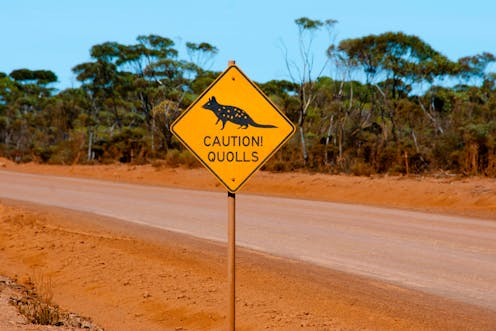
Humans have been poisoning rodents for centuries. But fast-breeding rats and mice have evolved resistance to earlier poisons. In response, manufacturers have produced second generation anticoagulant rodenticides such as bromadiolone, widely used in Australian households.
Unfortunately, these potent poisons do not magically disappear after the rodent is dead. For example, it’s well known owls who eat poisoned rodents suffer the same slow death from internal bleeding.
Our new research shows the problem is much bigger than owls. We found Australia’s five largest marsupial predators – the four quoll species and the Tasmanian devil – are getting hit by these poisons too.
Half of the 52 animals we tested had these poisons in their bodies. Some had died from it. These species are already threatened by foxes and feral cats. Rat poison is yet another threat – and one they may not be able to survive. Other countries have moved to ban these poisons. But in Australia, they’re widely available.
How does rat poison end up in a Tasmanian devil?
Quolls and Tasmanian devils are carnivores. They eat mammals, birds, amphibians and reptiles, finding food by hunting – or by scavenging dead bodies, including rats and mice. But do they eat enough poisoned rats and mice to be at risk?
To find out, we analysed liver samples from all four of Australia’s quoll species as well as the iconic Tasmanian devil. The samples came from dead animals from a range of sources, including animals dying in veterinary care, found as roadkill, or simply found dead.
Each of these species is endangered or vulnerable. Together, they represent the largest remaining Australian carnivorous marsupials – native animals at the top of their food chains.
We tested samples from 52 animals. Half of these were positive for second generation anticoagulant rodenticides. Of these, 21% tested positive for more than one rodenticide.
Unfortunately, many animals we tested had consumed doses high enough to kill. Around 15% of the Tasmanian devils, 20% of the eastern quolls, 22% of chuditch (western quolls) and 20% of the spotted-tailed quolls tested were very likely to die either from the poison itself or a related cause such as longer-term sickening.

We found one chuditch from a Perth suburb had been exposed to three different second-generation rodenticides. It had levels of one poison, brodifacoum, at 1.6 milligrams per kilo, far above the rate presumed to be lethal to mammals. This is likely the highest recorded exposure rate in an Australian marsupial.
Some 5% of Tasmanian devils had also been exposed to lethal levels of these second-generation poisons and a further 10% were exposed to potentially lethal levels.
Even when these poisons don’t directly kill the quoll or devil, they can leave it worse off.
All five species are threatened, meaning their populations are a fraction of what they used to be. Even small changes to populations can trigger more rapid decline.
Our analysis indicates an increase in deaths of just 2–4% of the chuditch population could increase extinction risk by 75%. This figure is dwarfed by how many chuditch are at risk from rat poisons, which we estimate at 22% of any given population in each generation, based on the exposure rates here.
So, exposure to rat poison alone is likely enough to tip the species towards extinction – even without other threats such as being killed by foxes and cats.

Can poisons be too potent?
After the poison kills a mouse or rat, it remains lethal for some time.
The poisons we examined take several months to halve in toxicity, meaning during this time they can kill owls, reptiles, frogs and small and medium-sized mammals such as possums.
In Australia and around the world, evidence is mounting that these second-generation rodenticides are killing many more animals than those targeted. The poisons are hitting a wide range of carnivores including otters, wolves, foxes and raccoons. Even the famous Californian condor is threatened by rodenticides.
Efforts to use thousands of litres of bromadiolone to stop a mouse plague in New South Wales triggered strong criticism. But to date, criticism has done little to curb their use in Australia.
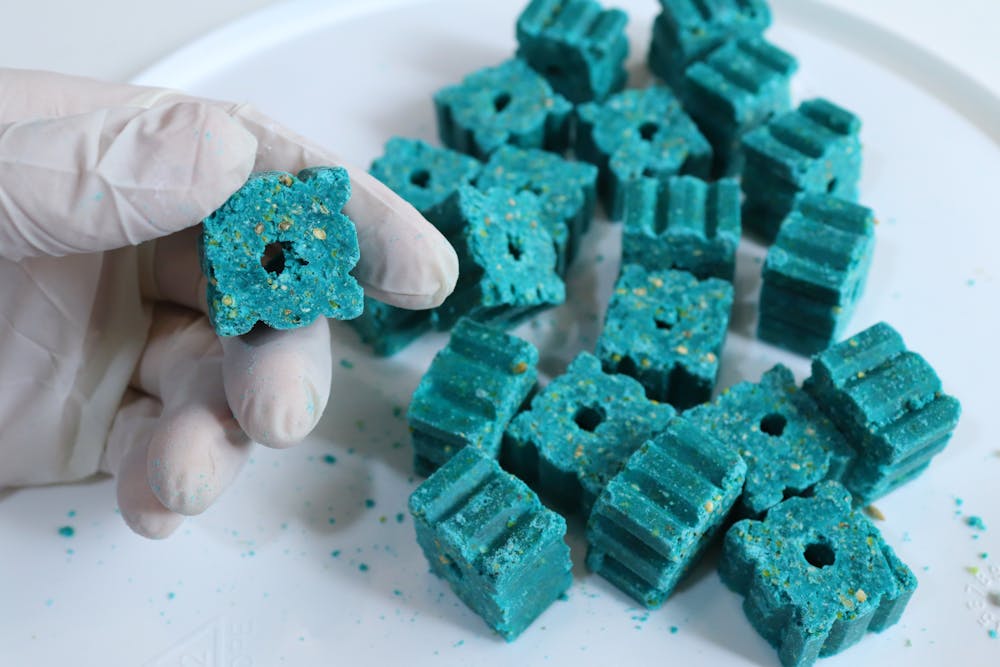 Second generation anticoagulant poisons are extremely effective at killing rats and mice – but the poison doesn’t stop there.
speedshutter Photography/Shutterstock
Second generation anticoagulant poisons are extremely effective at killing rats and mice – but the poison doesn’t stop there.
speedshutter Photography/Shutterstock
Australia is an outlier on this issue. In European and North American nations, these products are restricted to use by licensed pest controllers and banned for home use. Some nations have gone further and banned these poisons altogether. But here, you can buy them at Bunnings, Coles or Woolworths.
Last year, a delegation of Australian researchers lobbied politicians to do more to regulate the use of these poisons.
The institution responsible for ensuring poisons are safe is the Australian Pesticides and Veterinary Medicine Authority. At present, the authority is weighing a decision on whether to introduce restrictions on these second-generation poisons, expected in April.
Four other threatened Australian species – the Tasmanian wedge-tailed eagle, Tasmanian masked owl, powerful owl and Carnaby’s black cockatoo – have previously been found to be exposed to these rodenticides. Our research takes this tally to nine threatened species.
In the absence of regulation, you can make a difference at home. Don’t use second-generation poisons which rely on brodifacoum, bromadiolone, difethialone, difenacoum or flocoumafen. Get rid of your mouse or rat problem with first-generation poisons containing warfarin, coumatetralyl or other chemicals.
If you only have a mouse or two, consider looking at non-poison alternatives.
Taking a moment to consider these alternatives could save Australia’s most threatened native predators from an agonising death.
Acknowledgements: Michael Lohr (Birdlife Australia) was the lead author on the research behind this article. Cheryl Lohr (Department of Biodiversity, Conservation and Attractions, Western Australia) contributed to the research.
Authors: Robert Davis, Associate Professor in Conservation, Edith Cowan University


















