

Lessons from Queensland on alcohol, violence and the night-time economy
- Written by: Peter Miller, Professor of Violence Prevention and Addiction Studies, Deakin University
This is the first in a series of articles on a recently released comprehensive evaluation of the Queensland government’s 2016 policy reforms to tackle alcohol-fuelled violence and the implications for alcohol regulation and the night-time economy in Queensland and Australia. A summary report is also available.
Under the “Tackling Alcohol-Fuelled Violence” policy, which among other things introduced statewide restrictions on trading hours, Queensland has recorded reductions in assaults, ambulance attendances and hospital admissions. These reductions represent a substantial cost saving to the Queensland community. At the same time, tourism and the number of liquor licences have continued to grow in many areas.
Despite this, levels of alcohol-related harm still remain too high, which calls for further effort.
Read more: All in it together: why stopping alcohol's harms needs everyone
In this article we describe the report findings from “archival” data – data collected by government services. The next three articles will:
- describe the data from patron interviews, highlighting levels of intoxication and harm
- highlight the unwanted sexual attention reported by patrons
- explore the impact on live music.
The Queensland government has provided an interim response to the report’s 38 recommendations. Community consultation will continue to the end of 2019.
What were the 2016 policy changes?
In 2016, the government responded to community concerns about alcohol-related harm by implementing a multifaceted policy with three broad aims:
- a safer night-time environment, in particular in entertainment precincts
- cultural change, including more responsible drinking practices within designated safe night precincts (SNPs)
- a regulatory framework that balances the interests of the liquor industry with a reduction in alcohol-fuelled violence.
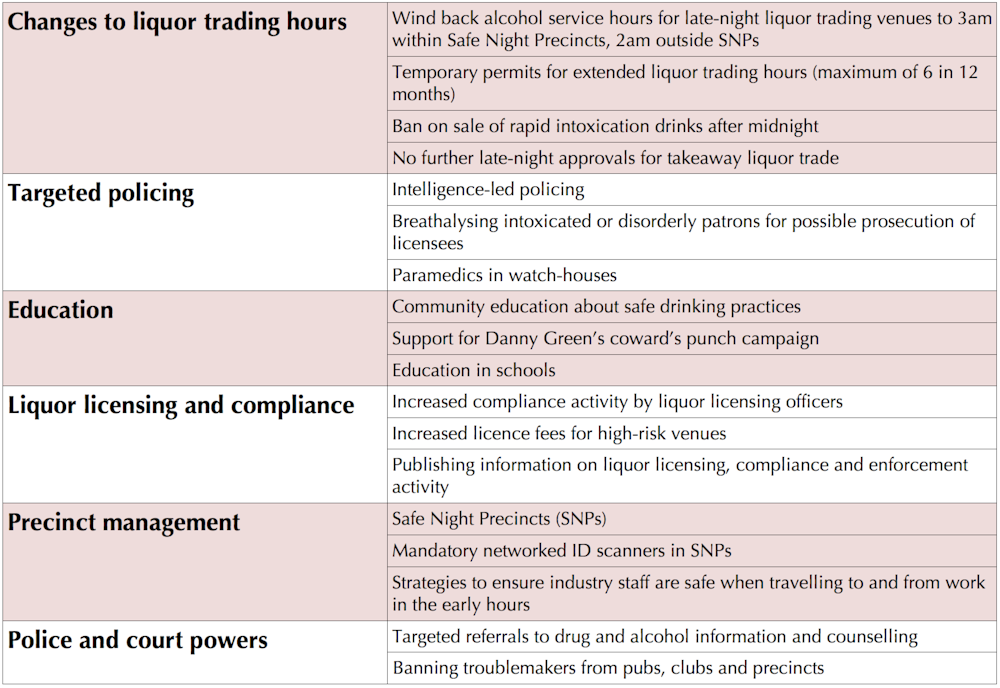 Table 1. Measures introduced as a part of the ‘Tackling Alcohol-Fuelled Violence’ policy (click to enlarge).
Author provided
Table 1. Measures introduced as a part of the ‘Tackling Alcohol-Fuelled Violence’ policy (click to enlarge).
Author provided
The policy measures were partly based on the successful “Newcastle intervention” in New South Wales. From 2008, Newcastle CBD venues closed at 3.30am and had a 1.30am one-way door (or “lockout”). These changes resulted in steady reductions in harms over time.
Read more: ‘Last drink’ laws, not lockouts, reduce alcohol-fuelled violence
The measures introduced in Queensland differed from those in Newcastle in four key ways:
- licensed venues were permitted to remain open after 3am, but not to serve alcohol
- the 1.30am one-way door, although originally proposed, was later repealed in light of an interim report
- the government introduced mandatory networked ID scanners
- venues were able to apply for up to six extended trading permits allowing trade until 5am (reduced from 12 in February 2017).
The measures were implemented in a series of steps, shown in the timeline below.
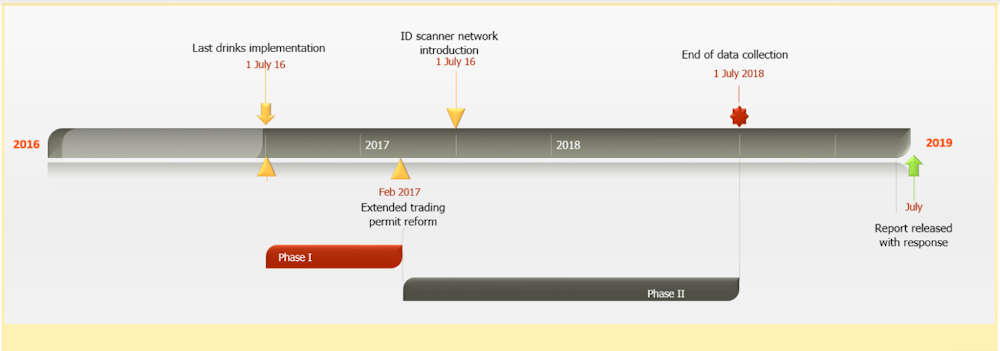 Timeline for implementing TAFV measures (click to enlarge).
Author provided
Timeline for implementing TAFV measures (click to enlarge).
Author provided
How did we measure impact?
We were able to collect and report on more than 40 datasets. The full report provides detailed methods. The main elements include:
administrative service and business data (police, ambulance, hospital, liquor licensing, alcohol sales, transport)
interviews with patrons in the street (including follow-up surveys)
interviews with key informants (licensees, police, support service workers, doctors, licensing officials etc)
structured venue observations
precinct streetscape and business mapping
foot traffic counting
ID scanner data
live music performances (based on events recorded by music rights licensing organisation APRA-AMCOS and Facebook)
population surveys
education campaign assessments
tourism data and survey
economic evaluation.
What did we find?
SAFETY
After 2016, there were no deaths around licensed venues in a safe night precinct.
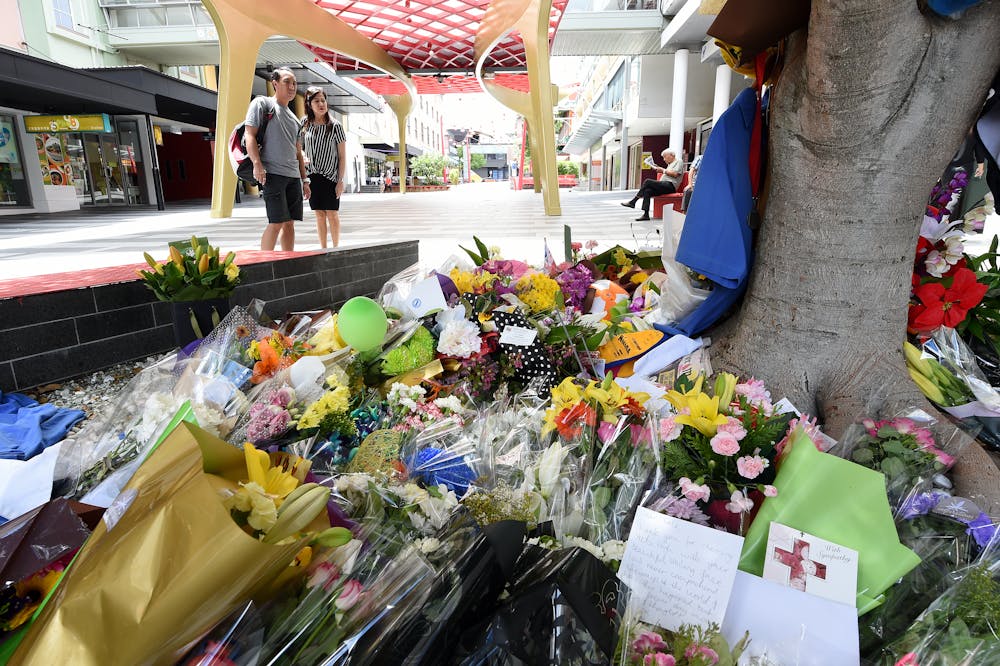 Floral tributes in Fortitude Valley, Brisbane, for Cole Miller, 18, whose death after being punched in the head in January 2016 lent weight to calls to act on alcohol-related violence.
Dave Hunt/AAP
Floral tributes in Fortitude Valley, Brisbane, for Cole Miller, 18, whose death after being punched in the head in January 2016 lent weight to calls to act on alcohol-related violence.
Dave Hunt/AAP
Statewide, the rate of serious assaults from 3am-6am fell by 29% per month on average. But serious assaults increased by 19% earlier in the night (8pm to midnight).
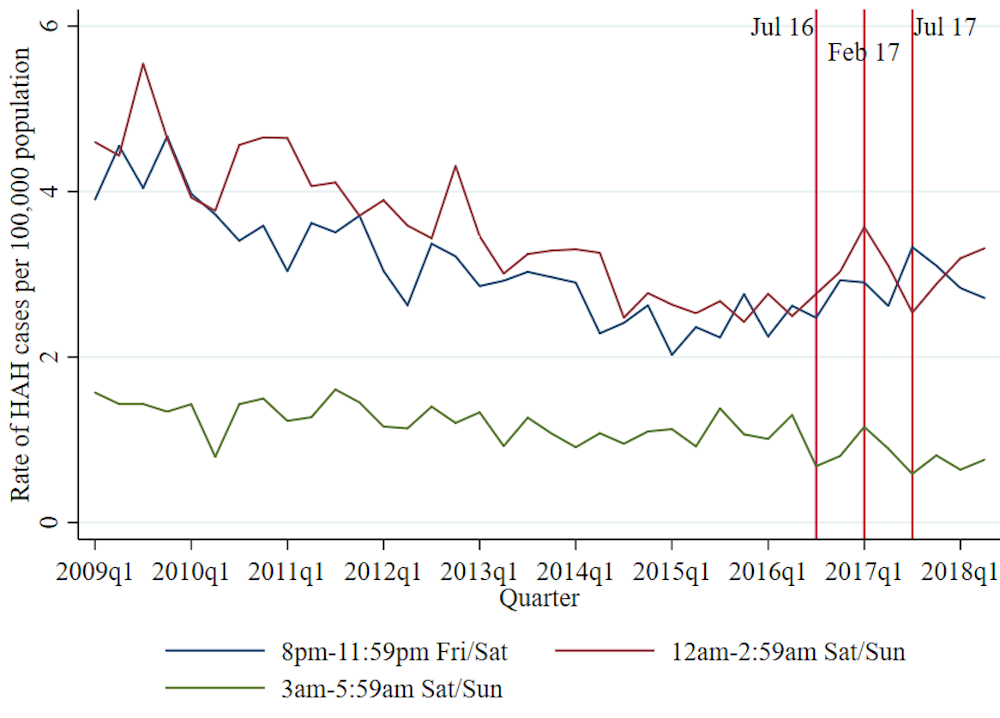 Figure 2. Rate of serious assault (per 100,000 population) during high alcohol hours (8pm-6am Friday and Saturday nights), Queensland.
QUANTEM final report, Author provided
Figure 2. Rate of serious assault (per 100,000 population) during high alcohol hours (8pm-6am Friday and Saturday nights), Queensland.
QUANTEM final report, Author provided
A 40% reduction in serious assaults was recorded in Fortitude Valley between 3am and 6am and 35% in Toowoomba (3-6am). Trends were stable elsewhere.
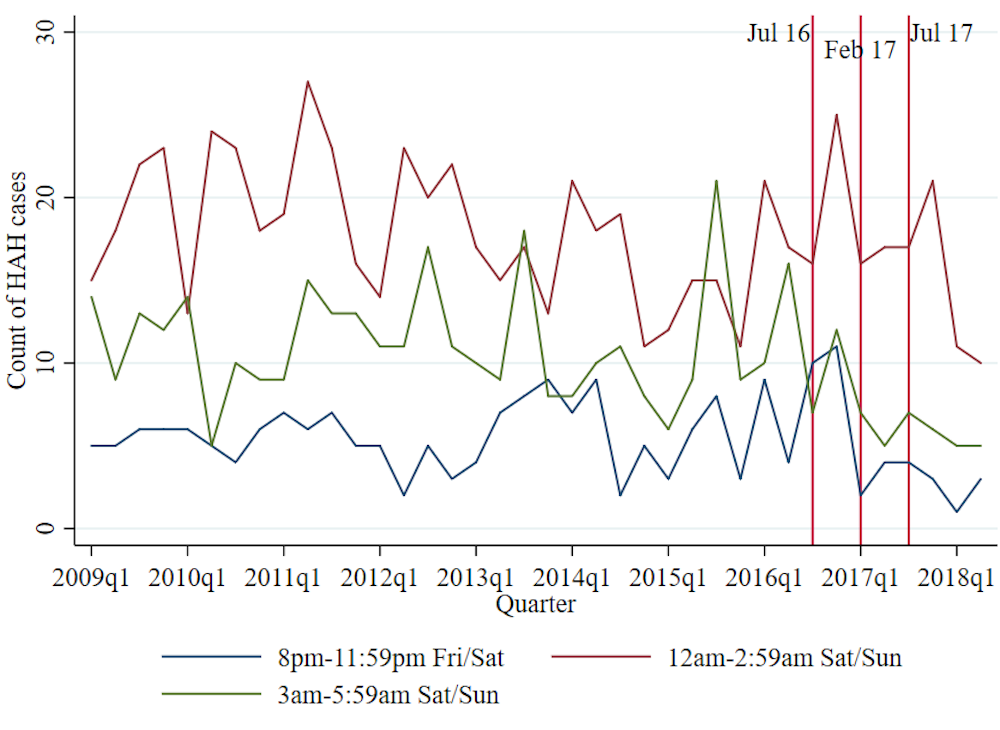 Figure 3. Quarterly counts of serious assault during high alcohol hours, Fortitude Valley.
QUANTEM final report, Author provided
Figure 3. Quarterly counts of serious assault during high alcohol hours, Fortitude Valley.
QUANTEM final report, Author provided
Alcohol-related ambulance call-outs were reduced significantly statewide: 11% on average per month 3-6am, and in all safe night precincts (29% 3-6am).
 Figure 4. Rate of monthly alcohol-related ambulance call-outs for Queensland, July 2011 to June 2018.
QUANTEM final report, Author provided
Figure 4. Rate of monthly alcohol-related ambulance call-outs for Queensland, July 2011 to June 2018.
QUANTEM final report, Author provided
Hospital admissions for ocular bone fractures also fell significantly statewide, as did intracranial injuries in Greater Brisbane. These are some of the most common fractures related to alcohol.
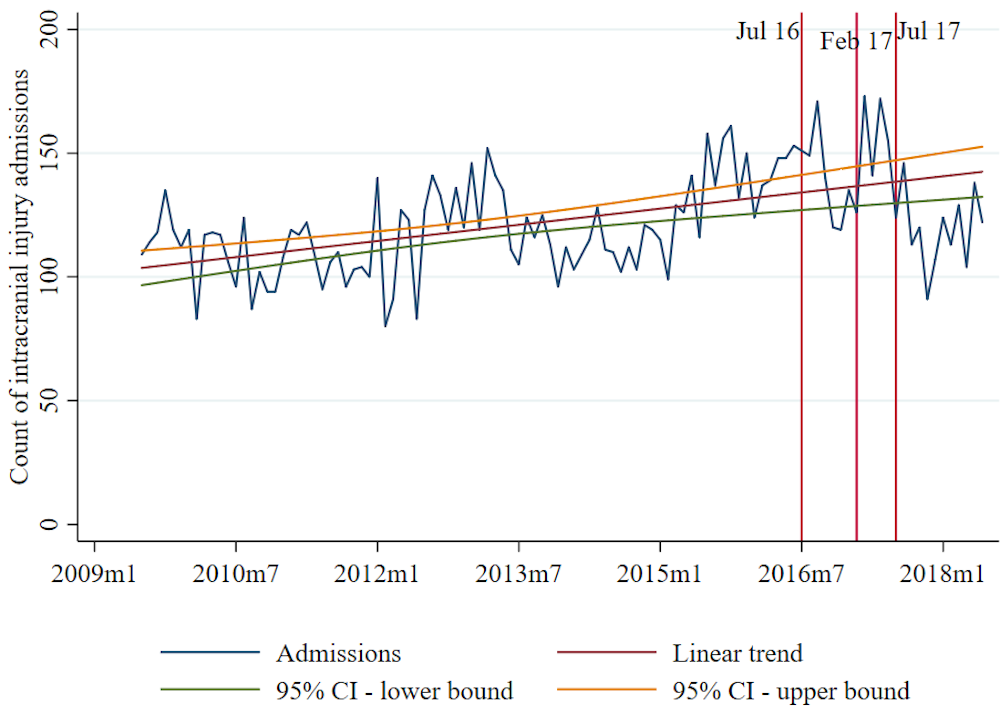 Figure 5. Monthly count of intracranial injury hospital admissions among 16-to-65-year-olds, Brisbane.
QUANTEM final report, Author provided
Figure 5. Monthly count of intracranial injury hospital admissions among 16-to-65-year-olds, Brisbane.
QUANTEM final report, Author provided
Hospital admissions for alcohol intoxication and a range of injuries, which had been increasing, also levelled out statewide and in Brisbane.
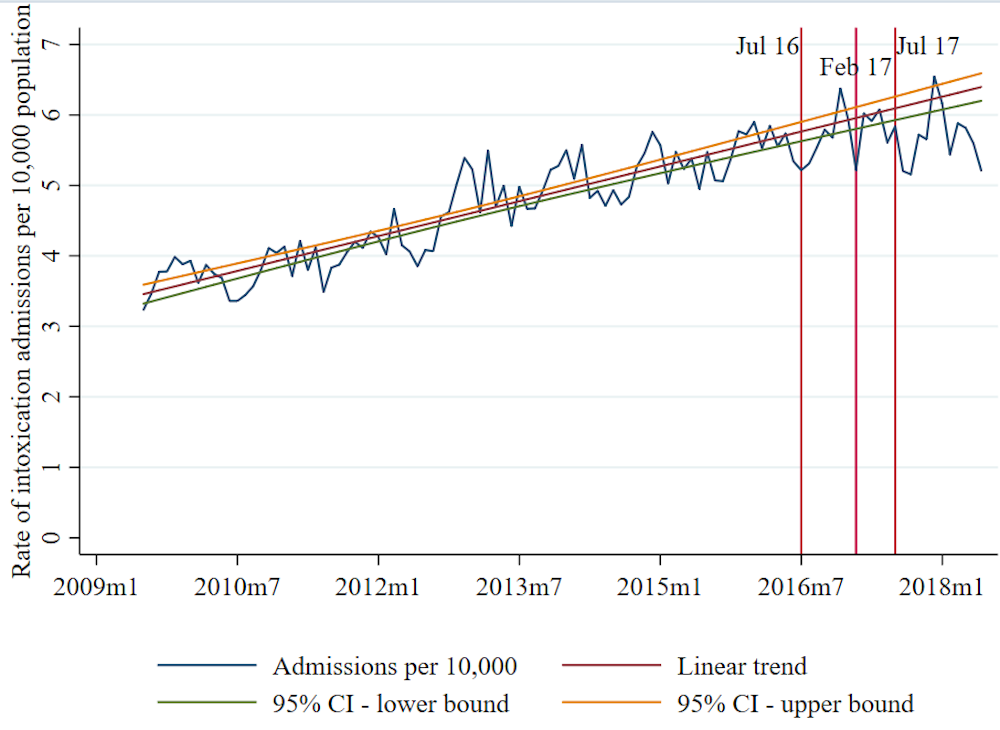 Figure 6. Monthly rate of alcohol intoxication hospital admissions among 16-to-65-year-olds per 10,000 population, Queensland.
QUANTEM final report, Author provided
Figure 6. Monthly rate of alcohol intoxication hospital admissions among 16-to-65-year-olds per 10,000 population, Queensland.
QUANTEM final report, Author provided
Read more: Fewer alcohol-related visits to inner Sydney emergency room since 'lockout laws' introduced
Other key findings included:
no displacement of issues to outside safe night precincts for most of the state
at least one serious crime solved (such as rape and grievous bodily harm) per week using ID scanner data.
DRINKING CULTURE
Key findings included:
- the proportion of patrons in safe night precincts reporting pre-drinking remains high and has not changed
- education/awareness campaigns were ineffective at reducing intoxication and violence.
BUSINESS IMPACTS
The economic evaluation identified a A$16 million overall benefit from the changes to the Queensland community. The returns on every dollar spent by govt on implementation have been A$1.96-6.80.
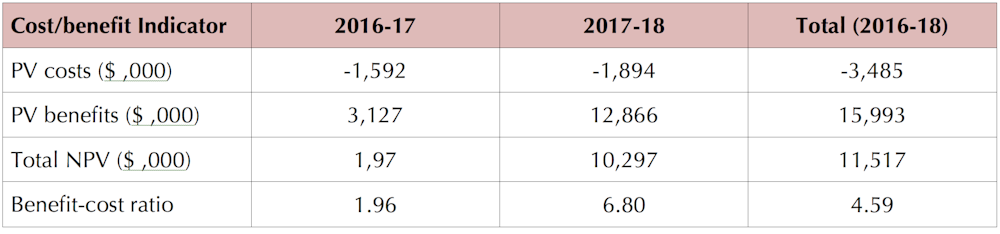 Table 2. Benefit, cost, net present value (NPV) and benefit-cost ratio (BCR) sensitivity analysis using 50% of implementation cost to the government (in 2018 dollars)
QUANTEM final report, Author provided
Table 2. Benefit, cost, net present value (NPV) and benefit-cost ratio (BCR) sensitivity analysis using 50% of implementation cost to the government (in 2018 dollars)
QUANTEM final report, Author provided
Other findings included:
increased number of liquor licences across Queensland
increased number of people using transport (public transport, taxis and Uber) on weekend nights in Fortitude Valley over time
tourism continues to grow strongly statewide
all live music performances have continued to increase. However, the number of original live music performances may have continued declining since 2012.
Building on the gains
The findings are terrific news in terms of reductions in ambulance callouts, serious assaults and hospital admissions, although alcohol-related harm across much of Queensland has remained stable. Further, the policy has not significantly harmed business and has delivered an overall economic benefit to the community.
The report made recommendations to further reduce alcohol-related harm. These include increasing banning periods for unruly patrons, shutting venues at 3.30am and introducing point-of-sale health promotion.
But, overall, the evaluation is a good news story for the people of Queensland. These findings hold important lessons for other states grappling with how to reduce alcohol-related violence.
Read more: Designer nights out: good urban planning can reduce drunken violence
Authors: Peter Miller, Professor of Violence Prevention and Addiction Studies, Deakin University


















