

My cat needs to be contained indoors – how do I make sure it stays happy?
- Written by: Barbara Padalino, Associate Professor of Animal Behaviour, Husbandry and Welfare, Southern Cross University
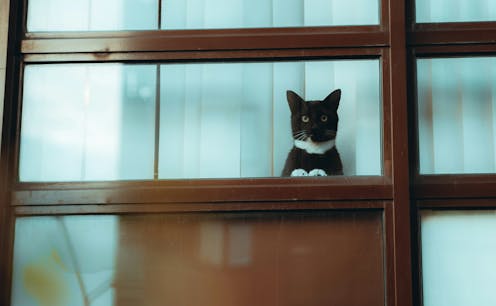
In Australia, there are some 5 million pet cats, and several million feral cats that live outdoors and away from human care, with devastating consequences for native wildlife.
While there’s debate over just how much domestic cats harm wildlife, two-thirds of Australians support keeping cats indoors only.
An increasing number of councils around the country either have overnight or 24-hour curfews for our furry, clawed friends.
But if your cat is used to going outside unsupervised at least some of the time, is it possible to transition them to an indoor-only lifestyle? Here are the welfare questions to consider.
Do cats need outdoor access?
In 2023, the European Union adopted a scientific report on dog and cat welfare in commercial breeding establishments. This work, which I participated in, was a thorough review of the current literature and national regulations.
Based on the scientific evidence, access to outdoor space was requested for dogs, but did not become a requirement for cats in Europe. The necessity for cats to have outdoor access remains a matter of scientific debate.
Meanwhile, the Australian Veterinary Association recommends keeping pet cats contained “on their owners’ properties”:
Contained cats require an appropriate environment with enrichment that meets the cats’ physical and mental needs, allows expression of natural behaviours, promotes good health and welfare and minimises stress. This should include controlled outdoor access where possible.
On the one hand, many cat owners, particular those living in rural areas, prefer to let their cats roam free, as they believe the outdoors provides cats with exercise and allows them to engage in natural behaviours such as hunting, exploring and climbing.
But uncontrolled outdoor access has many negative impacts on the welfare of pet cats. Free-roaming cats are at a higher risk of disease and parasites, injuries or death from car accidents, accidentally ingesting toxins, unwanted pregnancies, and becoming lost.

How can I safely contain my cat?
Whether you’re moving house and can’t provide outdoor access any more, or your council is implementing a curfew on cats, you may find yourself in a situation where your outdoors-loving cat now has to be confined.
A good indoor home for a cat must have easy access to food, water and a litter tray, a safe physical environment, comfortable places to sleep or to hide, and plenty of ways to engage in play and other activities, including scratching posts and raised platforms to survey their territory from.
Hopefully, your cat already has all of these things.
Read more: How can I keep my cat happy? 5 tips from a vet to help your feline friend live their best life
However, our pets’ experiences and attitudes are also shaped by their breed, temperament, and the environment they grow up in. A cat that’s only lived indoors in a good home is more likely to be content and happy in its confinement.
But a pet cat that’s always been allowed to wander around and suddenly isn’t allowed to do so, may end up distressed and “act out”.
One of the most common behavioural problems is soiling outside the litter tray. That’s because a cat who’s been habitually using the outdoors as a toilet may not like the litter box as much.
However, a cat may also be stressed by a change in its environment, which can increase the risk of developing a urinary tract infection. In such cases, the cat might start peeing outside the litter box, often choosing cool surfaces such as sinks or bathtubs. Because house soiling can have both medical and behavioural causes, it is always best to consult a veterinarian.
Other signs of distress can be increased aggression, or becoming depressed and spending lots of time hiding. So, if you notice any changes in your cat’s behaviour, consult your vet. They can first rule out any stress-related medical conditions and then guide you on how to best support your cat through this transition.

It’s not all or nothing
Among the many good recommendations for making your cat’s indoor environment more engaging is the use of cognitive enrichment. You can offer puzzle feeders or play hide-and-seek with your cat.
Another effective option is a clicker training program, which has been shown to provide both mental stimulation and improved welfare for cats. It involves using a small clicker device and an immediate treat to reward the animal for a desired behaviour.
With clicker training, you can teach your cat a variety of simple tasks, turning learning into a fun and rewarding activity. For example, clicker training can help your cat become more comfortable entering a pet carrier, enjoying car rides, or even walking on a leash – so you can start bringing your cat outdoors with you.
While free roaming may no longer be an option for your cat, it doesn’t mean they can’t experience any outdoor time at all.
 With successful training, you can take your cat outdoors on a leash.
Piotr Musiol/Unsplash
With successful training, you can take your cat outdoors on a leash.
Piotr Musiol/Unsplash
Where possible, you could build a cat-proof fence on your yard, have a fully enclosed outdoor space (a “catio”) or even investigate virtual fencing options if they are permitted in your state. These involve a transmitter paired with a collar that makes a sound or vibrates when the cat reaches an invisible boundary.
You can also make sure your cat has a GPS tracker on their collar in case they do manage to escape.
Ultimately, the response to permanent confinement will vary among individual cats. As the owner, you are best placed to watch them for any behavioural changes and make sure their quality of life is still good.
Authors: Barbara Padalino, Associate Professor of Animal Behaviour, Husbandry and Welfare, Southern Cross University


















