

When a tree dies, don't waste your breath. Rescue the wood to honour its memory
- Written by: Cris Brack, Associate Professor, Fenner School of Environment and Society, Australian National University
Trees die. You don’t have to like it, but they do. And this comes as a surprise to some. A senior public servant once told one of us (Brack): “Trees don’t die; people kill them.”
Of course sometimes we kill trees, especially in urban areas where trees are regularly removed for reasons of safety or urban development.
Read more: Our cities need more trees, but that means being prepared to cut some down
But more concerning than the death of a tree is how we waste them afterwards. In municipalities around the world, the trees are chipped into mulch. Not just the leaves and skinny branches and bark, but the whole tree.
It’s the least valuable, indeed least respectful, thing you can do with a tree.
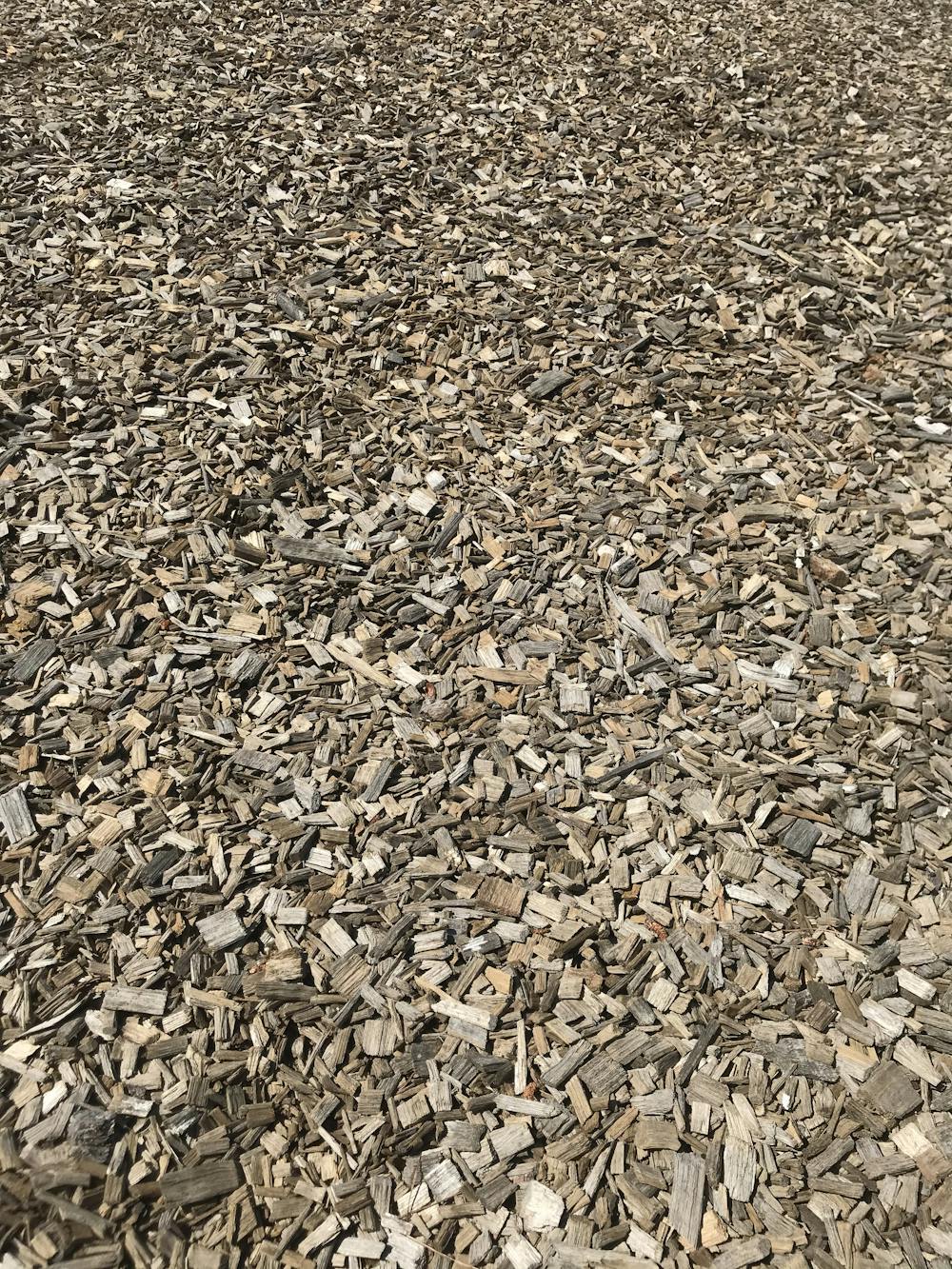 Turning a whole tree into woodchips for mulch is the least valuable and least respectful thing you can do to it.
Author provided
Turning a whole tree into woodchips for mulch is the least valuable and least respectful thing you can do to it.
Author provided
In contrast, the wood can be rescued and used to craft furniture and other unique objects that honour the trees and their legacy of timber.
For those more poetically inclined, trees are literally made of our breath. By chipping them, we are wasting the breath of our past and making it harder to breathe in the future.
Read more: Trees are made of human breath
Chipping trees means releasing carbon to the atmosphere as the mulch breaks down. It’s also a waste of high-quality timbers such as oak, ash, elm and cedar, which, ironically, Australia imports by the shipload.
When made into furniture, for example, the tree is transformed, the carbon stays bound and we have something both functional and beautiful.
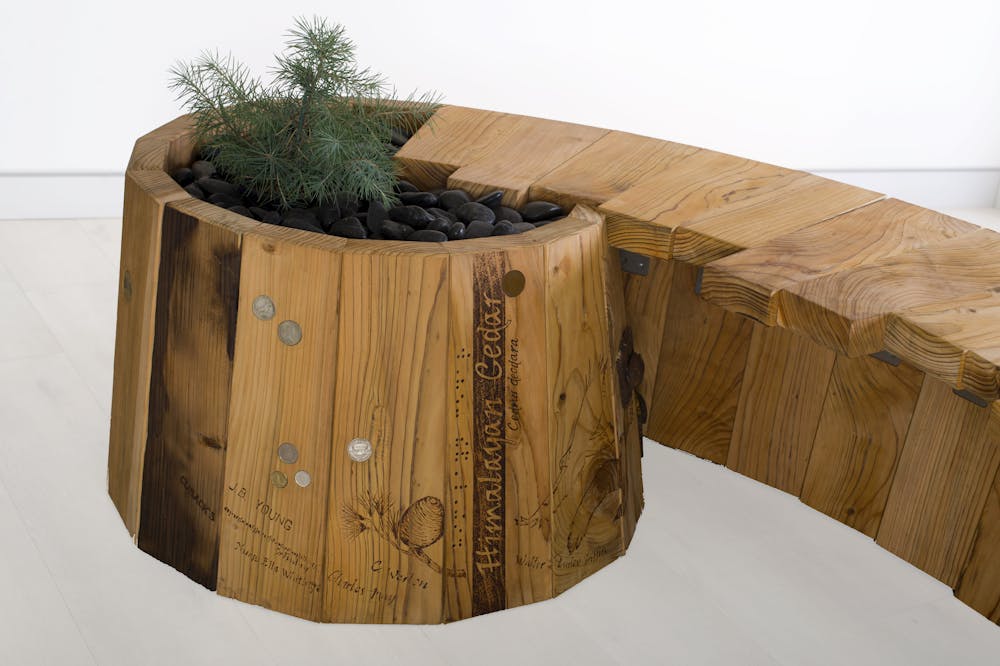 Katalin Sallai’s Witness Tree Bench of Kingston (2016), 600 x 450 x 2000mm, Cedrus deodara (Himalayan cedar) from Kingston, mild steel.
Photo by Martin Ollman, Author provided
Katalin Sallai’s Witness Tree Bench of Kingston (2016), 600 x 450 x 2000mm, Cedrus deodara (Himalayan cedar) from Kingston, mild steel.
Photo by Martin Ollman, Author provided
Urban forests can keep on giving
Salvaging quality timber is such an obvious win-win, you’d think everyone would do it. Sadly, there are many obstacles, including the difficulties of coordinating multiple public and private stakeholders and agencies.
To better understand the challenges and opportunities for urban timber rescue in Australia, we hosted a symposium at Australian National University in September 2019. Forestry researchers, public officials, craftspeople, teachers, students, conservation activists and city parks employees attended. They identified key values and concerns critical to reclaiming and distributing urban timber.
The symposium included a demonstration of how a portable (Lucas) mill could be quickly set up near a tree to cut it into useful timber. Operators can minimise waste by using bespoke cutting patterns to get the most valuable timber from each tree.
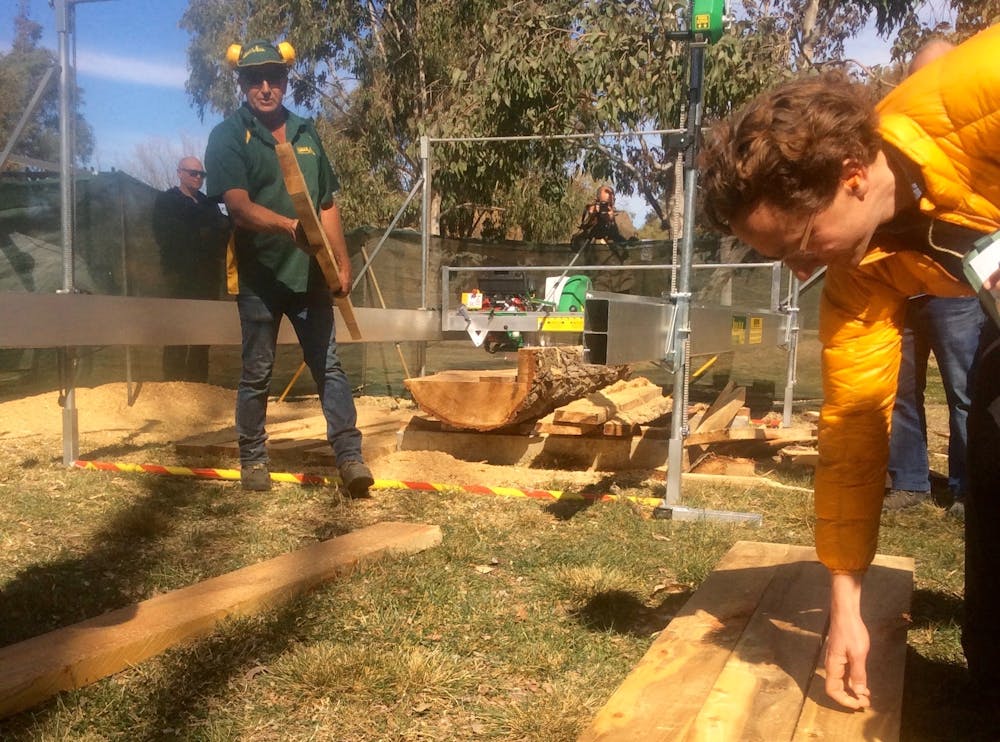 Street trees can provide valuable hardwood timber that, unlike woodchips, doesn’t release their stored carbon.
Author provided
Street trees can provide valuable hardwood timber that, unlike woodchips, doesn’t release their stored carbon.
Author provided
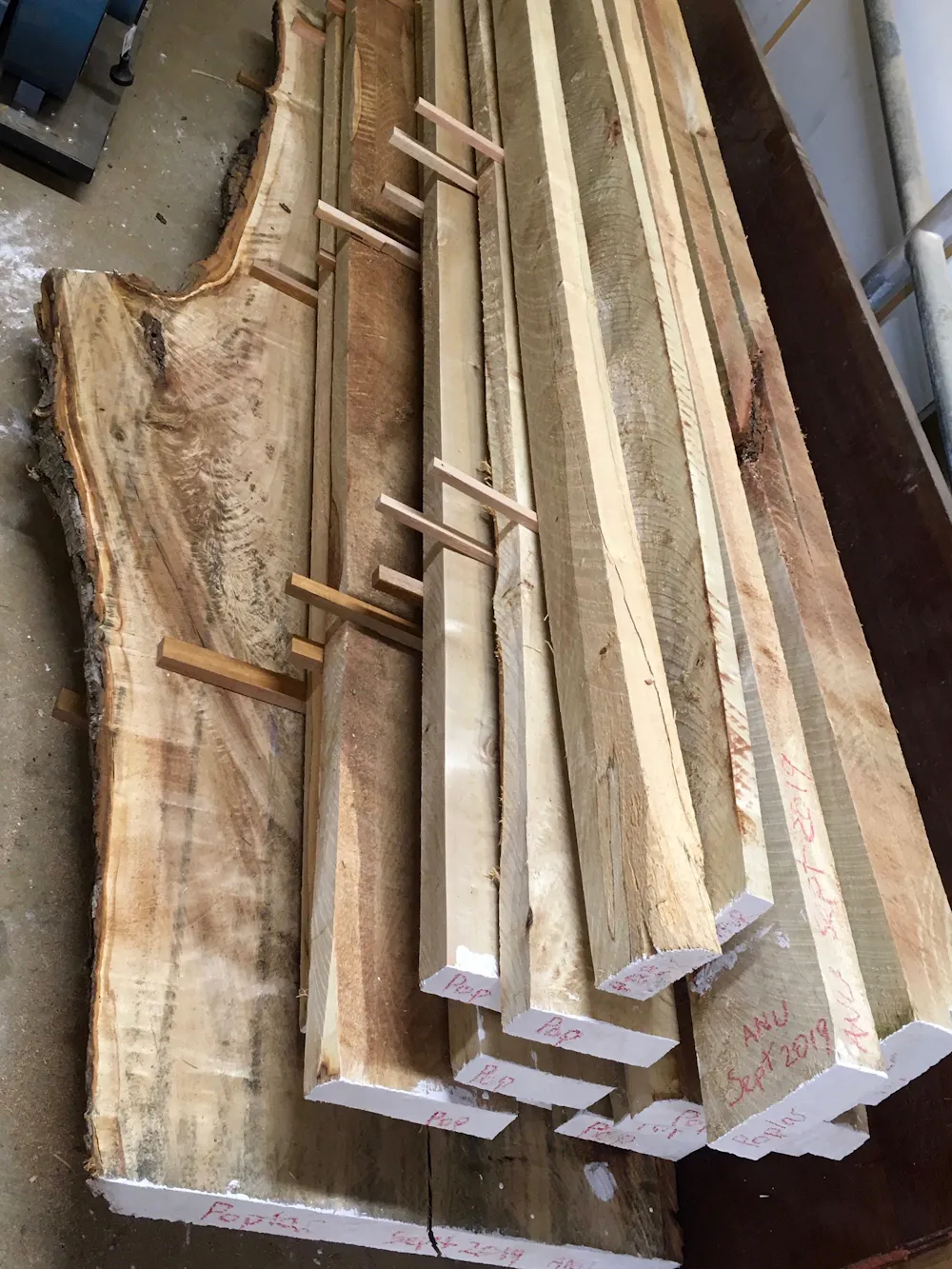 Wood from a street tree is sawn and dried before the timber is given new life as a piece of fine furniture or other useful object.
Author provided
Wood from a street tree is sawn and dried before the timber is given new life as a piece of fine furniture or other useful object.
Author provided
Participants from California described the Sacramento Tree Foundation’s Urban Wood Rescue program. Arborists, residents and the city work together to intercept logs from the waste stream. The timber is then made available to the public.
This program benefits from public trust that stems from decades of active tree planting across the city and genuine concern for the health of the urban forest. Recognising that the recovered wood is too good to waste is a natural extension of residents’ respect for their living trees.
Craftspeople and teachers from Canberra and other Australian cities discussed how providing quality timber to school students supports their love of making and develops their skills. One participant spoke of high school students being thrilled to work with such beautiful timber. They normally make do with cheap construction pine or broken-down pallets.
Rescuing and transforming the timber can bring people together to teach, learn and create. The object then captures not just carbon but a sense of the history of the tree and the place where it lived.
This is what the Witness Tree Project in Canberra, spearheaded by Eriksmoen, set out to do. Wood was rescued from just six of hundreds of trees scheduled for removal. The timber was distributed to six local woodworking artisans and furniture makers.
Their task was to creatively reconstruct a narrative of each tree and its neighbourhood. They transformed the trees into unique objects that delivered anecdotes and collective memories of local history and culture, culminating in a public exhibition.
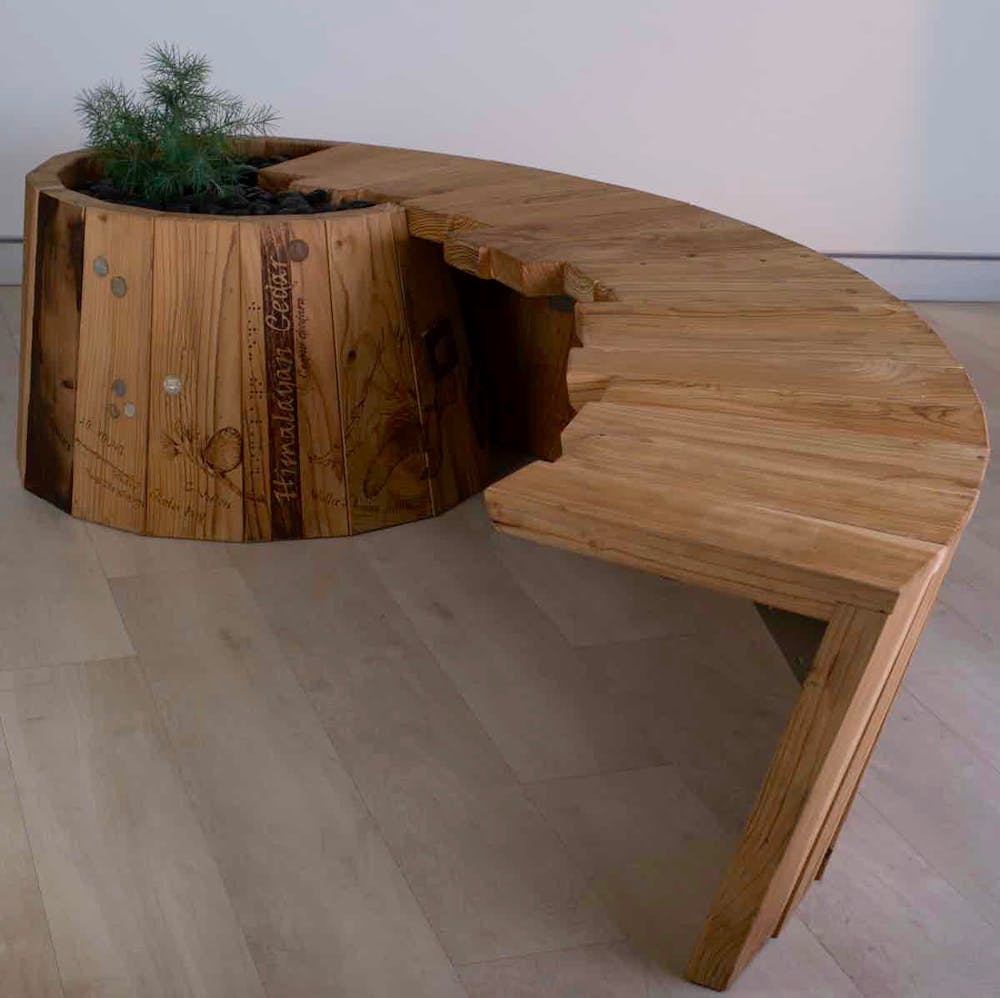 The bench references the dimensions of the Himalayan cedar used for its timber.
Photo by Martin Ollman, Author provided
The bench references the dimensions of the Himalayan cedar used for its timber.
Photo by Martin Ollman, Author provided
Katalin Sallai created the Witness Tree Bench of Kingston from a Himalayan cedar. The circular planter, containing a sapling of the same species, is the diameter of this tree when it was felled in 2013. The unfurling spiral arc of the bench seat describes the potential diameter of Himalayan cedar in ideal natural conditions.
Many references to Kingston, one of Canberra’s oldest suburbs, are embedded and engraved in the surface, including coins commemorating the queen’s 1954 visit. The bench is both an educational tool, describing the differences between a city tree and a rural tree, and a celebration of its own tree’s life and provenance as a witness to local history.
Read more: Loving emails show there's more to trees than ecosystem services
The recent symposium was also told of the positive effects of having living trees in our surroundings, including improved mental health, reductions in crime and better air quality. But this isn’t lost when the trees die. Recent research has shown wooden furniture and fittings in offices or homes can benefit mental health and reduce stress and sick days.
Seeing urban trees given a second life can also help ease eco-anxiety. Every tree removal can add to the sense of helplessness, but putting those trees to good use may create feelings of empowerment.
Four steps you can take
So don’t despair or whine when a tree is removed. Instead, make sure the wood isn’t squandered. Otherwise you are wasting your breath – twice!
Here’s what you can do:
raise awareness: tell people trees do die naturally, and city trees have shorter lives than their rural kin
demand action: tell your local representative that community trees are squandered on woodchips
buy local: buy products made from locally salvaged wood, not imported timber
get radical: if you’re the protesting type, chain yourself to a log to stop it being chipped.
Read more: Where the old things are: Australia's most ancient trees
Authors: Cris Brack, Associate Professor, Fenner School of Environment and Society, Australian National University


















