

Google AI


Modern Australian

Spiders inspired biologists to create artificial webs to capture airborne DNA for biodiversity monitoring

  • Written by: Angela (Ang) McGaughran, Senior Lecturer in Population Genomics, University of Waikato
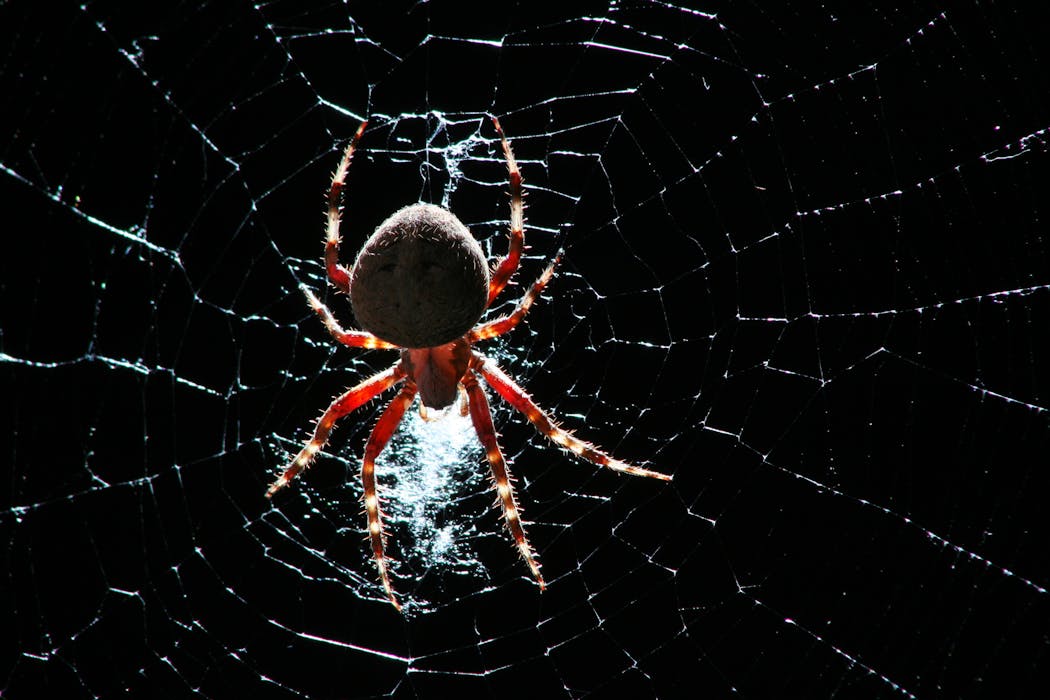
Spiders inspired biologists to create artificial webs to capture airborne DNA for biodiversity monitoring

The global crisis of diminishing biological diversity is challenging our current ability to monitor changes in ecosystems.

Environmental DNA, or eDNA, has become a popular method. It involves taking a sample from the environment and extracting the DNA to document the species that are (or were recently) present.

Just like matching barcodes to an item’s price at the supermarket, eDNA data are matched to a corresponding identification record in a reference database.

But most eDNA sampling takes place in water, passing litres of liquid through a filter that retains DNA fragments for analysis. This method works very well for freshwater and marine species, but less so on land.

Enter airborne DNA, or airDNA, an emerging method not yet optimised for widespread commercial applications but with great promise for capturing signals of land-based biodiversity.

Researchers have been exploring the question of whether natural spiderwebs could be used to collect DNA, but our research takes this a step further.

A composite image of (left) a coat hanger with Halloween spiderweb decorations and (right) a natural spiderweb with two cicada skins.
Artificial spiderwebs are as good as natural spiderwebs at capturing DNA from the air. Authors provided, CC BY-ND

Inspired by a bit of Halloween decoration, we designed artificial spiderwebs to see if they are as good as the real thing in capturing airborne DNA. Our data show artificial spiderwebs performed similarly to real spiderwebs in detecting land-dwelling species.

History of DNA capture

eDNA has been used to monitor changes in biodiversity, detect new species and evaluate the success of restoration or eradication projects. It is easy to use, cheap and non-invasive, and is now being deployed by citizen scientists, community groups and mana whenua.

But species living mostly on land – mammals, birds, bats, reptiles, insects – are less well detected by this method.

One of the first studies to showcase the potential of methods to analyse airborne DNA vacuumed air at a zoological park in Huntingdonshire (United Kingdom). It picked up DNA from 17 of the resident land species, including black and white lemurs, howler monkeys, sloths and tigers, as well as their food items and other mammals and birds.

This stimulated further research, including into the use of cheaper, passive methods of airDNA collection that rely on the settling of air onto inert biofilters. A recent study explored whether natural spiderwebs might provide a new way to capture traces of vertebrate DNA from the environment.

This work sparked excitement among researchers, who immediately saw the potential of spiderwebs to provide aerosol DNA alongside DNA derived from the spiders themselves and their recent prey.

We shared the general excitement of our colleagues but couldn’t help but wonder about the potential negative impacts of this methods’ widespread use on spiders. Spiders are already on the receiving end of bad press, but they have important roles in the ecosystem as nature’s pest and disease control agents. They eat about 800 million tonnes of insects annually across the globe.

Using natural webs is also less robust, as their size and shape, and how long and where they are deployed, are left to chance.

How do artificial webs perform?

In comparison to water eDNA methods, both types of spiderwebs in our research revealed a distinct signature of terrestrial communities. But they were also good biofilters for capturing fungi, possibly by trapping floating fungal spores.

The ecosystem picture drawn from both types of webs compared to water eDNA also shows these methods are likely complementary, capturing a more complete catalogue of species in both terrestrial and aquatic ecosystems.

This is great news: artificial spiderwebs are easy and cheap to construct and provide better control over location, frequency and duration of DNA collection – all at a reduced cost to nature.

Where to from here? Further refinements are on the way. Outstanding questions include how many artificial spiderwebs we need to sufficiently capture biodiversity, whether these webs will perform better or worse in windy or wet conditions, and whether other materials besides Halloween decorations could provide an even better artificial web.

As we continue to explore such questions, perhaps nature’s weavers will provide further inspiration that helps us fashion even better biomechanic solutions for measuring biodiversity.

Authors: Angela (Ang) McGaughran, Senior Lecturer in Population Genomics, University of Waikato

Read more https://theconversation.com/spiders-inspired-biologists-to-create-artificial-webs-to-capture-airborne-dna-for-biodiversity-monitoring-265741

Better Business Photos Without Misleading Customers: An Australian Guide

A timber dining set looks inviting against a sunny deck, with cushions, lanterns and enough chairs for the whole family. But imagine the retailer sell...

Understanding a dental implant Melbourne Treatment Plan

A dental implant Melbourne patients may consider is one option for replacing a missing tooth, but suitability depends on oral health, bone support a...

How 3PL Logistics Australia Supports Faster and More Efficient Supply Chains

Why Has 3PL Logistics Become Important for Growing Businesses?  Gone are the days when supply chains were simpler and in minimal quantity. Now, the...

Common Skin Concerns and Treatment Options Available in Melbourne

Skin concerns can develop gradually or become noticeable following changes in age, lifestyle, sun exposure or hormonal factors. Pigmentation, rednes...

Why a Code-Compliant Home Can Still Feel Uncomfortable

When people build or renovate a home, they usually expect that meeting current building requirements will also produce a comfortable place to live. ...

Breach of Contract in Business: What Are Your Options?

Contracts are essential to business relationships. They establish expectations, allocate responsibilities and provide a framework for delivering goods...

How Pest Control Companies Can Rank for the Problems Customers Search First

Introduction SEO for Pest Control needs to start with the customer’s problem. Most people do not search for pest services in a neat or technical wa...

What Are the Benefits of Renovating an Older Home in Sydney?

Sydney has plenty of character homes, from Federation cottages to mid-century brick homes. Renovating rather than rebuilding can preserve what makes t...

Pool and Deck Design: How to Plan the Perfect Outdoor Living Space for Your Sydney Home

For many Australians, the backyard is where life happens. Summer barbecues, weekend swims and long evenings outdoors are all part of the lifestyle, ...

Is Solar Pool Heating Worth It? What Sydney Homeowners Should Know

There's nothing quite like a backyard pool on a hot Sydney day. But once autumn rolls in, many pools sit unused for months because the water is simp...

Planning a Luxury House Move: A Week-by-Week Timeline for Prestige Sydney Homes

Selling or buying a prestige home is a major milestone. Whether it's a waterfront residence in Birchgrove, a grand Federation home in Haberfield or ...

Downsizing or Upgrading Your Caravan? Here's How to Sell It Without the Hassle

Selling a caravan can feel like a major task, especially when you are unsure about its value, paperwork, or how to find a buyer. Whether you are dow...

The Best Overseas Adventure Holidays for Australians Who Love the Outdoors

Australia offers no shortage of incredible outdoor experiences, but sometimes the best way to satisfy your sense of adventure is to head overseas. A...

Cape Town Wine Shuttle: Winelands Tasting & Tours

Embark on an unforgettable journey through the picturesque Cape Winelands, where world-class wines and breathtaking scenery await. Our Cape Town Win...

Metal Fabrication: Choosing Metal Fabrication Melbourne Services for Custom Projects

What Modern Metal Fabrication Involves From individual components to complete structures, metal fabrication brings together processes such as desig...

Why Giant Rats Tail Grass Keeps Coming Back After Spraying

Giant Rats Tail Grass (GRT) is one of the most frustrating pasture weeds for farmers and lifestyle property owners. You spray an infested area, see th...

When Custom Cardboard Boxes Make Sense for Your Business

Custom cardboard boxes can be useful when a standard carton does not fit a product, packing method or presentation requirement particularly well. A ...

Full-Height vs. Pop-Top Caravan: Which Is Better for Family Travel across WA?

A pop-top caravan is an excellent choice for travellers who want the comfort of a caravan without committing to a larger, bulkier setup. With a lowe...

















