

before The Dismissal, the Whitlam government changed Australia forever
- Written by: Michelle Arrow, Professor of History, President, Australian Historical Association, Macquarie University
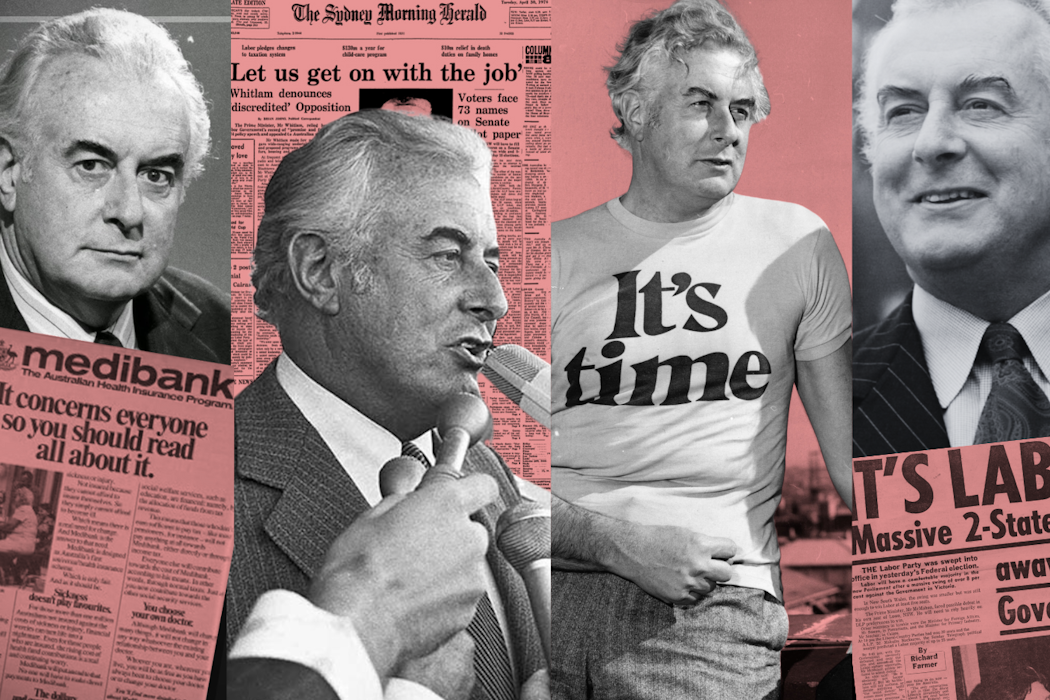
When Australians of a certain age imagine Gough Whitlam, they probably think of him standing on the steps of Parliament House, addressing the crowd after Governor-General John Kerr’s shocking decision to dismiss his government. The Dismissal marked an astonishing end to an extraordinary, occasionally inept, government.
In 1975, it seemed Whitlam would be forever defined by The Dismissal, especially after his defeat at the subsequent federal election. Yet his vision for Australian social democracy has been burnished by the intervening decades.
When Whitlam died in 2014, ordinary Australians eulogised the impact of his reforms on their lives, and his courage in pursuing them. Not only did his comprehensive policy agenda change the nation, but the urgency and passion he brought to politics inspired devotion. His bold, at times reckless, approach to government has shaped the possibilities for Australian politics ever since.
In his 1972 election speech, Whitlam outlined his “three great aims” for government. They were to:
- promote equality
- involve the people of Australia in the decision-making processes of our land
- liberate the talents and uplift the horizons of the Australian people.
In practice, this meant a wide-ranging program of reform that touched almost every aspect of Australian life.
1. Promote equality
Labor had always represented working people – but in practice, this meant foregrounding the interests of white male breadwinners. Whitlam’s policies were based on a new conception of equality that stretched beyond the traditional Labor allegiances of class to recognise race, ethnicity and gender difference.
At the same time, policies such as increasing pensions, Medibank and legal aid benefited low-income Australians and traditional Labor voters.
The Whitlam government officially ended the White Australia policy in 1973, introducing the new policy of multiculturalism in its place. While it was the Fraser government that introduced key multicultural infrastructure such as SBS, Whitlam set the tone for a new policy approach.
The great coincidence of the emergence of a progressive government and an energetic women’s movement produced a raft of important reforms for Australian women. These included the supporting mother’s benefit, a women’s advisor to the prime minister, overdue actions on equal pay, and the first Commonwealth funding for feminist-created women’s refuges and health centres.
The Family Law Act reformed divorce and Whitlam’s abolition of tertiary student fees transformed the lives of many women.
Aboriginal land rights had emerged as the central issue of Aboriginal politics in the late 1960s. The Whitlam government’s Land Rights Act was introduced to parliament in late 1975 and passed by the Fraser government in 1976.
The Whitlam government returned traditional lands in the Northern Territory to the Gurindji people, who had been struggling to reclaim their traditional country since they went on strike in 1966. It also passed the landmark Racial Discrimination Act in 1975.
2. Involve the people of Australia in the decision-making processes of our land
In his 1972 campaign speech, Whitlam emphasised his commitment to participatory government:
we want (the Australian people) always to help us as a government to make the decisions and to make the right decisions.
Empowering citizens in this way had far-reaching implications for many areas of government, including the creation of community health centres, establishing the Law Reform Commission, lowering the voting age to 18, and the Australian Assistance Plan, which funded social welfare services at the grassroots level in communities across the country.
Whitlam also established 13 royal commissions, diversifying sources of advice for decision-making. The Royal Commission on Human Relationships, for example, not only featured expert evidence from doctors and social workers, but also reached out to the community, asking “what do you think?” about family life, sexuality, gender relations, and childcare. In this way, it helped establish the principle that people deserved input on policy that shaped their lives.
3. Liberate the talents and uplift the horizons of the Australian people
“Liberating the talents” of Australians took many forms, including increasing education funding, expanding preschools and abolishing university fees. Whitlam nurtured the “new nationalism” of the 1970s, creating a system of Australian honours and replacing God Save the Queen with Advance Australia Fair as our national anthem.
His foreign policy encouraged Australians to focus on our region, rather than Britain’s distant shores.
But this aim also animated Whitlam’s arts policy. His government established new support for artists, writers and performers through schemes such as Public Lending Rights, the Australian Film Commission and the revamped Australia Council. Australian music was boosted by the introduction of 2JJ and community radio. Whitlam foregrounded the arts in a way few governments have done before or since.
Whitlam’s legacies
Whitlam presided over an impatient, untested government, which inevitably led to self-inflicted scandals. He was also unlucky to come to office at the end of the long boom, as stagflation took hold. While these economic challenges confounded governments around the world, they were a particular blow to Labor’s ambitious reform agenda, which depended on expanding the role of the state.
Whitlam’s bold and sometimes undisciplined approach has haunted progressive politics ever since. Should governments hoard their political capital or spend it?
The Hawke Labor government learned hard lessons from Whitlam’s mistakes, which saw it retain office for more than a decade. Labor under Anthony Albanese is determined to become the “natural party of government”, apparently at the cost of pursuing transformative reform.
Whitlam’s expansive national vision – democratic, fair and self-reliant – helped define the contours of contemporary Australia. His agenda for reform produced tangible improvements to the lives of millions of Australians. This policy impact is why Whitlam still matters.
Authors: Michelle Arrow, Professor of History, President, Australian Historical Association, Macquarie University


















