

6 things to think about if you want a baby and 1 if you don't
- Written by: Freya MacMillan, Senior Lecturer in Interprofessional Health Science, Western Sydney University
The number of people with diabetes is expected to increase from 463 million in 2019 to 700 million by 2045 globally. So more women with diabetes will be having babies in the future.
If you have diabetes, here’s how to have the best chance of a safe and successful pregnancy, and to give your baby the best start in life.
Alternatively, if you have diabetes and want to avoid pregnancy, here’s what to think about when it comes to contraception.
Read more: Explainer: what is diabetes?
Why are women with diabetes and their babies at greater risk?
Women with diabetes have an increased risk of pregnancy complications, particularly if they’re among the more than 60% whose pregnancies are unplanned.
Harm can be to the mother, such as preeclampsia, where her blood pressure increases, her body swells and her liver and kidneys may be damaged. If left untreated, preeclampsia can lead to seizures and loss of mother and baby.
Read more: Explainer: what is pre-eclampsia, and how does it affect mums and babies?
Pregnancy can also affect the mother’s diabetes directly, from changes in how her body uses insulin.
Early in pregnancy, women may become more sensitive to insulin and be more likely to have extremely low blood sugar levels (become hypoglycaemic), severe enough to lose consciousness.
Later in pregnancy, hormones released from the placenta make the body more resistant to insulin, which can make controlling her blood glucose much more difficult.
 Babies are at a greater risk of malformations due to sub-optimal levels of glucose they may be exposed to in the womb.
from www.shutterstock.com
Babies are at a greater risk of malformations due to sub-optimal levels of glucose they may be exposed to in the womb.
from www.shutterstock.com
Babies are also at higher risk of malformations, such as congenital heart defects and central nervous system defects, because of the mother’s sub-optimal blood glucose levels.
If higher blood glucose levels continue or the mother has extreme blood glucose levels, this may lead to miscarriage, stillbirth or the baby dying shortly after birth.
So it’s no wonder the childbearing years can be daunting.
Here are some tips from the Australasian Diabetes in Pregnancy Society on contraception, pre-pregnancy care and antenatal care.
1. Think about contraception early, even if you want a baby
Are you planning to become pregnant? If “yes”, then contraception is important to make sure you’re ready for pregnancy, and when it happens, there’s the greatest chance of a healthy baby (see point 2). If “no” and you are sexually active, or soon will be, then you also need effective contraception.
So, start discussing contraception early in your childbearing years, ideally before you become sexually active. You can do this either through your diabetes team or your regular health-care provider.
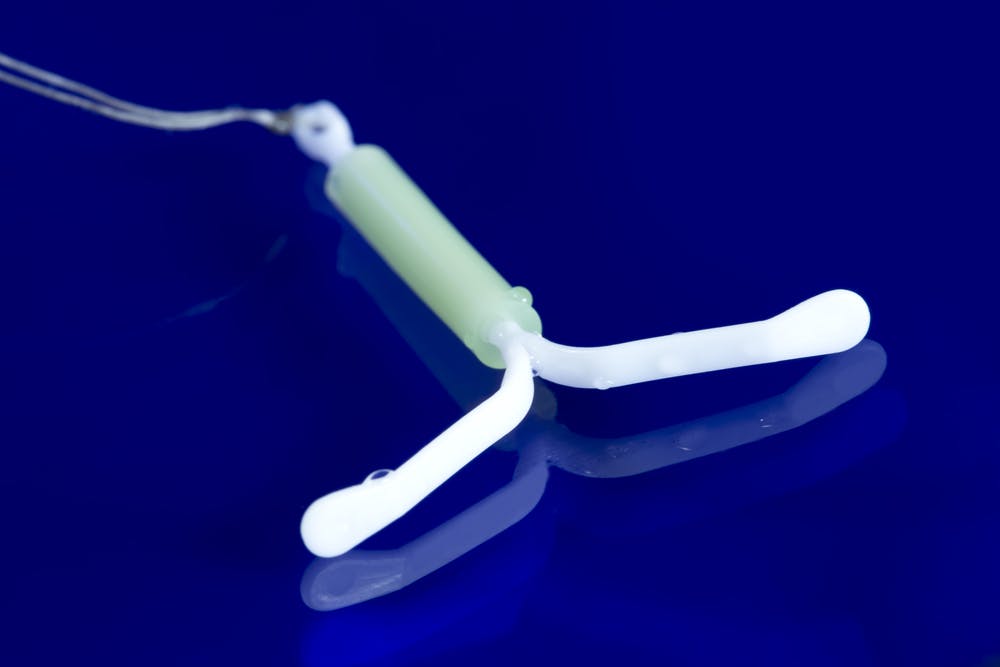 Long-acting reversible contraception, like this intrauterine device, is recommended for women with diabetes.
from www.shutterstock.com
Long-acting reversible contraception, like this intrauterine device, is recommended for women with diabetes.
from www.shutterstock.com
Long-acting reversible contraception (for instance, intrauterine devices or implants) are strongly recommended as these have the lowest failure risk and minimal, if any, impact on your diabetes.
Some oral contraceptives are less effective than long-acting reversible contraception and can lead you to gain weight (which can impact how well your diabetes is managed). Weight gain may also increase your risk factors for heart disease, and increases the risk of pregnancy complications, such as having a large baby.
Read more: Few Australian women use long-acting contraceptives, despite their advantages
2. If you want a baby, find a pre-pregnancy diabetes management service
A pre-pregnancy diabetes management service is a one-stop-shop that looks after your pre-pregnancy care including contraception (see point 1) to make sure the time for conception is right for you.
Using one of these services has been shown to reduce the risk of your baby being malformed by 75% or dying before or at birth by 66% compared to those that do not receive such pre-pregnancy care.
So ask your health-care provider if there is a service like this in your area, and if there is, ask for a referral well before trying to conceive.
Read more: How psychological support can help people living with diabetes
At a pre-pregnancy diabetes service, you will get advice and support on all aspects of diabetes from a multidisciplinary team including: a diabetes specialist, a diabetes educator and dietitian, linked with obstetric or gynaecology services.
This includes the impact pregnancy can have on diabetes complications; the impact of diabetes on your baby and pregnancy outcomes; miscarriage and IVF; folic acid supplementation (see point 5); and medication safety (see point 6).
But these services are not available in all areas. Before our diabetes contraception and pre-pregnancy service opened in 2018, few clinics in NSW specialised in diabetes pre-pregnancy care.
3. Choose the right health-care provider for your pregnancy
Once you know you’re pregnant, ask your GP to refer you to a diabetes specialist team of health-care professionals experienced in managing diabetes in pregnancy. This team will work with an obstetric team.
Such a multi-disciplinary approach means endocrinologists, obstetricians trained in high-risk pregnancy care, dietitians and diabetes educators, among others, will be looking after you.
Early referral is essential, preferably before eight weeks gestation. This is to allow your insulin to be carefully managed to avoid uncontrolled changes in glucose that, as mentioned earlier, can affect you and your baby.
Every woman should have access to diabetes specialist services through a hospital, but in rural and remote areas this may be some distance away.
Although there may be some telehealth options, it is important that ongoing management and particularly the birth are planned with that diabetes specialist team as soon as possible. Your GP will need to refer you.
4. Keep healthy glucose levels before and during pregnancy
Whichever health professional or team of health professionals looks after you, maintaining your blood glucose levels within range as much as possible before and during pregnancy is vital.
It helps women with diabetes fall pregnant safely, reducing the chance of miscarriage. If you are using IVF, fewer miscarriages will mean fewer rounds of IVF.
Healthy glucose levels also provide a growing baby an environment where it will flourish, reducing the chances of pregnancy complications.
So, when monitoring your blood glucose aim for:
- fasting blood glucose level, 4-5.5 mmol/L
- one hour after eating level, less than 8.0 mmol/L, and
- two hours after eating, less than 7 mmol/L.
Naturally, these may need to be higher if hypoglycaemia is a problem.
If you have type 1 diabetes and are planning pregnancy, are pregnant or have very recently had a baby, you now have access to a free glucose sensor, a wearable device that monitors your glucose continuously. With this device, you should aim to be within 3.5-7.8mmol/L more than 70% of the day.
At present there is not enough evidence to support using a continuous glucose monitoring during pregnancy if you have type 2 diabetes. But glucose monitoring remains very important before breakfast and after meals.
Read more: Health Check: is it safe to express milk before giving birth?
5. Take a high-dose folate supplement
Pregnant women with diabetes are recommended to take a high dose of folate (5 milligrams daily, as opposed to 0.4-0.5 milligrams in women without diabetes.
That’s because the risk of having a baby with a neural tube defect is raised in women with diabetes.
So if your health-care professional doesn’t raise this, mention it yourself and buy a folate supplement from your local pharmacy.
6. Ask about your medications
It’s important to talk to your health-care provider as soon as you know you are pregnant so they can advise whether it is safe to continue taking your existing diabetes medication.
Insulin does not cross the placenta and is the preferred medication, if required.
Read more: Weekly Dose: metformin, the diabetes drug developed from French lilac
Metformin does not cause malformations but does cross the placenta. It’s used where the benefits from improved glucose control outweigh any possible theoretical long-term risks to the baby.
Other oral medications to lower blood glucose are generally not approved for use during pregnancy.
If you have diabetes and want to know more about pregnancy or avoiding pregnancy, resources are available from the Australasian Diabetes in Pregnancy Society, Diabetes Australia and our Diabetes Contraception and Pre-pregnancy Program. Information is also available from the government’s health-care advisory service Pregnancy, Birth and Baby and National Diabetes Services Scheme.
Authors: Freya MacMillan, Senior Lecturer in Interprofessional Health Science, Western Sydney University


















