

Sidelining citizens when deciding on transport projects is asking for trouble
- Written by: Crystal Legacy, Senior Lecturer in Urban Planning, University of Melbourne
Citizen engagement is, or should be, central to city planning. When it comes to planning and implementing transport infrastructure the focus tends to be on how to engage the public, when to engage, and what form this should take. But we should be asking another, more important question: how can citizen engagement make infrastructure planning more democratic?
In many cases proposed transport infrastructure and the conflicts and debates it provokes are actually about much more than the project proposal. If the project is a new light rail system, for instance, the questions are: Who and what will it serve? What will it look like? And what impacts (positive and negative) will it have on the city over time?
Read more: All the signs point to our big cities' need for democratic, metro-scale governance
Any efforts then to reduce citizen participation, to stifle the question “What kind of city do we want to be?”, will meet with resistance.
Recent academic and government projects and reports on citizen participation and infrastructure planning have called on our governments to do three things:
- consult and engage citizens early in infrastructure planning
- improve quality and access of citizen engagement at the strategic planning stages
- use more sophisticated strategic planning tools and practices to improve decision-making.
However, a key challenge, as echoed in submissions to a current parliamentary inquiry into city development, is the disconnect between citizen participation and decision-making. To overcome this disconnect, early consultation and new participation platforms are critical. Yet these alone cannot resolve this problem.
How does democracy come into this?
Engaging citizens in a meaningful way in infrastructure planning is good and necessary for many reasons. That we live in a country that purports to be a democracy is central to that argument. But there are other reasons too. These include the potential to make decisions that better respond to citizens’ needs and desires.
Another reason that often goes unstated is that infrastructure is a public thing. Whether it is ultimately publicly or privately owned, operated and controlled, there is a relationship between infrastructure and democracy that ultimately makes infrastructure planning and implementation a contested process. Savvy consultation does not alter this fact.
As the political scientist Bonnie Honig recently argued in her book, Public Things: Democracy in disrepair:
Public things [such as infrastructure] are part of the ‘holding environment’ of democratic citizenship; they furnish the world of democratic life … They also constitute us, complement us, limit us, and interpellate us into democratic citizenship.
Since 2013 I have researched citizen participation in infrastructure planning. The focus has been on multi-billion-dollar, transformational urban transport infrastructure proposals in Australian and Canadian cities.
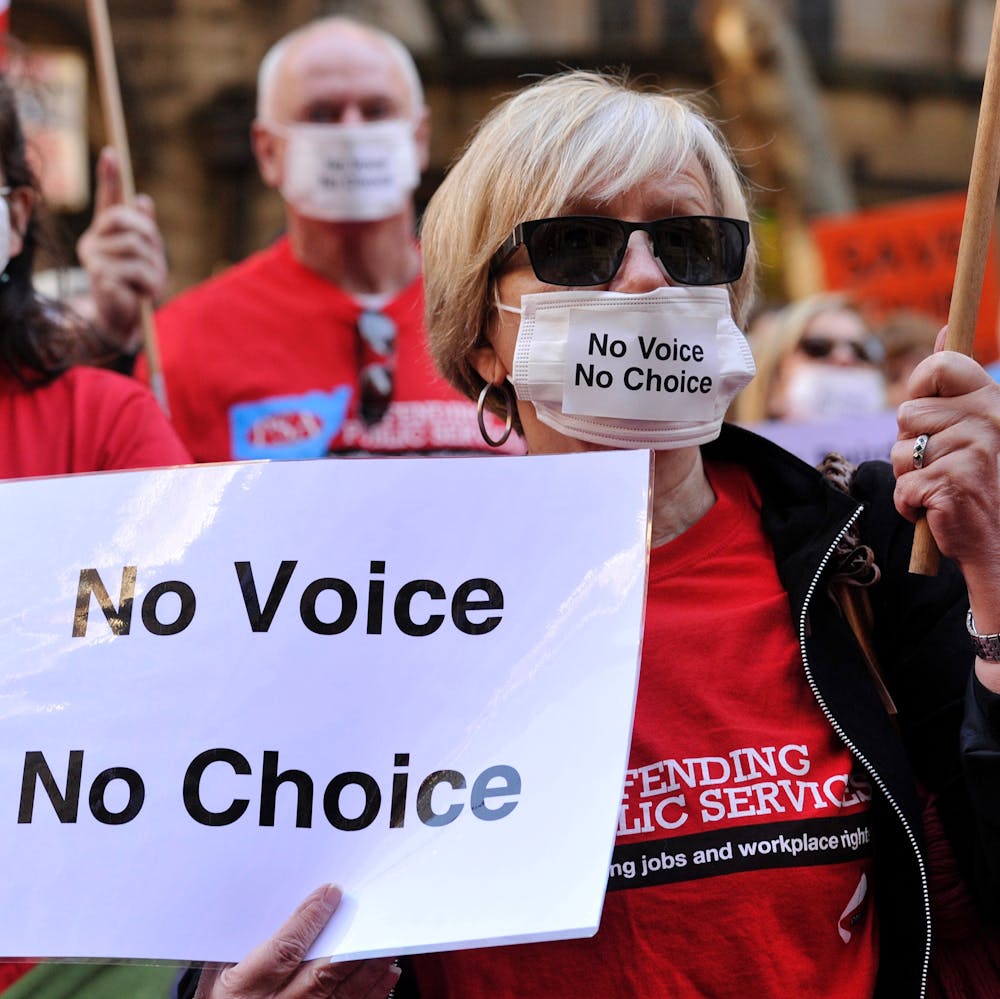 When citizens lack a meaningful say in which projects shape the city, as with WestConnex, democracy is diminished.
Joel Carrett/AAP
When citizens lack a meaningful say in which projects shape the city, as with WestConnex, democracy is diminished.
Joel Carrett/AAP
My primary focus has been on projects such as the East-West Link and West Gate Tunnel in Melbourne, and Westconnex in Sydney (working with Glen Searle). But my interest is not in contested tollway projects alone. I also examined the 2015 Vancouver plebiscite on transit funding, and the rollout of two light rail projects in the Greater Toronto and Hamilton Area (GTHA) in Canada.
Research of this kind into cross-city, cross-country and cross-modal (road and public transport) transit systems produces insights into the relationship between citizen participation and infrastructure planning. It makes visible both party-political and socio-political struggles for the present and future city, which infrastructure – be that a major road or a light rail system – often represents.
Transport infrastructure awakens controversy because these projects embody the debates that frame who we are as a group of people living in a city.
A process of sidelining the citizens
The question of what kind of city we want to be is often left to strategic planning. However, this question needs to remain at the forefront of decision-making in project planning too.
Take the cancellation of the East-West Link project. You would be excused for assuming that this cancellation, following the election of the current Victorian government in 2014, was a rejection of inner-city toll roads and a “roads must be built to tackle congestion” paradigm.
Read more: The East-West Link is dead – a victory for 21st-century thinking
But weeks later the government announced the now A$6.7 billion West Gate Tunnel project. This announcement was met with similar concerns to those raised against the East-West Link. These centred on the very undemocratic processes that produced these projects in the first place.
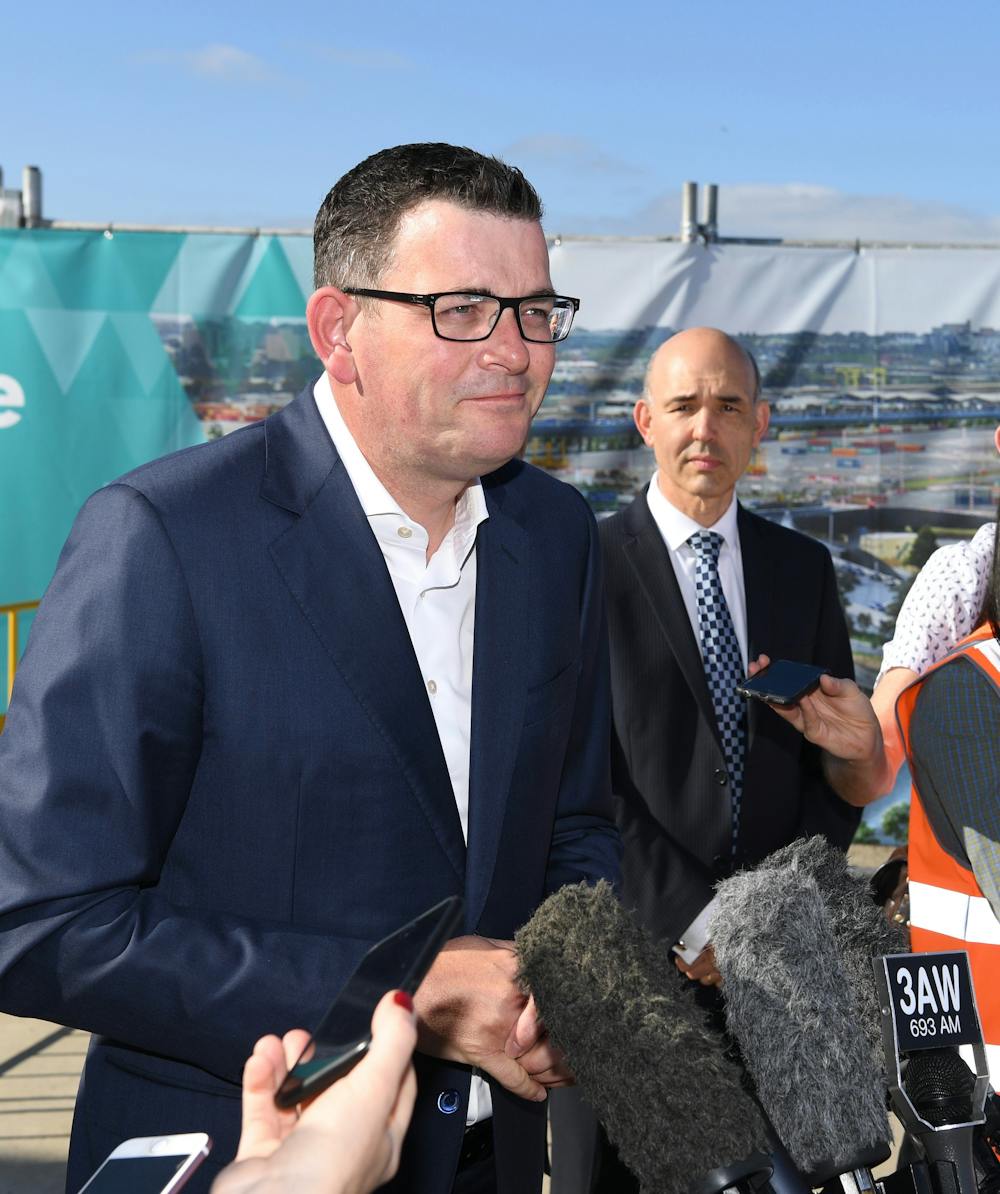 The go-ahead for the West Gate Tunnel confirmed a change of government in Victoria did little to change top-down decision-making.
James Ross/AAP
The go-ahead for the West Gate Tunnel confirmed a change of government in Victoria did little to change top-down decision-making.
James Ross/AAP
Another key concern was about the efficacy of building tollways when other valued alternatives such as public transport are not only available but also desired. Indeed, these are set out as ambitions for the future city in a succession of metropolitan plans.
In the weeks and months after the West Gate Tunnel announcement, a community liaison group and then a public process of evaluating the environmental effects were organised. This did result in some design modifications. However, this was a process about how best to manage out conflict and limit engagement to questions about design.
This is common practice for transport infrastructure planning across Australia. It it is not what can be reasonably called “best practice” in citizen engagement.
The lack of transparency and carefully controlled consultation remove the publicness of infrastructure.
Read more: East-West Link shows miserable failure of planning process
Market-led planning and its impacts
The West Gate Tunnel is a case study in both market-led planning and how these processes can be an assault on democratic, participatory planning. These proposals and other public-private partnership schemes continue to be devised, as seen recently with a proposed “super city” in East Werribee.
It’s clear more needs to be said about the links between citizen participation and infrastructure planning in this context. To design better citizen consultation is to better understand what galvanises citizen interest and protest.
It is more than just the project. It is what the project represents. In many cases, it is a departure from a clearly stated vision for the city.
Our ability as citizens to assert what is in the public interest – throughout the infrastructure planning process – can be further severed when unsolicited proposals become commonplace.
Read more: Transurban's West Gate tollway is a road into uncharted territory
A way forward
A recent alliance between the Coalition and the Greens in the upper house revoked the West Gate Tunnel planning amendment. It’s a reminder that any planning process that undermines inclusive citizen participation and ignores the publicness of infrastructure planning will meet with resistance. Westconnex, the East-West Link, Roe8 in Perth, and now the West Gate Tunnel are all examples of this.
Infrastructure cannot be divorced from the city and its citizens. But as long as citizen engagement is limited, infrastructure will be a hotly contested area of decision-making.
Authors: Crystal Legacy, Senior Lecturer in Urban Planning, University of Melbourne


















