

To address the ecological crisis, Aboriginal peoples must be restored as custodians of Country
- Written by: Zena Cumpston, Research Fellow, University of Melbourne
In the wake of devastating bushfires across the country, and with the prospect of losing a billion animals and some entire species, transformational change is required in the way we interact with this land.
Australia’s First Peoples have honed and employed holistic land management practices for thousand of generations. These practices are embedded in all aspects of our culture. They are so effective, so perfectly suited to this harshest of continents, that we are the oldest living culture in the world today.
A reintroduction of traditional land management is essential if we want to address the ecological crisis we now face.
Read more: Why Aboriginal people need autonomy over their food supply
Not just ‘consultants’
For a little over 200 years, Country in Australia has been predominantly managed without empowering or reflecting Aboriginal and Torres Strait Islander peoples’ cultural practices, voices or aspirations.
To meaningfully engage First Nations communities’ ways of knowing and interacting with Country, they need to cease being “informants”, “actors” and “consultants” which, at best, marginally inform ecological and agricultural imperatives.
The machine of colonisation continues to restrict our involvement in decision-making processes at every level. There are very few areas in Australia where Traditional Owners have succeeded in not only gaining back large land holdings, but also enjoy any real power to significantly maintain and nurture Country.
An example of this can be seen on my own Barkandji Country where in 2015, after 18 years of fighting, Barkandji people were recognised as the Traditional Owners of one of the largest areas ever before granted in a Native Title determination.
And yet, our Barka (the Darling River), our Mother, is now dying. It is poisonous and foul with algae, bone dry in many areas, with millions of fish washing up dead.
The devastation was caused by the gross mismanagement of this precious river by those in power – a destruction wrought through greed. Rights to land, with no rights to water, is a poignant example of our continued disempowerment in managing and caring for our lands in line with cultural obligations.
Our many thousands of generations of careful observations (science) and effective management and custodianship, must see us empowered to lead decision-making. Our community leaders must not only be given a seat at the table, they should set the menu too.
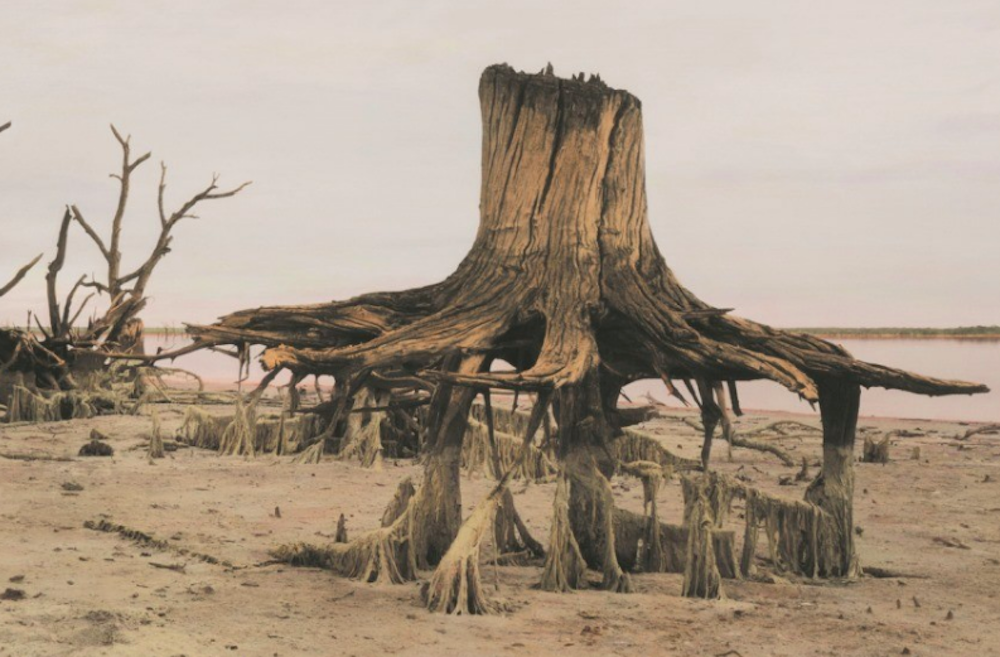 It’s not enough for Aboriginal and Torres Strait Islanders to be ‘consulted’ about their lands.
Ringbarked II, image courtesy of Nici Cumpston and Michael Reid Gallery, Author provided (No reuse)
Different mob, different knowledge
Our mobs are extremely diverse, as are our land management practices. But some overarching beliefs sit at the core of our culture, and are important to understand.
First Peoples have a relationship with Country that is loving, reciprocal and engaged. This “kincentric” relationship includes custodianship obligations – often lacking within non-Indigenous views of Country. Instead of being seen as kin – something to be cared for, listened to, deeply respected and nurtured – Country is seen by many non-Indigneous people as a resource to be exploited and controlled.
Our custodianship of Country, our Law and our vast ecological knowledges are all attached to a place. For each area in Australia, the mob belonging to that place must be engaged, and empowered to speak for that Country.
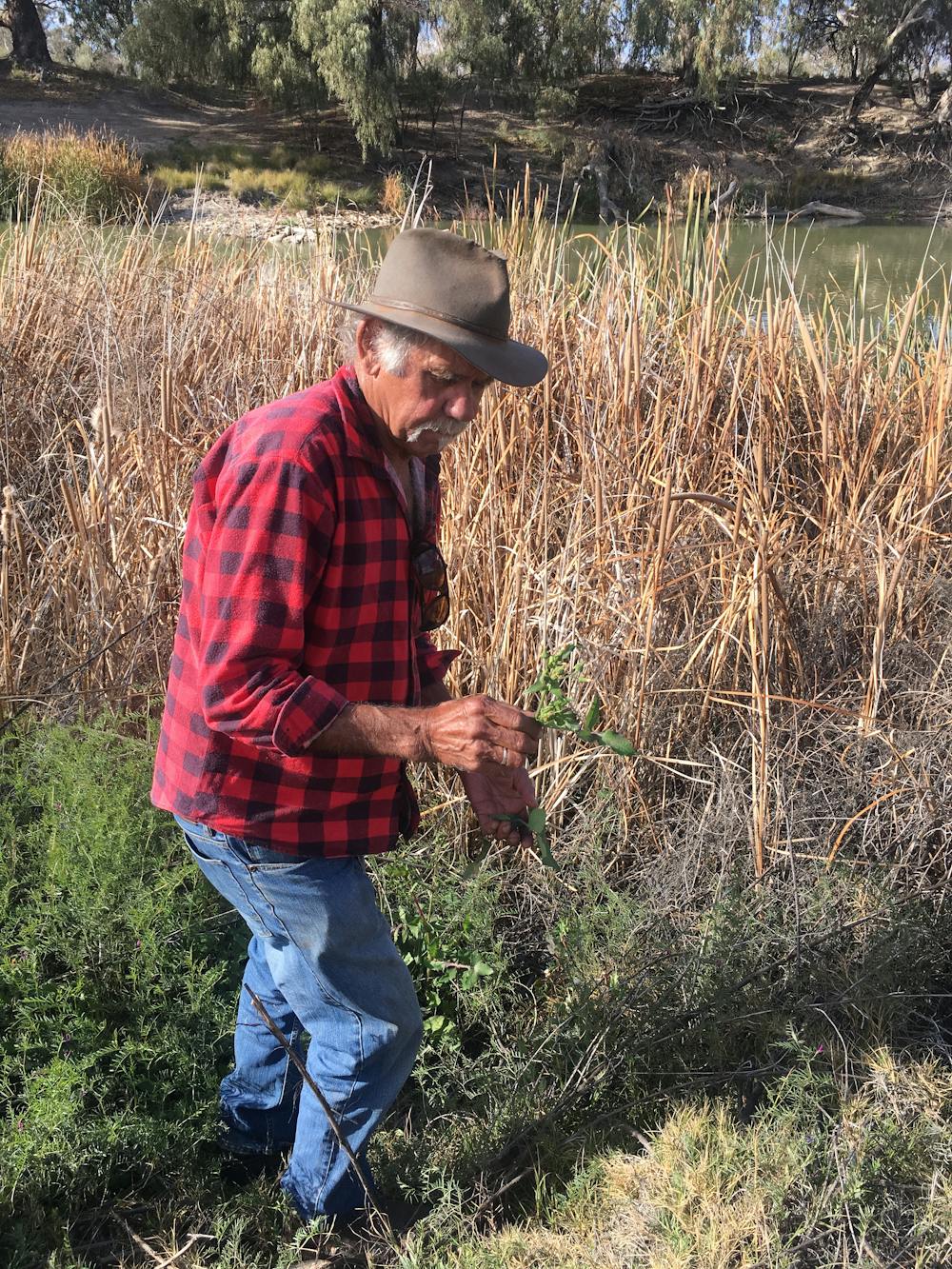 Each mob speaks for its own Country. Barkandji Elder Uncle Badger Bates.
Zena Cumpston, Author provided (No reuse)
It’s time to stop seeing Aboriginal ecological knowledges as something which can exist separately from the people who are its custodians. Our vast knowledges are embedded in our communities, and always have been.
Read more: Friday essay: Dark Emu and the blindness of Australian agriculture
Aboriginal knowledges aren’t lost
When it comes to Aboriginal agricultural and land management practices there is still so much to uncover, adopt and reinvigorate. And there are still many who do not believe in our expertise in this area.
Too many ignorantly perceive our knowledges as lost, or call for elders to hand over their knowledges as a matter of urgency, unaware that our communities still practice intricate systems of sharing knowledge across generations.
The belief that our knowledges are lost harks back to early “scientific” theories which emerged around the time of colonisation, when we were considered an inferior race which would soon die out.
Our knowledges are not lost. We are very much still here, still a living culture. But many of our practices and systems need more resources to reinvigorate them.
 Barkandji Elder Uncle Badger Bates pointing out the ancient fish traps at Wilcannia.
Zena Cumpston, Author provided (No reuse)
The extraordinary lifetime work of ethnobiologist Dr Beth Gott to reawaken Aboriginal plant knowledge is a brilliant example of this reinvigoration.
Dr Gott took a truly collaborative, respectful and empowering approach to working with Aboriginal communities. This enabled a safe space for Elders and communities to share and create a significant archive of their unparalelled knowledge of the medicinal, nutritional and cultural uses of Indigenous plants in south-eastern Australia.
Agriculture and fire
With temperatures rising, many of our food systems will fail. Introduced grain crops we rely heavily upon may not cope with the fluctuations predicted.
Traditional crops endemic to Australia such as native millet (panicum) and kangaroo grass will perhaps again become staple food sources.
As explored by Uncle Bruce Pascoe in Dark Emu, Australian crops are the most nutrient-rich and sustainable crops that can be grown here, requiring little water and no fertilisers. First Nations communities domesticated these crops over thousands of generations, and hold the best knowledge of how to grow them.
Cultural fire management practices are integral to our agricultural practices and are medicine for Country. Their continued reinvigoration will undoubtedly prove an important aspect in land management, protection and healing for all communities.
Read more: Many of our plants and animals have adapted to fires, but now the fires are changing
The recent horrifying and unprecedented bushfires traumatrised and distressed all Australians. The loss of life, both people and animals, and the devastation wrought on Country triggered many calls for Aboriginal management systems to be more meaningfully incorporated.
Empowering and resourcing First Nations peoples’ ecological knowledges would help address the effects of climate change on the land, through practices of care and custodianship. But it must not perpetuate well-established systems of exploitation. It must happen in true partnership.
Enacting healing
Finally, making Indigenous cultural practices central to Australia’s ecological management could be vital to the process of “truth-telling”.
Truth-telling here means acknowledging the complexity and richness of our culture, acknowledging the science we have developed over many many millennia to care for Country, and challenging still-embedded narratives which deny our diversity, our agency and most damaging, our sovereignty.
Truth-telling could not only bring long overdue public recognition of atrocities suffered and their continuing legacies, but could also finally dispense with the lie of peaceful settlement. The psychosis of denial impoverishes us all.
A process to enact a healing would begin a path to enlightened acceptance of our systems of management, opening up new possibilities for coming together to heal and enact vital reparations for both people and Country. Empower us and our active custodianship of Country and you empower yourselves.
As long as Aboriginal and Torres Strait Islander peoples and communities continue to be disenfranchised with our sovereignty denied, as long as we are excluded from leadership roles in meeting the challenges of climate change, we all stand to lose so much more than we can imagine.
Read more: Cultivating a nation: why the mythos of the Australian farmer is problematic
Authors: Zena Cumpston, Research Fellow, University of Melbourne


















