

how gambling took over Australia
- Written by Louise Francis, Lecturer, Health Promotion, Curtin University
I started my research into gambling and its adverse effects in 2014. At the time, Australia’s annual gambling losses were A$21 billion. Today, they are $31.5 billion.
A decade ago, per-capita annual gambling expenditure was around $1,200 per adult. The latest data has the annual per-capita expenditure jumping to $1,527. In New South Wales and the Northern Territory, it’s $2,007 and $1,871 respectively.
There has been a threefold increase in expenditure on gambling advertising, from a reported $89.7 million in 2011 to a peak of $300 million in 2022, before falling to almost $188 million in 2024.
The social and economic cost of gambling in Victoria alone is said to be a staggering $14.1 billion annually, more than double the 2014 estimate. These costs include, but are not limited to, adverse impacts on family finances, mental health, relationships, productivity and suicide. They are largely driven by poker machines and the rise of online gambling.
In a relatively short time – less than 50 years – commercial gambling has become deeply entrenched in Australia, establishing a shameful legacy of social and financial harm across our communities.
How did we arrive at this juncture, when the social and financial effects were not only foreseeable but, some might argue, entirely avoidable?
Review: Hooked: Inside the Murky World of Australia’s Gambling Industry – Quentin Beresford (NewSouth)
Quentin Beresford’s Hooked: Inside the Murky World of Australia’s Gambling Industry makes a concerted effort to answer this question. Beresford blends investigative analysis with accessible storytelling, making the work both deeply informative and profoundly unsettling. His historical lens adds depth and nuance to the discussion.
To uncover the stories and unravel the complex machinery of commercial gambling, Beresford draws on an extensive array of media sources and academic research. He also incorporates interviews with leading gambling reform advocates, such as Baptist minister Tim Costello and academic Charles Livingstone, who have dedicated decades to this cause, and politicians championing reform, including independent federal MPs Andrew Wilkie and Kate Chaney.

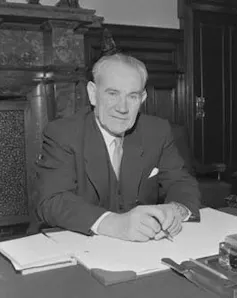
In 1956, poker machines were legalised in NSW for exclusive use in registered clubs. Hotels and pubs were excluded. The bill was introduced by C.A. “Gus” Kelly, Minister for Cooperative Societies, who justified pokies with the blunt claim that Australians loved gambling. This action transformed clubs into powerful gambling venues almost overnight.
This was not framed as a gambling expansion, but as a way to fund clubs beyond beer sales and a means of supporting working-class leisure. It was a politically palatable form of gambling, because clubs were “not for profit”. Beresford shows that this masked the real motivation: it created a dependable revenue stream for clubs and government.
Other states would gradually follow the lead of NSW. By the late 1990s, pokies were legal in all Australian states and territories; only in Western Australia are they confined to casinos.
Ironically, the “not for profit” status of clubs accelerated pokies’ growth. The clubs could not distribute their profits, so the gambling revenue was reinvested in bigger buildings, more machines and more amenities, creating a self-reinforcing cycle. More machines = more revenue = more expansion = more gamblers.
Beresford argues that clubs subordinated their social mission to economic interests, becoming gambling enterprises in all but name. They quickly recognised the political influence they wielded through their large memberships. By the 1960s, NSW clubs had become a powerful political lobby.
Beresford concludes that pokies were imposed on communities, particularly in working-class areas, despite weak public support. Community opposition existed from the beginning. Surveys in the 1950s showed most people opposed pokies. Churches, retailers, women’s groups and some politicians warned of harm. Even many gamblers supported banning the machines.
Policy failures
A key appeal of Hooked lies in Beresford’s talent for compelling storytelling. He brings the political and social history of gambling vividly to life. The book contains stories of criminality and downright underhandedness which, at times, feel as if you are inside the fabricated plot of a crime novel.
Beresford colourfully recounts stories of corruption, guided by a keen eye for detail. These include, for example, an examination of the allegations of bribery and manipulation surrounding the establishment in 1973 of Wrest Point Casino in Hobart. There are stories from NSW of illegal casinos and baccarat schools flourishing under police and political protection. In Queensland, gambling-related corruption was formalised into a system known as “The Joke”, with senior police acting as “bagmen” collecting and distributing bribes from illegal casinos, bookmakers and massage parlours.
Early in Hooked, Beresford asks: “How did clubs grow so big, so unaccountable and so powerful?” In short, the blame is placed on governments and their “gross failure of public policy”. As the various modes of commercial gambling are addressed, the response is invariably the same.
How did online and sports betting operators build and sustain a predatory, profit-at-any-cost business model? Failed public policy.
How did casinos go unchecked for so long, despite allegations of money laundering and, in one case, sex trafficking? Failed public policy.
After harrowing evidence of animal neglect surfaced and prompted an almost immediate industry shutdown, how did NSW greyhound racing get the green light to rebuild and grow to be even more powerful? Failed public policy.
Hooked describes how sports and gambling have become deeply intertwined. Major sport codes, such as the Australian Football League (AFL) and the National Rugby League (NRL), have negotiated substantial commercial agreements with betting companies. How has this happened? Again, failed public policy.
While Hooked is rich in detail, some readers may argue the critique of commercial gambling and government somewhat one-sided. Given the scale of harm documented, however, Beresford’s stance in my view is justified.

One minor criticism (perhaps revealing my own research instincts) is the book’s reliance on media reporting as a primary source. While some original research is acknowledged, much of the work of highly regarded gambling scholars is engaged with indirectly, via media accounts rather than through direct citation. That said, this is likely a deliberate and effective strategy, broadening the book’s appeal well beyond an academic readership.
Hooked provides a faithful and compelling account of how power, unfettered greed and poor policy decisions have enabled gambling’s unhealthy expansion.
The solutions Beresford proposes, such as tighter regulatory controls via a national legislative agenda, total bans on gambling advertising, mandatory pre-commitment systems and banning political donations from gambling companies, have been circling for decades. They are sensible, well evidenced and should not be considered overly optimistic. Changes are needed.
At some point, the presiding governments in every state and territory, along with our national leaders, must accept that it is time to break the chokehold commercial gambling has on this country and relinquish their addiction to gambling taxation. Placing the health and wellbeing of Australians must be at the forefront of much needed (and wanted) gambling reform.
Hooked is essential reading for policymakers, educators and anyone concerned about the intersection of corporate power and social wellbeing. It shines a light on an issue often hidden behind glossy advertising and political spin. It urges Australians to confront the true cost of gambling.
Authors: Louise Francis, Lecturer, Health Promotion, Curtin University
Read more https://theconversation.com/a-billion-dollar-empire-of-harm-how-gambling-took-over-australia-272343


















