

New modelling shows renewable electricity can meet NZ’s future demand – without importing gas
- Written by: Alan Brent, Professor and Chair in Sustainable Energy Systems, Te Herenga Waka — Victoria University of Wellington
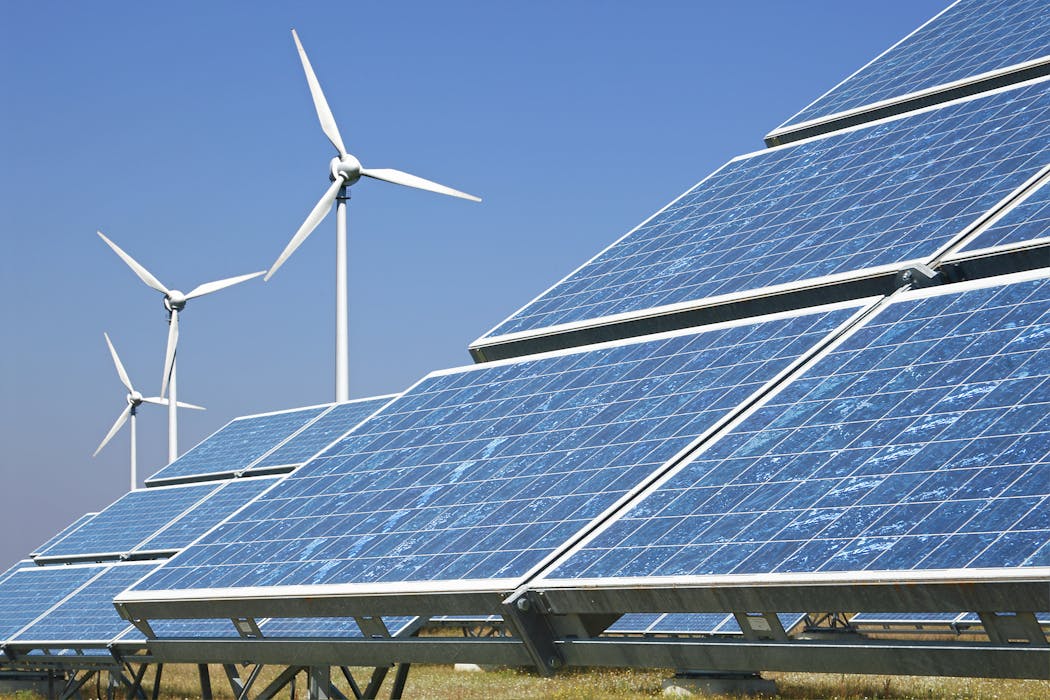
The government’s plan to import liquefied natural gas (LNG) has raised questions about whether this is the best approach to strengthening New Zealand’s energy security, not least because the conflict in Iran highlights price volatility.
Our analysis suggests it is not. And it casts doubt on the logic of imposing a levy on electricity to fund an LNG terminal, which the government expects to be operational in 2028.
That’s because New Zealand also has a goal to achieve 100% renewable electricity generation by 2030, which means it would be unlikely to need gas in the long term.
We examined whether a fully renewable grid could meet growing electricity demand as the economy decarbonises, and whether the system would be sufficiently resilient during dry years – the conditions that led to an energy security crisis in 2024.
We found existing commitments to invest in renewable electricity generation and storage systems to buffer fluctuations in supply could meet, and even exceed, future demand.
As a first step, we modelled the expected annual electricity generation and investment information provided by the Electricity Authority about renewable projects expected to be ready in 2030.
We assumed new solar, wind and geothermal projects would provide generation profiles similar to the assets already on the grid in 2024. We then asked what would be expected from hydropower to stabilise the intermittent generation of the other renewable sources.
We found that without offshore wind, the added renewable capacities would not be enough to meet a high-end scenario of a 34% increase in electricity demand projected by the Ministry of Business, Innovation and Employment.
Demand would exceed the maximum hydropower available (around 5.3 gigawatts) for 474 hours (5%) of the year in 2030. On 28 days (8% of the year), hydro lake reservoirs would reach their minimum levels.
Our model also shows hydro lake reservoirs would deplete at a faster rate during winter in 2030 than they did in 2024, when they reached low levels towards the end of winter. They would also recover faster, however.
But if offshore wind projects are added to the model, it shows New Zealand would need significantly less hydro electricity generation in 2030 compared to 2024.
There would still be instances during winter when demand would exceed maximum hydro power capacity. However, for up to 65% of the year, hydro electricity generation would not be required because other renewables would meet or exceed total demand.
Hydro levels would be kept full for almost the entire year, unlike in 2024.
Storage is crucial
We also modelled the required storage capacity and associated power output for both short-term and long-term needs to stabilise a 100% renewable grid.
Short-term refers to minutes and hours during any energy deficit and is usually covered by battery storage systems.
However, a renewable grid would also require long-term buffers to secure electricity generation for days or weeks, for example during dry years when lake reservoirs are depleted.
This could be achieved through pumped hydro systems, which use excess grid power to pump water to an upper reservoir so it can be released through turbines to generate electricity during high demand.
Since current investment plans for electricity generation don’t include any new hydro projects, our model assumes capacity from hydro generation in 2030 to be similar to 2024.
We found that even without offshore wind, there would be excess energy generated that could be stored and discharged when continuous supply is insufficient.
For the high-end scenario of a 34% increase in electricity demand, we found the maximum short-term power requirements would be 1.45 gigawatts over an hour. That is equivalent to about 15 of the newest commissioned utility-scale battery system at the Ruakākā Energy Park, which have a maximum power output of 100 megawatts.
However, the required long-term storage for normal years (2.58 gigawatts over around 600 hours, or 1.58 terawatt hours) is about a third of the potential requirement during a dry year of 4.5 terawatt hours. This suggests New Zealand would need significant additional long-term storage.
How to keep the power on
New Zealand could avoid power shortages during dry years by combining battery systems with pumped hydro schemes.
For batteries, New Zealand already has a regulatory roadmap in place. For long-term storage, a private consortium has applied for a fast-track consent to revive the scrapped pumped-hydro project at Lake Onslow. This project alone could cover the entire long-term storage needs, or several smaller projects could provide the necessary capacity.
As of February this year, the grid operator Transpower had more than 24 gigawatts of renewable generation and battery energy storage systems in various stages of development. At the end of 2025, nearly 500 megawatts of utility-scale battery projects were underway or scheduled in the next two years.
Our findings echo comments by industry leaders that New Zealand may well be overbuilding capacity. Enough battery capacity will be added to stabilise intermittent generation, and the existing hydro power capacity will cater for long-term storage in a normal year.
For growth in electricity demand beyond 2030, a variety of long-term energy storage technologies such as compressed air energy and advanced flow batteries are expected to become competitive and enter the market.
The government plans to fund the construction of a new LNG terminal through a levy on electricity. Our findings raise the question of why the country would put a levy on power to pay for infrastructure that in all likelihood the electricity sector won’t actually need.
Authors: Alan Brent, Professor and Chair in Sustainable Energy Systems, Te Herenga Waka — Victoria University of Wellington


















