

Modern Australian
The Times

In Trump’s precarious world, NZ will need all the middle-sized friends it can get

  • Written by Nicholas Ross Smith, Senior Research Fellow, National Centre for Research on Europe, University of Canterbury

When a local political commentator recently suggested (partly tongue-in-cheek) that New Zealand might respond to US President Donald Trump’s new world order by becoming the seventh state of Australia, it was dismissed by the prime minister and most political leaders.

But the fact their views were even sought shows how far the debate has moved since Trump began dismantling the old rules-based international order New Zealand has long considered the basis of its foreign policy.

At January’s World Economic Forum in Davos and more recently in his address to the Australian parliament, Canadian Prime Minister Mark Carney laid down a challenge for other “middle powers” to start finding practical solutions to the new global realities.

Carney’s clarion call matters also for smaller powers uneasy about the United States under Trump and rising great-power disorder. New Zealand, with its long-held preference for multiple alliances and foreign policy independence, is likely a keen ally in such a middle-power movement.

Yet the hard part remains: how can middle and smaller powers effectively work together when still mostly reliant on great powers for security, trade and technology?

The technological dimension, in particular, makes middle power cooperation harder today. Modern states are existentially dependent on semiconductors, AI systems, 5G infrastructure and cloud computing – technologies produced overwhelmingly by the two “technopoles” of the US and China.
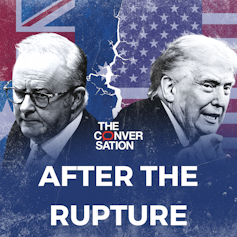
In Trump’s precarious world, NZ will need all the middle-sized friends it can get
The world order has “ruptured”, Canadian Prime Minister Mark Carney has warned – so it’s time for countries like Australia and New Zealand to forge a new, less US-reliant future. In this new series, we’ve asked top experts to explain what that future could look like – and the challenges that lie ahead. Finding a ‘workaround’ In a forthcoming collection of essays about how middle powers might cooperate on vital technology in this turbulent world, the concept of “workarounding” describes how countries can pursue strategic objectives collectively, without routing everything through Washington or Beijing. For New Zealand, technology is already an area of real foreign policy concern. Military interoperability with Australia – a key driver behind potentially joining AUKUS Pillar Two – is a sticking point. More broadly, New Zealand risks being left behind in the AI revolution. The Indo-Pacific region, however, offers promising workaround partners. Beyond Australia – New Zealand’s oldest friend and only formal ally – there is a growing cluster of tech middle powers with which Wellington has positive relationships: India, South Korea and several key ASEAN states. India produces the world’s highest number of IT graduates, runs ambitious semiconductor and quantum computing programs, and maintains multiple alliances that allow it to resist being absorbed into either great power orbit. New Zealand’s relationship with India is burgeoning with the announcement at the end of 2025 of a free trade agreement. New Zealand also has a trade agreement with South Korea, and both countries are part of the Indo-Pacific Four group (with Australia and Japan). Home to Samsung, Hyundai and LG, South Korea is often heralded as the most successful tech middle power and occupies an important position in critical international tech supply chains. The ASEAN bloc – driven by key member states – also has a deep institutional instinct for hedging between great powers, and contains five major tech economies: Singapore, Indonesia, Malaysia, Thailand and Vietnam. New Zealand has strong relationships with ASEAN, including a trade agreement and a Comprehensive Strategic Partnership. The problem is that Australia, India, South Korea and ASEAN all face their own tech dependency constraints, and the group lacks a technologically capable anchor outside the US-China duopoly. Europe as a way forward A third party may be able to fill that anchor role – the European Union (EU). While it remains an imperfect geopolitical actor, long derided for being a hobbled giant or a geopolitical sleepwalker, the EU is still a potential ally to middle powers. That’s because it is not a conventional state and does not have the military capabilities of great powers. This forces it to take a multilateral and multi-stakeholder approach to geopolitics. Importantly, the EU has significant and growing technological weight, most clearly expressed in its regulatory frameworks. Its General Data Privacy Regulation has established a global data governance template that neither Washington nor Beijing can match. Such rules shape how data flows, how AI is governed and how digital markets are structured globally. The EU is also moving decisively into hardware to complement its regulatory power. The 2023 European Chips Act mobilises over €43 billion (A$70 billion) to double Europe’s share of global semiconductor production, spurred by the building of a semiconductor plant in Dresden. Dutch multinational ASML’s near-monopoly on crucial semiconductor manufacturing machines gives Europe genuine structural leverage over global chip supply chains. Furthermore, during the second Trump presidency, the EU has moved quickly to improve its strategic autonomy, as well as deepen its Indo-Pacific presence. It is building trade relationships and positioning European tech companies as alternatives to US and Chinese providers. New Zealand’s relationship with the EU is at an all-time high since a free trade agreement came into force in 2024. And there is significant convergence on how both view the Indo-Pacific. The NZ-EU trade agreement includes a dedicated digital trade chapter, and the inaugural trade committee meeting in October 2025 flagged cooperation on digital technologies and critical minerals as priorities. Carney was right about the old “fiction” being over. The task now for smaller powers such as New Zealand is not to mourn it, but to help construct something more durable in its place. This is a networked middle-power order built on shared standards, supply chain resilience and strategic diversification.

Authors: Nicholas Ross Smith, Senior Research Fellow, National Centre for Research on Europe, University of Canterbury


Read more https://theconversation.com/in-trumps-precarious-world-nz-will-need-all-the-middle-sized-friends-it-can-get-276391

How Business Advisory Services Help Companies Achieve Sustainable Growth

Every business owner aims to build a profitable and sustainable organisation. While dedication, innovation, and hard work are important, achieving l...

Why Body Contouring Has Become A Popular Cosmetic Treatment

Many people maintain healthy lifestyles through regular exercise and balanced eating habits but still struggle with stubborn areas of fat that are dif...

How to Choose the Right POS Hardware for Your Business in Australia

A lot of Australian business owners spend weeks researching POS software but buy hardware almost as an afterthought. That's a mistake. The wrong har...

Why Material Handling Hose Is Critical for Industrial Efficiency

A high-performance material handling hose is an essential component in industries that transport abrasive, dry, or bulk materials on a daily basis...

How to Choose the Right Lawyer in Melbourne for Your Situation

Choosing legal support can feel difficult, especially when the stakes are personal or business-related. The right lawyer in Melbourne should underst...

Hoteliers Look to Clever Value Adds to Increase Revenue

The Australian hospitality industry is still in recovery mode after a notoriously rough patch in recent years. While there has been a post-COVID tra...

Moving to Queensland? Here’s How to Prep Your Car for the Big Move North

There’s no sign of the northern migration slowing down, with thousands of southerners fleeing from chaotic lifestyles and cooler climates for a brig...

Diesel Shortage to Impact Trades and Contractors

Strait of Hormuz blockage affecting all major parts of trades and construction Trades and construction across residential, commercial and industria...

Why Holiday Home Owners Turn to Rental Management Agents

The Allure — and the Reality — of Renting Out Your Property Owning a holiday home is a dream for many Australians. Whether it's a beachside sha...

Why Finding Reliable Doctors In Bundoora Is Important For Long-Term Health

Access to quality healthcare plays an important role in maintaining overall wellbeing and managing health concerns early. Trusted Doctors in Bundoor...

Understanding the Different Types of Car Services: Minor vs Major

When it comes to car maintenance, one of the most important things every vehicle owner should understand is the difference between a minor and a maj...

How Superannuation and TPD Insurance Work Together

Superannuation is an essential part of financial planning in Australia. It is designed to provide individuals with income during retirement, helping...

Tiny Towns funding granted for Mt Hotham and Mt Buller upgrades

Alpine Resorts Victoria (ARV) has welcomed funding support from the Victorian Government’s  Tiny Towns Fund, with both Mt Hotham and Mt Buller se...

Locksmith Services: Why Professional Security Solutions Matter More Than Ever

Security is a critical concern for homeowners, businesses, and vehicle owners alike. Whether it involves protecting a property, replacing damaged lo...

Why Tooth Fillings Are Important For Protecting Damaged Teeth

Cavities and minor tooth damage are common dental problems that can worsen if left untreated. Professional tooth fillings help restore damaged teeth, ...

The Connection Between Visibility and Driver Confidence

Operating a vehicle safely requires an immediate, uncompromised stream of visual information from the surrounding road environment. A driver's decis...

Important Things To Know Before Starting An SMSF Setup

Planning for retirement requires careful financial decisions, and many Australians are now looking for more direct control over how their superannua...

Why Retail Cleaning Plays a Key Role in Customer Experience and Business Success

Professional retail cleaning services are an essential part of maintaining a welcoming, safe, and professional environment for customers and staff...















