

Seeing the same midwife or doctor in pregnancy and labour reduces the risk of birth trauma
- Written by Hannah Dahlen, Professor of Midwifery, Associate Dean Research and HDR, Midwifery Discipline Leader, Western Sydney University
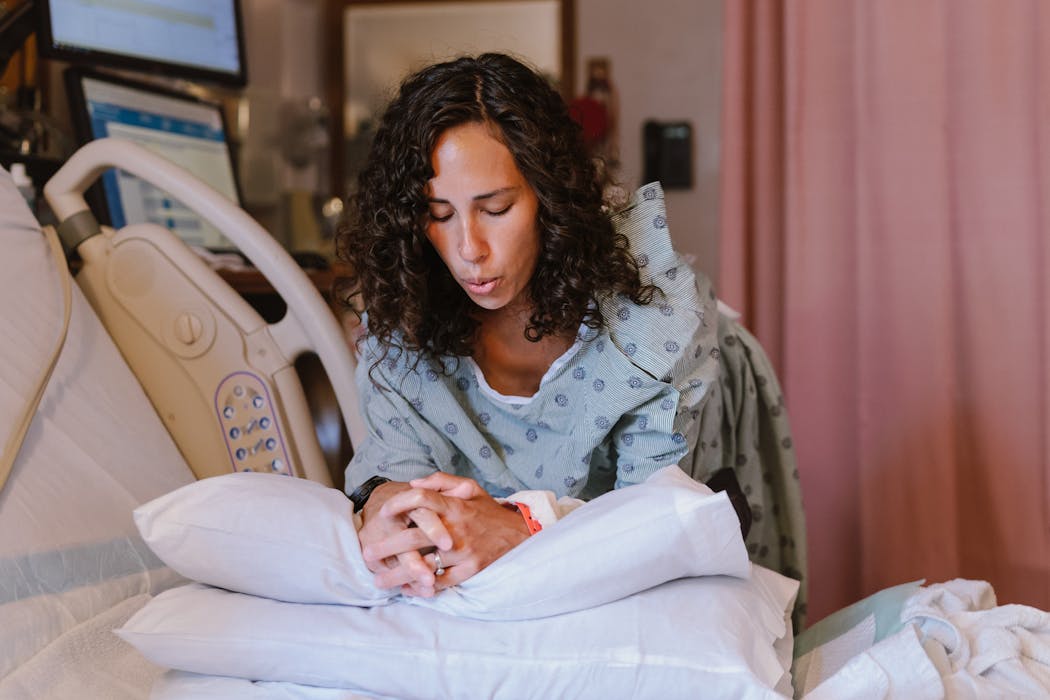
Every pregnant woman wants to deliver a healthy baby. During labour and birth, women also want to feel listened to and respected, and to come out of the experience physically and emotionally well.
But around 28% of Australian women describe their most recent birth as traumatic.
Birth trauma can include fear for their life or their baby’s life, a loss of control, damage to the perineum or pelvic floor, disrespectful care, or mistreatment from health care providers.
Our new research paper examined birth outcomes and both physical and psychological experiences of women and babies who experienced five different types (or models) of care in Australia during the COVID pandemic.
We found that seeing the same midwife or team of midwives was associated with lower rates of intervention and birth trauma, compared with standard care.
And for some women, private obstetric care also led to lower rates of birth trauma than standard care in the public system. Let’s take a look.
Five main models of care
Most Australian women receive standard public care or GP shared care.
In standard public care, women see rotating hospital staff (midwives, obstetricians and at times, trainees) throughout pregnancy and often give birth with a midwife or doctor they’ve never met.
GP shared care is when there is an arrangement between a GP and hospital. Women see their GP most during pregnancy and hospital staff for some antenatal appointments. The GP doesn’t usually attend the birth, except in some rural, remote regions.
In continuity of care models, one or a small number of midwives and obstetricians deliver the majority of the care before, during and after birth. This includes continuity of:
- midwifery care in the public system
- private obstetric care
- private midwifery care.
When given a choice, women favour continuity of care models.
What our study found
Our study looked at the experiences of 3,682 Australian women who gave birth in 2020 and 2021.
Compared to women who had standard care, we found that those who had continuity of midwifery care (through the public system or a private midwife) were:
- less likely to be induced or have an oxytocin drip to speed up labour
- much more likely to have a vaginal birth
- more likely to have the midwife visit them at home after the birth
- less likely to have a caesarean section
- less likely to have their baby admitted to special or neonatal intensive care or receive formula in hospital when they had chosen to breastfeed
- half as likely to describe their birth as traumatic.
These differences were seen even after adjusting for differences in the groups that could affect outcomes, such as women’s age, medical risk, education, employment status, country of birth, income and mental health.
These findings line up with decades of evidence. A 2024 Cochrane review of 17 randomised controlled trials found midwifery continuity of care models reduce some birth interventions, including caesarean section, forceps and vacuum birth, and episiotomy (surgical cut to the perineum).
Our study also found that while women who had private obstetric care had higher rates of birth intervention, they had lower rates of birth trauma when compared to standard care. There was no difference in outcomes for the baby, such as admission to special care or neonatal intensive care.
This suggests when women’s choices align with their care provider’s philosophy, outcomes are better – even if intervention levels are higher. Some women seek, or are not concerned about, increased obstetric intervention. Continuity itself, regardless of who the lead health care professional is, reduces birth trauma.
What are the study’s limitations?
As with any study there are limitations. This study relied on women reporting their labour and birth outcomes, so there could be difficulties with recall that affected reporting of some health risks and other important information.
A high proportion of women responding (86%) were born in Australia and spoke English at home (92%) and only 2% were Aboriginal or Torres Strait Islander, meaning the diversity of the Australian population is not represented.
We did not examine stillbirth or neonatal deaths as all the women responding to the survey had a live baby. So people still could have had those experiences but they weren’t captured in our data.
Why does continuity of care make a difference?
Continuity gives women a stable, familiar guide who knows their story, understands their concerns and advocates for them when the system is under strain.
It also allows for the kind of personalised care women consistently say they want and which midwives wish they could deliver more often.
Nearly half of all models of care (49%) have a midwife as the designated carer, with 16% having midwifery continuity of care throughout the maternity period.
However, midwifery continuity of care models are more common in urban centres and can be harder to access in rural and remote areas. Even in urban centres, not everyone who wants to access them can. The popularity of these programs means they fill up fast and many women miss out if they don’t book in when they are first pregnant.
Private obstetric and private midwifery models of care come with out of pocket costs and are not available everywhere. There are few private midwives and many struggle to get admitting rights into hospitals like doctors have.
The recent New South Wales Birth Trauma Inquiry recommended expanding continuity of care models to help reduce the high rates of birth trauma in Australia. Our study shows that this could make a significant difference.
Authors: Hannah Dahlen, Professor of Midwifery, Associate Dean Research and HDR, Midwifery Discipline Leader, Western Sydney University

















