

Why exposing young children to AI content could have irreversible consequences
- Written by Sarah Whitcombe-Dobbs, Senior Lecturer in Child and Family Psychology, University of Canterbury
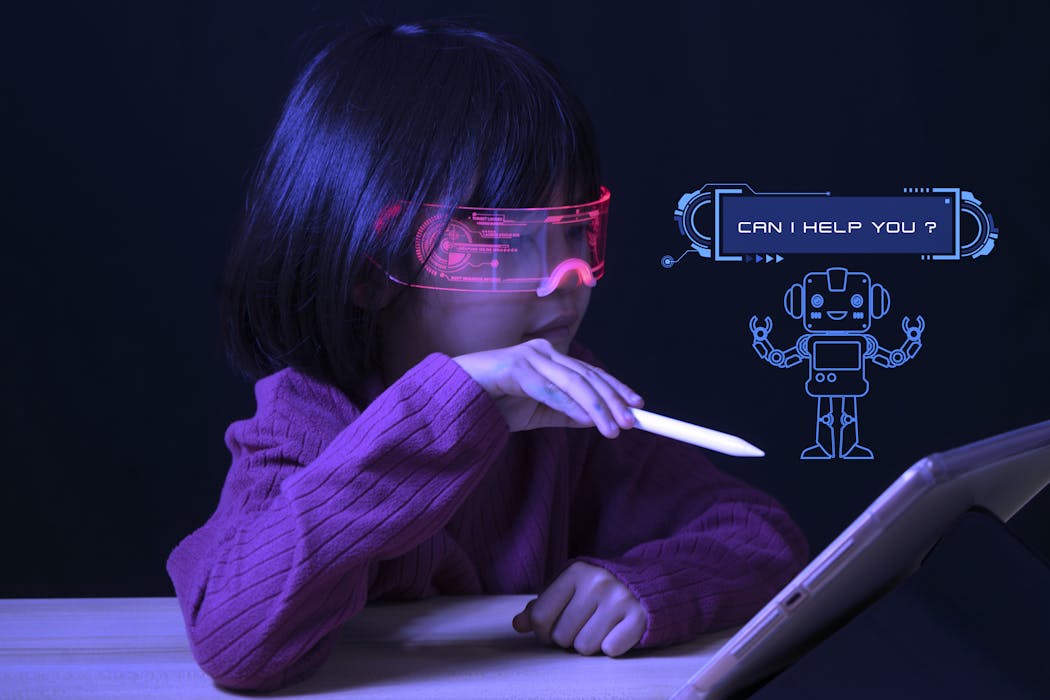
Artificial intelligence (AI) already affects many areas of daily life, including the lives of young children.
Many families give screens to children younger than two, and AI-generated content is increasing on the popular YouTube Kids channel – and it plays automatically.
Most parents are not able to monitor everything their child sees online. Some AI-generated content can be both frightening and attractive to young children, including violence and sexual content using engaging animals and characters.
Early childhood education centres are also using AI to support learning, particularly for children with developmental differences. This includes those who do not learn to speak easily or who have other communication problems related to autism or intellectual disability.
In the US, many parents report their children are using AI for school work. The encouragement for early childhood centres, schools and parents to use AI with children is based on short-term studies, but the long-term impacts are unknown.
The only way to know how AI may affect young children would be through well-designed longitudinal studies. But by the time robust evidence emerged, a whole generation would have grown up exposed – and if there are indeed harmful effects, these may be irreversible.
There are already some alarm bells ringing over AI’s potential impact.
New Zealand research shows high use of screens during early childhood is associated with poor language, social and relational functioning.
Many children love to use screens, and AI is likely to be similarly rewarding because AI models are endlessly patient and instantly responsive to the topics of your choosing and do not seem to demand anything.
Human development during early childhood
Like all mammals, human infants are bound by biological processes and have evolved to develop in social groups in close physical connection with others. Everything we know about child development highlights the importance of face-to-face connection.
Children learn about themselves and the world through all their senses. They learn to communicate through “serve-and-return” interactions – responsive, back-and-forth exchanges between them and their caregiver. This includes physical touch, emotion and play. Collectively, these interactions help shape brain architecture.
Based on their experiences during the first few years of life, children form models, or templates, of how intimate relationships work. These relational templates endure throughout their lives and influence close relationships in adulthood.
Children also learn about emotional regulation, seeking and receiving comfort and conflict resolution during the preschool years. All the while, their brains are forming, with foundational structures that require good experiences to function well throughout life.
We do not yet know what the impact will be on children’s capacity for human relationships if they are exposed to AI while their physiological, neurological and emotional regulatory systems are developing. It is unclear how longer-term AI exposure may affect children’s understanding of other people and their development of empathy.
Normal social interactions in childhood include conflict, negotiation, resolution and play with other children. These interactions involve non-verbal communication, risk estimation, relational repair and decision making.
It’s unclear how instantly responsive and engaging AI will affect these aspects of childhood. It is possible that children experiencing many AI-mediated social interactions may find it more difficult to navigate real-world relationships, especially when there is conflict.
It is also possible that children will develop a preference for AI engagement over real-life engagement with family or friends.
Young children find it harder to distinguish fantasy from reality. This quality is delightful for adults and children alike, involving imaginary play, silliness and amusement. Yet AI-generated fantasy may be persuasive to an overwhelming degree, potentially leading to children being confused about reality and the consciousness of others.
Potential for both harm and help
If infants and children don’t have sufficient real-world experiences, their emerging cognitive capacities for detecting reality and interpreting sensory inputs may be affected.
There is much excitement about the potential for AI-assisted tools to aid children with disabilities in their development of social communication. This seems likely to have benefits such as earlier detection of neuro-developmental differences. There may also be risks if these interventions replace real-life interactions with other children and adults.
What will be the daily experiences for children with extra learning needs? Parents may be happy with AI-enhanced learning, but less happy if this is provided in lieu of a real teacher aide.
The introduction of AI seems inevitable and it is already affecting our children. We know that connection, touch, reciprocal and language-rich environments, and unstructured play are important during early childhood development.
To adopt AI into our children’s spaces without knowing the consequences is an experiment with outcomes that may not be reversible. Given the uncertainty, families should at least have the freedom to choose an AI-free environment for their children.
Authors: Sarah Whitcombe-Dobbs, Senior Lecturer in Child and Family Psychology, University of Canterbury

















