

why NZ’s car dependence is now a strategic liability
- Written by: Timothy Welch, Senior Lecturer in Urban Planning, University of Auckland, Waipapa Taumata Rau
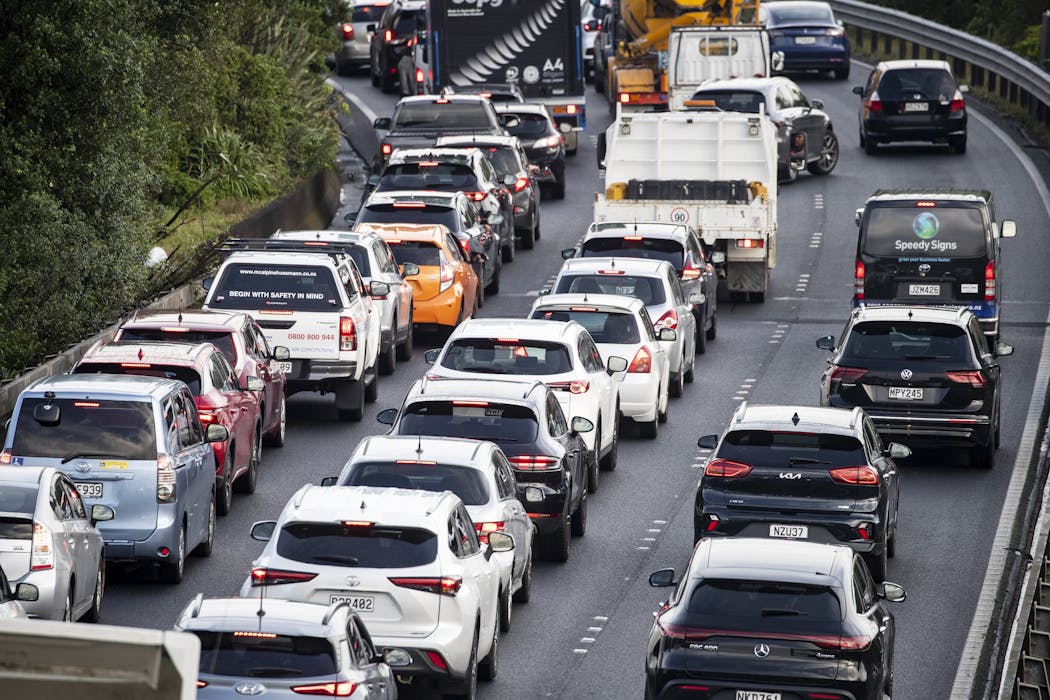
The war in Iran and the effective closure of the Strait of Hormuz have sent oil prices past US$100 a barrel – and Kiwis flocking to fill up. Petrol just hit NZ$3 a litre and some stations have reported running dry.
In response to about 20% of the world’s oil supply being shut off in just a few days, the International Energy Agency announced its largest-ever coordinated reserve release of 400 million barrels. But analysts warn oil could reach US$150 a barrel if the strait stays closed.
For a country that imports every drop of its petrol, diesel and jet fuel, this is not only a problem, it’s a hard reminder New Zealand has failed to mitigate such strategic vulnerability.
Since Marsden Point stopped refining oil in 2022, New Zealand has imported all its refined fuel, mostly from South Korea and Singapore. Those refineries rely on crude oil shipped through the waters now blocked by Iranian drones.
The latest official fuel stocks update suggests roughly 52 days of total cover, with less than 33 days of petrol in the country. This buffer was only designed to smooth over short disruptions, not substitute for a prolonged supply crisis.
Motorists are already starting to hoard supplies, with petrol stations in Auckland already selling out of fuel cans. Some drivers may well be regretting not having bought an electric vehicle earlier.
Failure to electrify
New Zealand generates more than 85% of its electricity from renewable sources – rising to a record 96.4% in the last quarter of 2025. It has one of the cleanest and most oil-independent electricity systems in the world.
Yet transport, which consumes nearly 40% of all energy in the country, remains almost entirely chained to imported oil. Electricity provides just 0.5% of domestic transport energy. It didn’t have to be that way.
For all its imperfections, the Clean Car Discount scheme started in 2021 was shifting the needle. Over its life, the scheme put 192,000 rebates into the hands of New Zealanders buying cleaner vehicles.
The scheme cost $634 million, leaned on government grants to stay afloat, and had real affordability gaps. But it was doing one thing very well: bringing in more cars with less petrol dependence.
EV fleet growth exceeded 50% per year while the scheme operated. When the current government killed it at the end of 2023, that growth collapsed to under 10%. The government is now reportedly considering scrapping the Clean Car Standard, the remaining incentive for importing lower fossil fuel-consuming vehicles.
Unaffordable road projects
The reversal of alternatives to petrol goes further. The government withdrew funding for Auckland’s under-25 and children’s fares on public transport. The Transport Choices program, which funded walking, cycling and bus improvements across the country, was frozen and then effectively killed.
Planned light rail for Auckland was cancelled. And the walking and cycling component of a second Auckland Harbour crossing was stripped out, leaving only plans for more car lanes.
Nationally, walking and cycling improvements received roughly $391 million in the current National Land Transport Plan, about 1.7% of the fund, while state highway improvements got $6.18 billion.
Seventeen mega-highway projects – the Roads of National Significance – carry an estimated cost of between $44 billion and $56 billion, a figure that keeps climbing. Treasury has warned the National Land Transport Fund can cover just under half of the overall projected $120 billion investment pipeline.
Seven of the first eight of those highway projects did not have completed business cases when funding decisions were being made. In mid-February, the Infrastructure Commission called the program unaffordable. Ten days later, the US and Israel attacked Iran.
Never too late
Every decade brings an oil shock. Each time, New Zealand could have used the crisis to create policies and plans to wean itself off over-reliance on petrol. Instead, it has waited for prices to settle and gone back to building roads and buying petrol cars.
The country now owns 815 light vehicles for every 1,000 people, one of the highest rates in the world. Road transport emissions have grown 82% since 1990.
New Zealand still has a choice, however. It already powers lights, hospitals and factories with renewable electricity. It could have powered a diverse transport system the same way, and it still can.
Every bus electrified, every cycleway built, every train funded is a direct reduction in exposure to the next crisis. The question now is whether New Zealanders begin to treat their car dependence not as a lifestyle choice but as a strategic liability.
Authors: Timothy Welch, Senior Lecturer in Urban Planning, University of Auckland, Waipapa Taumata Rau


















