

why NZ’s oil consumption is at a 5-year high
- Written by Robert McLachlan, Professor in Applied Mathematics, Te Kunenga ki Pūrehuroa – Massey University
New Zealand’s latest quarterly energy report shows electricity production was above 90% renewable and emissions from generation fell to the lowest level on record.
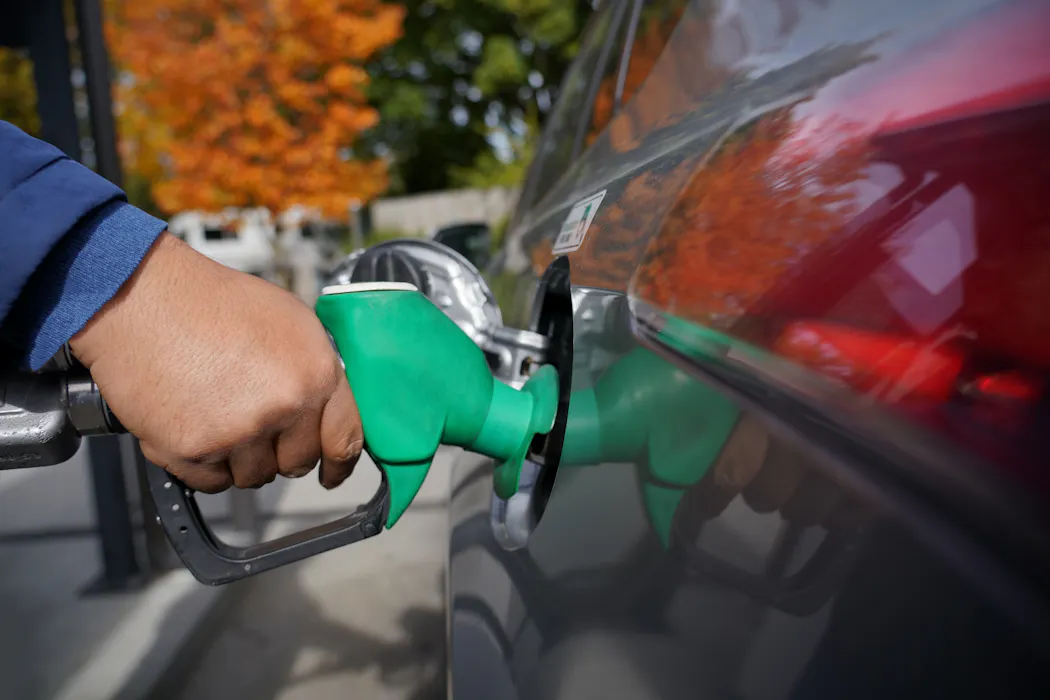
But it also shows New Zealand’s oil consumption, which had fallen markedly after the COVID pandemic, has crept back up to reach its highest quarterly level in five years.
Oil now comprises its highest quarterly share of New Zealand’s overall energy emissions on record.
Of the total carbon emissions from the burning of fossil fuels, 77% were from oil (mostly used for transport), 12% from industrial and domestic gas usage, 6% from coal, and just 5% from electricity generation.
Developing a coordinated energy strategy to reduce oil dependence would not only provide an effective climate response, but also protect New Zealand from recurring oil price and supply shocks.
The previous government had committed to a comprehensive strategy to transition to a renewable energy system in New Zealand’s first emissions reduction plan in 2022.
But the current government’s focus has shifted on energy security and it aims to boost energy supply by importing liquefied natural gas.
Missed opportunities to reduce oil dependence
Parts of New Zealand’s economy, particularly inflation and tourism, remain strongly linked to the price of oil.
During two previous periods of high oil prices, New Zealand missed the chance to weaken the country’s dependence on oil.
The 1978 oil shock was a severe hit to the economy; New Zealand’s oil consumption did not recover to its previous level until 1990.
The soaring oil prices hit New Zealand at a time of extensive government control of the economy under the National government of Robert Muldoon, whose “Think Big” strategy included building an experimental plant to produce petrol from natural gas.
This was intended to build energy independence, but unfortunately it proved to be costly and ineffective.
The 2008 financial crisis also involved extreme oil price spikes and a prolonged recession. Oil consumption did not recover until 2015. One planned response was to introduce fuel economy standards for new cars – a form of regulation already in place in most OECD countries.
Had these standards been put in place and gradually strengthened over time, New Zealand would now be in a much better place, with less pollution and less economic dependence on oil.
However, a change in government in late 2008 led to the cancellation of the planned standards. New Zealand now uses nearly twice as much transport oil per capita as the UK, where such standards have been in place since 2001.
New law changed NZ’s trajectory
The Climate Change Response (Zero Carbon) Amendment Act of 2019 was a turning point. Before that, total fossil fuel emissions were flat or trending up. Afterwards, a wave of investments in renewable electricity, in the decarbonisation of industry and in low-emission transport turned the trend around.
This was perhaps not just due to the specifics of the act, which includes five-yearly carbon budgets, but to strong pro-climate signalling from the government of the day.
A critical mass of society, from car buyers and dealers to New Zealand’s biggest companies, were investing to take steps away from fossil fuels.
Under the current government, both messaging and policy have changed. As Climate Change Minister Simon Watts has repeatedly stressed, New Zealand’s main climate tool is now the emissions trading scheme (ETS). However, this now covers only 35% of net emissions and is not an effective way to reduce oil use.
At the current price of NZ$40 per tonne of carbon dioxide emissions, the ETS adds only nine cents per litre to the price of petrol. Given New Zealand’s high car dependency, this has virtually no effect on existing drivers or on car buyers.
How to cut oil use in transport
In New Zealand, 80% of oil goes into air and land transport. An oil transition plan really means a transport plan.
There is a known way to turn off the tap on oil. The “avoid, shift, improve” framework is supported by three decades of experience.
Changing work patterns such as shorter work weeks and working-from-home arrangements can help avoid unnecessary travel. Better infrastructure for walking and cycling and public transport helps to shift transport and dramatically reduce oil use.
The remaining private vehicle travel can be improved through electrification. This requires a combination of incentives and stronger emissions standards, as the International Energy Agency reinforced this week.
At present, New Zealand is still moving in the wrong direction. Over the past decade, the total distance driven by light vehicles increased by 20%, while the distance driven by utility vehicles is up 55%.
Each utility vehicle has 50% higher carbon emissions than a (fossil-fueled) passenger car. These trends have outweighed the improvements from the rise of hybrid and electric vehicles.
There is a limit to how quickly New Zealand’s fleet can realistically be electrified. For a country with the world’s highest rate of car ownership, mass purchasing of new cars is not a good transport solution by itself.
But in any event, phasing out fossil fuels is required for a safe future and should happen in ways that build energy resilience and independence.
Authors: Robert McLachlan, Professor in Applied Mathematics, Te Kunenga ki Pūrehuroa – Massey University

















