

will NZ choose to import risk or build cleaner resilience?
- Written by Jen Purdie, Senior Research Fellow, Centre for Sustainability, University of Otago
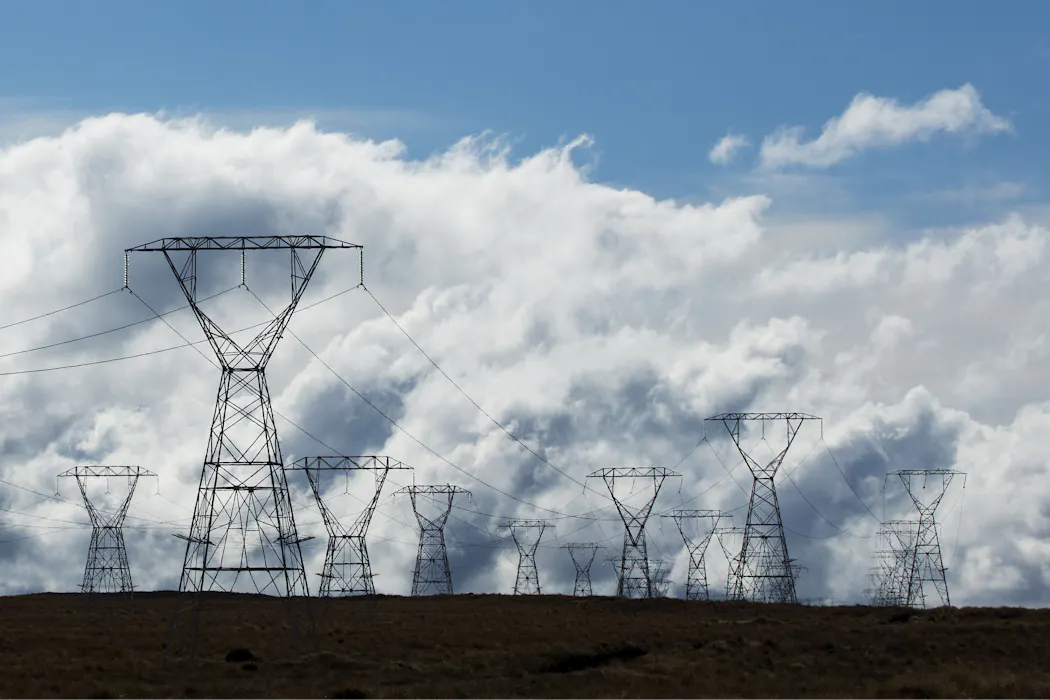
As the escalating US-Israel war on Iran drives a global fuel supply crisis, New Zealand is eyeing two major – and very different – projects aimed at bolstering its long-term energy security.
While one risks deepening the country’s reliance on the very fossil fuel systems now in turmoil, the other offers a more sustainable alternative.
In February, the government announced plans to develop a liquid natural gas (LNG) import terminal, likely in Taranaki, under its fast-track process.
This would replace New Zealand’s dwindling natural gas supplies, act as a backstop for dry-year electricity shortages and help stabilise power prices.
But it has now been reported that ministers may now be reconsidering the project, as surging global gas prices due to the Middle East conflict undermine its economic case.
Meanwhile, the government last week referred another major energy project to its fast-track consenting panel: a pumped hydro scheme at Central Otago’s Lake Onslow.
Once a government-led initiative, the project is now being steered by a private consortium chaired by former Meridian Energy chief executive and Transpower chairperson Keith Turner.
It would store excess water in a high storage lake when it is plentiful and release it to generate electricity when the hydro lakes are dry, acting as a “battery” to shore up intermittent renewable electricity.
As New Zealand seeks to establish a resilient energy system for the decades ahead, while meeting its climate change commitments, the contrast between these two schemes is hard to ignore.
The follies of fossil fuels
The latest oil shock is forcing countries to confront the fragility of global fuel supply chains – and the risks of relying on them.
Building renewable energy is increasingly being viewed as a path to energy independence. After Russia’s 2022 invasion of Ukraine disrupted gas supplies, Europe accelerated its shift away from imported gas, and the current rising global fuel costs are rapidly increasing the uptake of electric vehicles.
At the same time, the urgency of cutting fossil fuel use has become existentially important, as rising global temperatures drive more frequent storms, floods, wildfires and sea-level rise.
Only 4% of New Zealand’s emissions come from its largely renewable electricity system, while 34% come from transport and industrial heat. Electrifying these sectors would cut both emissions and reliance on imported fuels, helping align with the Paris Agreement’s goal of limiting global warming to 1.5°C above pre-industrial levels.
But electrification will increase demand for renewable electricity. And because wind and solar are variable, the system still needs backup when renewable generation is too low.
Two projects, two paths
Under the government’s terminal proposal, LNG would be imported to shore up dwindling gas supplies, with domestic production having declined over the past decade.
But the proposal cuts against both climate and cost goals. Although gas is meant to produce lower emissions than coal, transporting it around the world can result in higher total greenhouse gas emissions than coal, while leaving New Zealand exposed to volatile international markets.
That concern was echoed in a government-commissioned report by Frontier Economics, which found LNG imports for dry-year risk made “no economic sense”.
LNG is a costly way to generate electricity: around NZ$200–$250 per megawatt-hour (MWh) of power produced, without the cost of the terminal. By comparison, the fully loaded cost of domestic gas-fired power is roughly $125/MWh.
The terminal itself is expected to cost more than $1 billion, with those costs likely passed on to consumers through a levy. Subsidising the terminal risks undermining the commercial viability of cheaper renewable options.
In addition to this, opening an expensive LNG “portal” could incentivise new gas-reliant industries, locking in demand for this imported fossil fuel for decades.
By contrast, pumped hydro is a renewable alternative for shoring up intermittent electricity supply.
In a very dry winter, New Zealand can be short of around 5 terawatt-hours (TWh) of water for electricity generation – or about 12% of total annual demand.
The proposed Lake Onslow project is also not without its drawbacks. One is that it would raise the existing lake by around 20 to 50 metres.
This would have impacts on wetlands and native fish species, and environmental groups have noted the trade-off between local environmental effects and the wider climate benefits.
Bridging the gap
The Onslow scheme will take at least four years to build. But in the meantime, New Zealand has other firming options available to help bridge the gap.
Geothermal generation could be maximised, the Huntly power station can run on wood pellets, and coal and diesel generation could be retained as temporary backup during dry or high demand periods.
The main hydro lakes could also be given slightly more range, and electrified coal boilers could be retained for occasional use.
Demand response – where electricity use is reduced or shifted at peak times – is already being used in New Zealand. But this could be expanded, with large industries cutting output or households reducing demand, such as turning off hot water heating during the brief evening peaks.
Access to vehicle-to-grid battery systems could also be accelerated with government support.
If the crises facing our climate and fuel supplies point to a single message, it’s that energy resilience lies in reducing dependence on imported fossil fuels.
New Zealand has an opportunity to do so by incentivising electrification, facilitating temporary electricity firming, halting plans for the LNG terminal and pushing ahead with the Lake Onslow proposal.
Authors: Jen Purdie, Senior Research Fellow, Centre for Sustainability, University of Otago

















