

why the glory days of April Fools gags are over
- Written by Phoebe Hart, Associate Professor, Film Screen & Animation, Queensland University of Technology
April Fools’ Day is a funny one. Developed over centuries, it’s a tradition that gives people the permission to prank. Some leg-pulls are delightful – while others can cause distress and damage, especially if they’re rolled out on a large scale.
There’s a fine line between jokes that charm and those that harm. This overstep, especially in regard to the media and politics, warrants close attention.
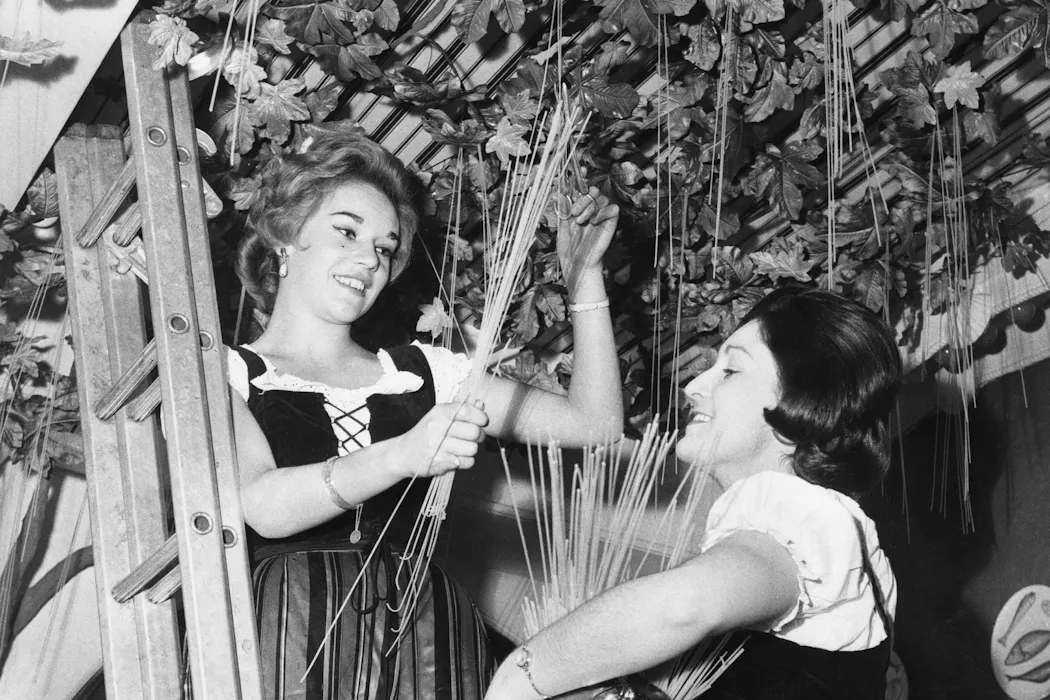
A cheeky pasta prank
Historians conjecture the mischief most likely began in earnest in the 1500s in France, when the Julian calendar – which started the year on April 1 – was replaced by the Gregorian calendar we use today.
But not everyone got the memo; those who continued to celebrate the new year on April 1 were branded “April fools”, and were often sent on fools’ errands. Some examples, according to folklorist Nancy Cassell McEntire, include being sent for:
a left-handed screwdriver or wrench, a board-stretcher, a stick with one end, a bucket of striped paint, a bucket of steam, pigeon milk, a jar of elbow grease […] or a fallopian tube.
There was often a subversive edge to the hoaxes, which grew in scale over time.
Fast forward to the 20th century and the advent of broadcast media. Industry and governments began to hold advertisers, television and journalists accountable for dishonesty and deception.
Even so, respectable media organisations joined in on the condoned capers offered by April Fools’ Day. The BBC was famous for its ornate hoaxes, which borrowed the conventions of conventional reportage to pull the wool over viewers’ eyes.
One classic example was the “spaghetti harvest” segment broadcast on the channel’s current affairs show, Panorama, in 1957. The three-minute bit claimed to show Swiss farmers plucking pasta directly from trees.
It’s thought to be the first April Fools prank ever pulled on TV.
When the Opera House was sinking
In Australia, institutions such as the Australian Broadcasting Commission (now Corporation) also began a lighthearted tradition of fooling the public on the first day of April.
The ABC’s flagship current affairs program, This Day Tonight (1967–78), reported on serious issues every other night of the year (although it also ran satirical content).
But in 1970, the April 1 program included a fishy report on a new invention called the “Dial-O-Fish” – a device guaranteed to aid even the most inept angler.
A few April Fools’ later came the bogus story on how the iconic Sydney Opera House, which opened in 1973, was sinking into the harbour. There were shots of divers inspecting the foundations underwater; it was convincing.
Then, in 1975, the program announced Australia would soon be converting to “metric time” following on from the introduction of metric currency in 1966. According to an ABC report, “under the new system there would be 100 seconds to the minute, 100 minutes to the hour, and 20-hour days”.
The segment featured shots of Adelaide Town Hall with a new ten-hour clockface. South Australian Deputy Premier Des Corcoran took part in the prank by heartily supporting the change on camera.
Audiences were divided. Many called the station. Some were amused, while others upset. More than a few were confused.
Importantly, these jokes were psychologically benign – and the reveal came quickly before any real damage was done.
Routine April Fools’ Day ruses still occur on television breakfast shows, commercial radio and in advertising – but news broadcasters walk a trickier tightrope.
No longer laughing along
The key difference before and after the digital revolution is how production, platforms and audiences have transformed.
Broadcast news audiences used to be large and trusting. Millions gathered in front of television and radio sets every evening and believed most of what they saw and heard.
Now, when everyone and anyone has the means to film and publish a story on their mobile phone, audiences are fractured and suspicious. News is suffering a crisis of confidence in an era of misinformation, and many in the industry are loath to do anything that might instil more distrust among the public.
Moreover, attention is a scarce commodity on social media, where information is delivered with less context. Short video clips, deep fakes and fake news jostle for space – and all too often, April Fools’ jests backfire.
Last year, Australian-born British ITV presenter Georgina Burnett made a social media post pretending to be pregnant as an April Fools’ prank. Instead of generating excitement, she ended up offending a lot of people – including people struggling to start a family.
On the same day, Queensland politician Ryan Murphy’s misjudged post claimed Brisbane City Council had annexed the neighbouring shire of Redlands.
The language was official – alluding to Donald Trump’s proposed annexation of Greenland. And the reaction to the post was harsh and swift; the good folks of Redlands didn’t like the idea of paying higher rates, nor being governed by another wealthier city.
Pranks in a post-truth world
Jests about personal sovereignty and safety never seem to land well, especially when issued from a source of authority. Gone are the days of the Aussie larrikin who could transgress without a care.
In the past, most forgave this (usually white, male) character when others become targets of his hazing.
Today, onlookers are digitally-savvy. They are aware they’re living in a world with entrenched inequality, scammers and bad actors, immoral leaders and elites, and corruptible institutions. No wonder we’re quicker to denounce lies and insensitivity.
Authors: Phoebe Hart, Associate Professor, Film Screen & Animation, Queensland University of Technology

















