

How might the Strait of Hormuz be reopened? Here are 3 scenarios
- Written by Donald Rothwell, Professor of International Law, Australian National University
The Strait of Hormuz crisis has reached a critical juncture. President Donald Trump has demanded Iran reopen the strait or the United States will further intensify its military assault.
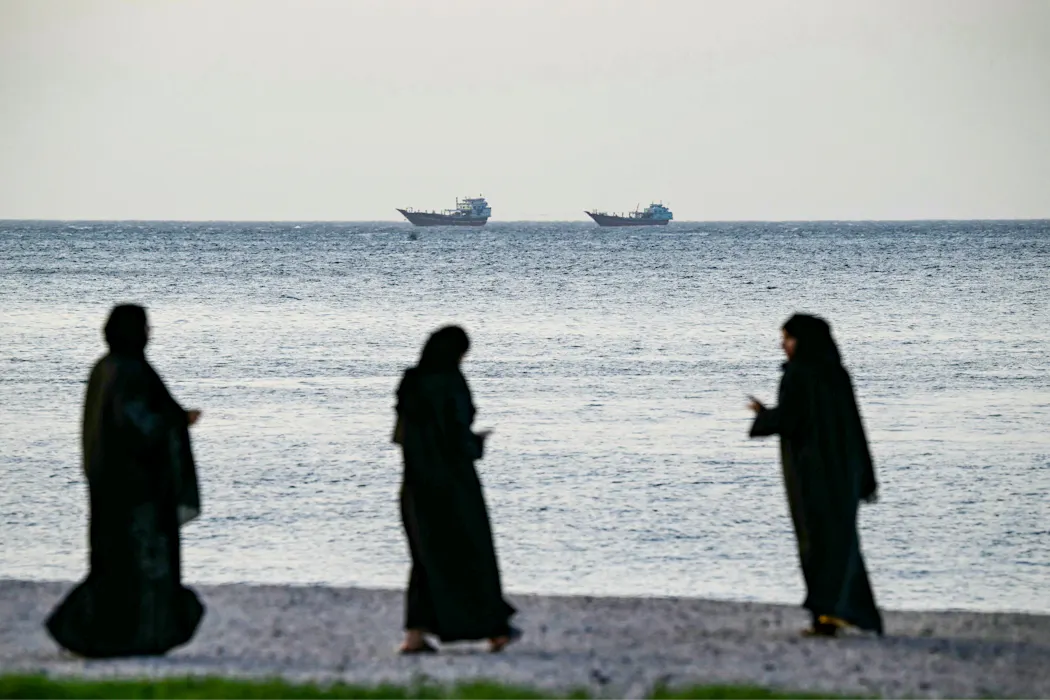
While the strait has not been totally closed to shipping, it has been substantially disrupted and transits have effectively slowed to a trickle. The strait is economically and strategically unique due to the access it provides to the Persian Gulf from which there is no exit point. All shipping passes in and out a single waterway.
The key navigational choke point borders Iran to the north and Oman to the south. It’s only 29 nautical miles wide (53 kilometres) and consists of two-mile-wide (just over three kilometres) navigable channels for inbound and outbound shipping as well as a two-mile-wide buffer zone. This is all in Iranian waters.
In 2025 a total of 20 million barrels per day of crude oil and oil products were estimated to have been shipped through the strait. That’s 25% of the world’s seaborne oil trade to multiple markets in Europe, Asia, and Australia.
So what does the future look like for the Strait of Hormuz, and how might it be reopened? There are three legal, geopolitical and military scenarios.
Read more: Why hasn’t the US military used force to secure the Strait of Hormuz?
1. There’s a ceasefire
A ceasefire could arise from an Iranian capitulation to Trump’s demands to reopen the strait, even on a temporary basis until a permanent ceasefire is reached.
This scenario would leave the strait predominantly in Iranian hands and while hostilities may have ended, there is every prospect that Iran may seek to impose ongoing tolls on any foreign shipping passing through.
Reports have emerged that tolls have been imposed on some ships to escape the strait in recent weeks. These could be viewed as a temporary wartime measure that Iran knew it could extract from desperate shipping companies.
The imposition of tolls on ships passing through an international strait such as Hormuz is prohibited under international law during peacetime, but Iran may give little weight to that constraint following weeks of American and Israeli bombardment.
There is every possibility that under whatever scenario emerges for the strait’s future, Iran will seek to keep in place an ongoing toll regime. The international shipping industry, who would initially bear the burden of paying any such tolls, would most likely reluctantly do so to keep their ships moving.
The cost of any such tolls would then have to be factored into the market resulting in inevitable price rises for all exports from the Gulf region.
This is the most likely scenario given the current diplomatic and military efforts to achieve an end to the conflict, but would depend on Iranian concessions over the future of its nuclear ambitions.
2. The US puts boots on the ground
The second possible scenario is that the US pivots from an air and missile campaign against Iran to a land-based operation involving American boots on the ground.
With a significant build-up of 5,000 additional US troops throughout the Gulf, making an estimated total of 50,000 scattered throughout the region, the US is clearly poised for such an assault.
There has been much speculation as to whether the US would first seize Kharg Island, which handles roughly 90% of Iran’s crude oil exports. The island could provide a launch pad for US ground and sea operations throughout the Gulf.
However, Kharg Island is not located in the Strait of Hormuz and does not offer an immediate military advantage to reopening the waterway. Any US reopening of the strait would eventually require significant naval assets to be deployed to initially secure the strait from all hostile threats, including mines, and then to be able to escort commercial shipping through the strait in both directions.
Recent comments from President Trump suggest he is not inclined to do this alone without the support of US allies. That support has not been forthcoming and in some instances has been directly rejected.
While capable of escalating its current campaign, even Trump may not want to gamble on the military and political risks it would entail. At present, it would appear unlikely the US would pursue this course of action.
3. End the war, but leave the strait closed
The third scenario is the US ends the war but safe passage through the strait is not secured.
There is clearly growing momentum for a coalition of like-minded countries to act to resolve this issue. On March 11 the United Nations Security Council adopted Resolution 2817 directly addressing safety and security of navigation in the Gulf and through the Strait of Hormuz.
A fresh resolution could be adopted authorising UN member states to take collective action to secure the strait. This would provide a clear legal basis for the strait to be cleared and for freedom of navigation to resume under escort from a UN-mandated naval coalition capable of defending itself from Iranian attacks.
The United Kingdom on April 2 coordinated discussions among partners and allies to explore options for how this could be achieved. Australia was part of those discussions.
The UK, Australia and other European and Asian powers such as China who may contribute to such a UN-mandated Hormuz mission will not wish to do so during a hot armed conflict. They will feel more comfortable acting once the US has withdrawn and hostilities between the main protagonists have ended.
This becomes the fall-back option if the current Iran/US impasse over the strait remains and Trump declares victory and withdraws US forces.
What is clear is that the pre-war status quo will not return in the Strait of Hormuz. If hostilities end and an ongoing peace settlement is reached, Iran will still have the capacity to control the strait. This is a reality of geography that the world will need to live with.
Authors: Donald Rothwell, Professor of International Law, Australian National University
Read more https://theconversation.com/how-might-the-strait-of-hormuz-be-reopened-here-are-3-scenarios-279840

















