

Modern Australian
The Times

Searching for a ‘technofix’ to climate change has many dangers. Could radical humility save the planet?

  • Written by Nanda Jarosz, Researcher, Environmental Philosophy, University of Sydney

In 1989, environmentalist Bill McKibben announced to the world that nature was dead. Due to the rapid rate and scale of anthropogenic climate change, he argued, the idea of nature as an entity independent of human activity had become obsolete.

Review: Brave New Wild: Can Technology Really Save the Planet? – Richard King (Monash University Publishing)

A new book by Richard King, Brave New Wild: Can Technology Really Save the Planet?, conducts a postmortem on this idea of “nature”. And it describes a dangerous ideology that has taken root at the heart of the environmental movement.

King considers the moral, political, social and economic implications of a particular way of attempting to solve climate change, known as the “technofix”. This mindset looks for “a technological solution to tackle a social or environmental issue”.

We are, King suggests, entering “a period in which mitigation and adaptation are giving way to re-engineering”. As the consequences of climate change become harder to ignore and the environmental and moral costs of inaction become too high, “radical interventions such as geoengineering and de-extinction are taking root in the imaginations of thought leaders and policymakers across the globe”.

But solutions that come in the guise of technological progress may harbour dangers to the planet that we can’t fully fathom or control.

Brave New Wild examines proposals involving nuclear power, geoengineering, de-extinction approaches to conservation, nanotechnologies capable of manipulating matter at a molecular level, smart technologies and interplanetary colonisation. It outlines potentially terrifying scenarios associated with the technofix mindset.

King describes, for example, the risks that come with developments in nanotechnology. Billions of self-fuelling and self-replicating nanomachines deployed to clean up an oil slick could run out of control and lead to an environmental disaster of planetary scale:

Given that every new nanite created would need to consume some of the Earth’s resources to use as fuel or source material, the resulting army could reduce the biosphere to dust within a matter of days. The grey goo would consume the world.

It has also been suggested that mining the moon “will be feasible by the end of the decade”. King notes that some see this as a positive scenario, because the moon is uninhabited and a “barren, airless wasteland”. But he points out there are many potential hazards to such work: lunar dust pollution, the proliferation of space junk and debris, and risks to workers, including mental health problems, physical disabilities, exploitation and death.
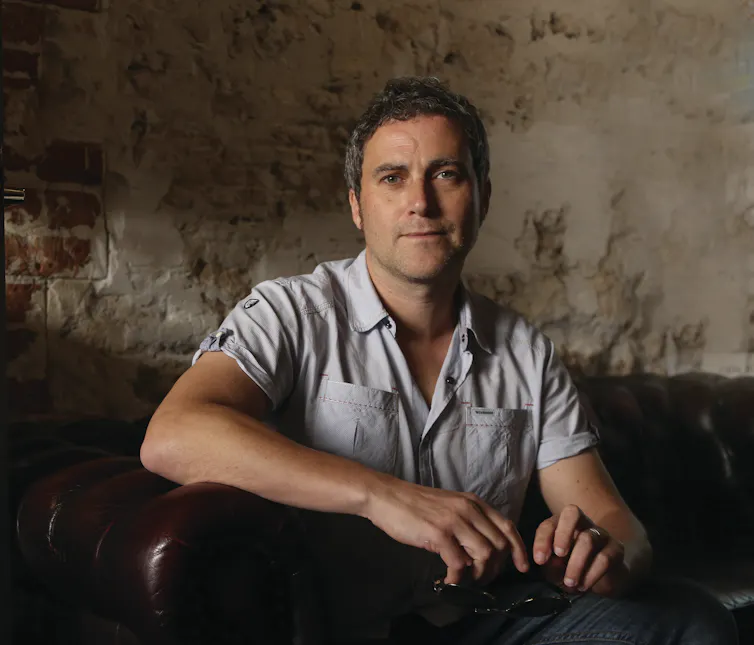
Searching for a ‘technofix’ to climate change has many dangers. Could radical humility save the planet?
Richard King. Bohdan Warchomij/Monash University Publishing

Anthropocene thinking and moral hazards

King grounds his critique of the “technofix” in an analysis of the concept of the Anthropocene: a period when human activity is altering the conditions of life on a planetary scale and leaving perceptible traces in the geological record.

This development, King argues, “places humanity at the centre of the Earth story, suggesting that whatever challenges the planet faces will need to be solved by Homo sapiens, the species whose destructiveness is inseparable from its genius”.

Paired with the concept of the “death of nature”, Anthropocene thinking is a deadly precursor to the types of technological interventions that, King argues, will fundamentally change humanity’s relationship to the environment.

The problem is not only that technology can escape human control, with catastrophic consequences. Accepting a perspective that subjugates the non-human world to purely human ends has moral and ethical implications.

“The Anthropocene narrative,” King writes, “tends to encourage a view of nature as infinitely malleable – something that can and should be shaped by human hands, to human ends – and this perspective is likely to reproduce the arrogance and lack of principled reflection that placed us in this situation in the first place.”

Removing the separation between human and non-human nature actually makes it easier to exploit the natural environment, including other humans. This mindset – which King terms “ecomodernism” – “repeats the error of industrial capitalism, and even modernity itself, in treating the environment as an abstract entity that can be endlessly manipulated.”

Responsibility towards nature

In response to the ecomodernist mindset, which “effectively abolishes nature as a category distinct from humanity by making everything humans do effectively identical with it”, Brave New Wild suggests an alternative: what King terms “ecohumanism”.

He argues that nature is at once an idea and a phenomenological reality. “Human beings in short, are always part of and always apart from the natural world: nature defines us, and we define nature.”

This view may appear to be the same as that taken by proponents of the technofix. For King, however, our idea of nature actively shapes our experience of reality: “our ability to recognise ourselves as animals marks us out from all the other animals, while the suite of powers (intellectual, technological) from which that self-recognition is inseparable imposes upon us certain responsibilities – to ourselves and to parental nature.”

Searching for a ‘technofix’ to climate change has many dangers. Could radical humility save the planet?
In the act of recognising that nature is created through human thought, we can realise that it should not be used purely for human gain. We must act with a sense of responsibility towards it. King proposes an embodied approach to technological solutions to the problem of anthropogenic climate change. He argues that modern science must move away from a perspective of mastery over nature, towards “an attitude of care”. The first level of interaction with nature should not be mediated through logic or distant observation. It should be phenomenological: at the level of lived experience. It should involve what King calls a “more holistic way of being”. This is based on a consideration of all aspects of what it means to be human and the implications of potential solutions for “conscious, subjective, immediate experience”. One way to achieve this goal is by engaging with the democratic, creative and imaginative aspects of our humanity. King suggests decentralising political and technological control “as far as possible to individual human beings”. He proposes developing community through political policies such as universal basic income and “bringing energy and other utilities into public ownership”. He also points to sources of inspiration in creative and imaginative exercises, such as reading nature writing, or other activities that help to elicit what he calls “human flourishing”. The point, for King, is to revitalise a sense of “conviviality” through a communal understanding of what it means to be human. Radical humility Brave New Wild advocates an ethical sense of human agency. It offers an accessible point of departure for many ideas circulating in environmental philosophy. But while it is true that human beings are part of nature and should treat it respectfully, it is also true that “nature” is not limited to human perception or ideas. Human beings employ reason and sensory perception to make sense of the world, but the universe itself is not rational or reasonable. Despite advances in science and technology, nature exists beyond the powers of human comprehension, in both a material and conceptual sense. As much as scientists can engineer life, they do not know how life in the universe started or how it will end. What King does not explain is how to cultivate ecohumanism among those who view science and technology as providing ready solutions to the messy realities of our ecological existence. To foster the embodied responsibility that his interventions demand, we must first appreciate nature as a force that unsettles our claims to knowledge and mastery. One way of doing this is through the aesthetic appreciation of the sublime. An experience that embraces wonder and destruction, the sublime offers a view of nature on its own terms. It compels us to experience nature as fundamentally incomprehensible. It directly challenges the hubris of a “technofix” approach. In a world of high-tech maps and data-driven solutions, the sublime offers a glimpse of nature as it exists independently of us. The sense of awe might inspire a radical humility. It might move us away from trying to fix the planet, and towards caring for it as a source of infinite possibility.

Authors: Nanda Jarosz, Researcher, Environmental Philosophy, University of Sydney

Read more https://theconversation.com/searching-for-a-technofix-to-climate-change-has-many-dangers-could-radical-humility-save-the-planet-276046

Vista Cruises Enters "Two-Flagship Era" as Vista Aurora Completes Inaugural Voyage

Vista Aurora Sets Sail along the Yangtze. (Photo courtesy of the company)YICHANG, China — August 5, 2026 — Vista Aurora, a high-end interprovinc...

A Digital Preparation Checklist For International Medical Conferences

An international medical conference compresses many responsibilities into a few days. A delegate may need to present research, move between venues, ...

The Growing Popularity of Lab Grown Diamonds in Sydney and Hong Kong

The diamond industry has changed significantly in recent years as more buyers seek ethical, affordable, and sustainable alternatives to mined diamon...

Modern AI SEO Agency vs Traditional SEO: What’s the Difference

Search engine optimisation has changed dramatically over the past few years. Search engines have become smarter, user behaviour has evolved, and bus...

Caravan Travel for Modern Australian Getaways: Plan a Comfortable Holiday

A family road trip is one of the best ways to explore Australia together. And, travelling by caravan gives you the freedom to take your time, stop a...

Mini Excavator and Trailer Package for Sale: What I Buy as One Deal in 2026

The first client who asked me for a mini excavator and trailer package for sale wasn’t trying to save a few hundred dollars on shipping. They we...

Make Dad a Guest in His Own Home This Father’s Day

Father’s Day can accidentally turn Dad into the unpaid event manager of his own celebration. He lights the barbecue, finds extra chairs, checks wh...

Where to Enjoy Your Off-Road Caravan on the Gold Coast

With a caravan, you can travel anywhere and everywhere without battling the rush of the peak holiday season or last-minute reservations. While the r...

How Osteopathy Supports Recovery from Sciatica and Nerve Pain

Sciatica isn't just annoying. It's genuinely painful. It sits deep in your glute and shoots straight down the back of your leg. It turns something as...

The Winter Jewellery Edit: Five Pieces You'll Wear All Season

As wardrobes shift to cosy knits, tailored coats and rich seasonal textures, jewellery becomes the finishing touch that pulls every winter outfit to...

7 Signs It's Time to Upgrade Your Piston Air Compressor

If you run a workshop, panel shop, or fabrication business anywhere around Perth, you already know what heat and dust do to equipment over a few sum...

How Long Do Bathroom Renovations Melbourne Take? Step-by-Step Process Explained

Planning a bathroom renovation is exciting, but one of the biggest questions homeowners ask is, "How long will it take?" While every project is uniq...

Why Your Skin Breaks Out: The Science of Acne Explained

Acne is the most common skin condition in the world. An estimated 85% of people experience it at some point between the ages of 12 and 24, and a gro...

10 Swimwear Trends Australian Women Are Wearing This Summer

Every Australian summer brings a fresh wave of swimwear trends, but some styles have much greater staying power than others. While fashion constantly ...

Why Regular Skills Updates Are Essential for Licensed Security Officers

A guard at a Brisbane shopping centre gets a call about a shoplifter who's turned aggressive.  They’ve done the job for six years. But their de-...

10 Benefits of Choosing Professional Tutoring Penrith Services

Every student has unique learning strengths, challenges, and academic goals. While classroom teaching provides essential knowledge and structure, so...

Sunshine Coast Baby Classes Prove Big Hit Among First-Time Mums

There's a movement gaining traction on the Sunshine Coast, providing a village of support, socialisation and relief for first-time mothers and babie...

Father's Day Gift Ideas for Men Who Are Hard to Buy For

Some dads are easy to buy for. Others do not want anything, already have everything, or give you the classic "don't worry about me" answer every yea...
















