

Modern Australian
The Times

Built to last? History shows us the art of reform that’s both bold and enduring

  • Written by Pat Leslie, Senior Lecturer, Crawford School of Public Policy, Australian National University

Reform, while never an easy task, is probably more difficult now than it used to be. Not only is declining trust a problem, belief in governments’ ability and willingness to affect real change is also in decline.

There’s also the tyranny of the election cycle. Often real reform takes much longer than the three-year terms, not to mention assessing whether any given policy decision was effective.

The attitudes of voters are also unpredictable: just ask the prime ministers who proposed the last eight referendums, all of which failed to win popular support.

So what does it take? Australian history shows lasting reform is about building coalitions, managing the stakeholders who can make or break your reforms, and having the somewhat magical ability to read the moment correctly.

Method 1: building it from scratch

First, there’s the hard way: start from first principles. This means reckoning with existential political questions: who do we represent? What vision of Australia do we want to manifest?

From there, you develop policy to fit the vision and communicate it with the public (ideally in a highly compelling way). The party wins in an election and implements the policy in government.

While the policy may be in place, you then have to win the public debate for keeping the policy long term, so your reforms are not immediately repealed when you lose power.
Built to last? History shows us the art of reform that’s both bold and enduring
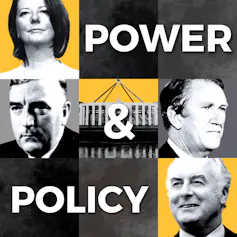
Politics and policy share a love-hate relationship, but we can’t have one without the other. In this six part series, we’re chronicling how policies have shaped Australia’s prime ministers, for better or worse, and what it means for how politicians tackle today’s big challenges. If you can do all of that, and that’s a big “if”, you can sit back and watch your legacy take shape. But of course, this method is contingent on a lot of things going very right. This doesn’t happen often and there are only a few arguable exceptions. Medibank, the Whitlam government’s universal insurance model of healthcare fits some of these criteria well. Whitlam’s unusually ambitious policy program for the 1972 federal election was based on the ideas of equality, serving ordinary Australians and an expansive attitude to what the government in Canberra should be able to do. Medibank and its insistence that universal healthcare was a federal responsibility was a key part of the success of the “It’s Time” campaign that won power for Labor after 23 years in opposition. The difficulties began in implementation, and the policy was blocked several times before being passed by parliament after a joint sitting in 1974. After Whitlam’s dismissal, the policy was modified heavily by the Fraser government, before the Hawke-era reforms which renamed the program “Medicare”. Despite this, Medicare is so embedded into Australian society that it’s almost impossible to imagine repealing it. But Medicare is a rare success story in a sea of grounded, sunk or scuttled policy proposals. Method 2: seizing the opportunities Then there’s the “easy” way: simply open the door for a policy whose time has come. Here, the skill is not so much in policy development, but in guessing which policies might have the best chance of long-term success. It relies more on political calculus, both within a party and in the community. Most lasting reforms fit this entrepreneurial description of policymaking more cleanly. Even Medibank itself was a policy program inspired by European programs implemented decades earlier and adapted to Australia for Whitlam by health researchers. In the case of superannuation, recent research makes the argument that the 1980s reforms that created today’s system were actually accidental, to a surprising extent. Paul Keating and Bob Hawke laughing in front of the media in the 1980s
The Prices and Incomes Accord provided Paul Keating and Bob Hawke with untapped potential for other reform. Hulton Archive/Getty

The origins of the modern system had its roots not in pension reform, but in finding a work-around between the government and unions to enable wage increases without causing inflation. Workers could take the pay rise as deferred payment through superannuation schemes.

What turned this negotiation into a lasting policy reform was that politicians in Bob Hawke and Paul Keating recognised the opportunity the Prices and Incomes Accord represented.

Seizing the opportunity for real reform relies on the combination of opportunity and political expertise, during periods political historians call “critical junctures.” According to academic Emily Millane, modern superannuation occurred during one of these periods. The timing and sequence of events had to be just right, or little would have happened at all.

What not to do

When politicians sell the policies to the Australian public, they’re making a bet with history. Sometimes they win, sometimes they lose.

Most governments can pass legislation for any policy reform they like, provided they have the numbers.

But this cuts both ways: what is stopping the next administration from winding back your reforms? This is where the “shadow of the future” constrains politicians in the choices they make. Why spend your time on big reforms when you know they likely won’t survive?

One example of a policy that was developed, debated publicly, enacted, and then swiftly canned by a new administration is the Turnbull government’s reforms to the Australian Education Act, popularly known as Gonski 2.0.

Under this scheme, the Turnbull government made school funding allocations more needs-based and addressed long-standing inconsistencies in funding across each state. This included tackling controversial “special deals” for the Catholic and independent sectors.

Gonski 2.0 played by the book. Procedurally, the bill passed through the Senate without compromising its main intent.

But the reform’s fatal weakness was political: it failed to account for the organised stakeholders who stood to lose out.

From the outset, Catholic school bodies mounted a fierce campaign against the new arrangements, arguing they would be worse off relative to independent schools.

Scott Morrison dances in a crowd of dancing primary school students
Scott Morrison danced for joy when he struck a peace deal with Catholic schools in 2018. Joel Carrett/AAP

When Scott Morrison replaced Turnbull in August 2018, the political calculation was straightforward: a well-organised lobby was threatening to cause trouble at the 2019 election — and with the Opposition Leader Bill Shorten also siding with the non-public schools, the pressure was mounting from all sides.

Morrison’s response was to offer a $4.6 billion compensation package to the Catholic and independent sectors, thus gutting the reforms.

As Adam Piccoli of the Gonski Institute said bluntly at the time: “This is purely a political fix to shut down a powerful lobby group.”

The lesson is stark. Good policy and procedure are usually necessary, but not sufficient for lasting reform.

It is not always possible to account for the decisions of your successors — but you can try to shore up political support to make repeal too costly to attempt.

Better in hindsight?

Finally, why does it seem like modern politicians have no great reforming ideas? Well it’s probably because it’s too soon to tell.

Our evaluation of policy success and failure is dependent on our point of view. Some policies look good at first, and their flaws become more obvious later on, while others grow in appreciation over time.

From the perspective of modern readers, Medicare and perhaps even superannuation seem obvious solutions to obvious policy problems, but they were far more contested in their early years.

The currently embattled NDIS is a good example. It may one day prove to be a keystone no-brainer Australian social policy, if it survives.

And for the government under Anthony Albanese, its noted incrementalist approach may, in the end, add up to more than the sum of its parts. But we probably won’t know until it’s long disappeared in the rear-view mirror.

Authors: Pat Leslie, Senior Lecturer, Crawford School of Public Policy, Australian National University


Read more https://theconversation.com/built-to-last-history-shows-us-the-art-of-reform-thats-both-bold-and-enduring-276747

Vista Cruises Enters "Two-Flagship Era" as Vista Aurora Completes Inaugural Voyage

Vista Aurora Sets Sail along the Yangtze. (Photo courtesy of the company)YICHANG, China — August 5, 2026 — Vista Aurora, a high-end interprovinc...

A Digital Preparation Checklist For International Medical Conferences

An international medical conference compresses many responsibilities into a few days. A delegate may need to present research, move between venues, ...

The Growing Popularity of Lab Grown Diamonds in Sydney and Hong Kong

The diamond industry has changed significantly in recent years as more buyers seek ethical, affordable, and sustainable alternatives to mined diamon...

Modern AI SEO Agency vs Traditional SEO: What’s the Difference

Search engine optimisation has changed dramatically over the past few years. Search engines have become smarter, user behaviour has evolved, and bus...

Caravan Travel for Modern Australian Getaways: Plan a Comfortable Holiday

A family road trip is one of the best ways to explore Australia together. And, travelling by caravan gives you the freedom to take your time, stop a...

Mini Excavator and Trailer Package for Sale: What I Buy as One Deal in 2026

The first client who asked me for a mini excavator and trailer package for sale wasn’t trying to save a few hundred dollars on shipping. They we...

Make Dad a Guest in His Own Home This Father’s Day

Father’s Day can accidentally turn Dad into the unpaid event manager of his own celebration. He lights the barbecue, finds extra chairs, checks wh...

Where to Enjoy Your Off-Road Caravan on the Gold Coast

With a caravan, you can travel anywhere and everywhere without battling the rush of the peak holiday season or last-minute reservations. While the r...

How Osteopathy Supports Recovery from Sciatica and Nerve Pain

Sciatica isn't just annoying. It's genuinely painful. It sits deep in your glute and shoots straight down the back of your leg. It turns something as...

The Winter Jewellery Edit: Five Pieces You'll Wear All Season

As wardrobes shift to cosy knits, tailored coats and rich seasonal textures, jewellery becomes the finishing touch that pulls every winter outfit to...

7 Signs It's Time to Upgrade Your Piston Air Compressor

If you run a workshop, panel shop, or fabrication business anywhere around Perth, you already know what heat and dust do to equipment over a few sum...

How Long Do Bathroom Renovations Melbourne Take? Step-by-Step Process Explained

Planning a bathroom renovation is exciting, but one of the biggest questions homeowners ask is, "How long will it take?" While every project is uniq...

Why Your Skin Breaks Out: The Science of Acne Explained

Acne is the most common skin condition in the world. An estimated 85% of people experience it at some point between the ages of 12 and 24, and a gro...

10 Swimwear Trends Australian Women Are Wearing This Summer

Every Australian summer brings a fresh wave of swimwear trends, but some styles have much greater staying power than others. While fashion constantly ...

Why Regular Skills Updates Are Essential for Licensed Security Officers

A guard at a Brisbane shopping centre gets a call about a shoplifter who's turned aggressive.  They’ve done the job for six years. But their de-...

10 Benefits of Choosing Professional Tutoring Penrith Services

Every student has unique learning strengths, challenges, and academic goals. While classroom teaching provides essential knowledge and structure, so...

Sunshine Coast Baby Classes Prove Big Hit Among First-Time Mums

There's a movement gaining traction on the Sunshine Coast, providing a village of support, socialisation and relief for first-time mothers and babie...

Father's Day Gift Ideas for Men Who Are Hard to Buy For

Some dads are easy to buy for. Others do not want anything, already have everything, or give you the classic "don't worry about me" answer every yea...















