

Our efforts to halt global forest loss aren’t working: new research
- Written by Chris Taylor, Research Fellow, Fenner School of Environment and Society, Australian National University
The loss of our forests is one of the biggest environmental challenges of our time.
Forests are key to curbing carbon emissions and protecting the plants, animals and humans that call Earth home.
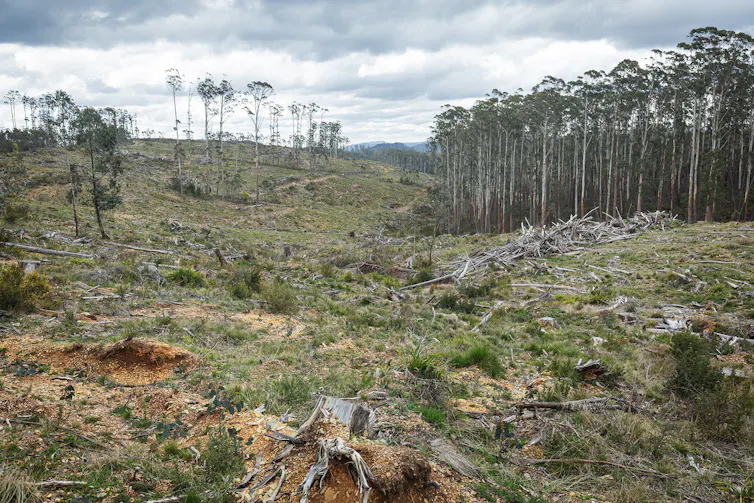
However, we’re losing our forests at an alarming rate. Our new study shows we’ve lost roughly 300 million hectares over the past 11 years. However, it’s unclear how much of this forest has since been restored.
Either way, we’re losing a significant amount of forest despite efforts to protect it through certification, protection and other conservation schemes.
A global effort
The European Union has introduced policies aimed at eliminating products and supply chains that contribute to forest loss. Examples include palm oil, soy, coffee, cocoa, timber and rubber.
Halting forest loss is also a major focus of international declarations, such as the Glasgow Leaders’ Declaration on Forests and Land Use. This declaration, which more than 140 countries endorsed at the COP26 conference in 2021, aims to strengthen global efforts to reduce deforestation and land degradation.
Over the past three decades, the international community has launched forest management certification schemes to protect our forests. These include those developed by the Forest Stewardship Council and the Programme for the Endorsement of Forest Certification.
Read more: Australia’s alpine ash forests are now officially endangered. Can we save them?
These are voluntary, market-based schemes meant to ensure forests are being properly managed. These schemes aren’t state-controlled, but rely on the market to create incentives to pressure companies to comply. They do this by getting accredited auditors to independently assess forest management practices against approved or endorsed forest management standards. These schemes also encourage companies to buy products sourced from certified forests. About 10% of the world’s forests are currently certified under these schemes, equal to more than 400 million hectares.
Protected areas may also help curb forest loss. Protected areas are defined locations designed to help conserve nature. Globally, roughly 18% of our forests are in protected areas.
These two strategies should be reducing, or even stopping, forest loss. But they’re failing to do so at a global scale.
So, what’s actually happening?
In our new study, we measured how much forest each country lost each year, due to fire or other causes, from 2013 to 2023. An example of a fire-related cause is a severe fire that engulfs the tree canopy. Forest loss as a result of logging for agricultural or urban development is an example of a non-fire cause. We then compared this to how much forest area is certified or protected in each country.
Between 2013 and 2023, we estimate the amount of forest in protected areas increased from about 868 million hectares to 990 million hectares.
Despite this, our study shows over that period between 21 million and 32 million hectares of forest were lost each year. This tracks with earlier research finding a similar, and no less alarming, trend between 2002 and 2011.
Our study also found no evidence linking more certification and protected areas with less forest loss, at a country level. Between 2013 and 2023, nearly half of global forest loss happened in four countries. These include Russia, Brazil, Canada and the United States. This was mainly caused by fire in countries north of the equator, and non-fire causes in tropical regions such as Brazil.
What can we do?
Forest certification schemes and protected areas, while effective at a forest or local scale, may not have much of an impact on forest loss on a global level. But that’s not a reason to get rid of them.
Instead, we should consider them as just some of the tools in the toolbox. And to make them more effective, we should rethink how they are governed and implemented.
At present, forest management certification schemes are market-based. This means they are largely influenced by private companies. In contrast, most protected areas are managed by state actors, such as a country’s government.
These are two very different forms of governance that historically have not been applied in a coordinated way. For example, a government may decide to add more forest to a protected area. But if it doesn’t have the support of private companies, this may inadvertently lead to negative forest leakage. This is where unprotected forests become more vulnerable to forms of intensified logging, such as clearfelling. Clearfelling involves removing most or all of an area’s trees in one operation, meaning old-growth trees and other key parts of the forest may be lost. To avoid this, we need to coordinate certification and protected areas better.
Read more: Indigenous peoples are crucial for conservation – a quarter of all land is in their hands
Another approach that’s been effective is Indigenous-led management. This gives Indigenous communities control over how land is used and managed, including preventing deforestation and other types of illegal forest loss. Recent research suggests this approach can be effective in conserving forests, when used in conjunction with other strategies.
We also need to use the resources we get from our forests more appropriately and efficiently. The vast majority of logs cut from forests are used in short-lived and often disposable products, such as copy paper and pallets. Using precious forests for these low-value products is wasteful and inefficient. It might help reduce forest loss if these products came from recycled sources. To protect our forests, we need to do more with less.
Authors: Chris Taylor, Research Fellow, Fenner School of Environment and Society, Australian National University
Read more https://theconversation.com/our-efforts-to-halt-global-forest-loss-arent-working-new-research-280368

















