

Modern Australian
The Times

Multicultural Australia was built under a Liberal prime minister. The current party should take heed

  • Written by Gwenda Tavan, Adjunct Associate Professor of Politics, La Trobe University

Multiculturalism first made its way into Australian political dialogue in the 1970s, with the idea that the country could, and should, be home to people from all over the world.

Inevitably, there was backlash against the idea, with opponents arguing it was the creation of political elites, such as academics, bureaucrats, the “ethnic lobby” and left-wing politicians.

Critics have been particularly vocal in recent times, arguing those in favour of multiculturalism champion an “ethnic rights” agenda at the expense of national cohesion.

But this perspective ignores the important role that politicians of the right played in its development. In Australia, one stands taller than most: Malcolm Fraser.

As Liberal prime minister from 1975 to 1983, Fraser made a series of decisions that would forever change Australia’s social fabric. His multicultural agenda would also become a defining feature of his political legacy.
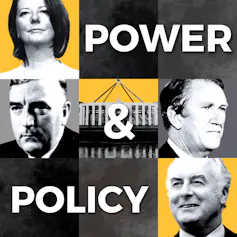
Multicultural Australia was built under a Liberal prime minister. The current party should take heed
Politics and policy share a love-hate relationship, but we can’t have one without the other. In this six-part series, we’re chronicling how policies have shaped Australia’s prime ministers, for better or worse, and what it means for how politicians tackle today’s big challenges. Anglo assimilation When mass European immigration began in 1947, the Labor government under Ben Chifley pledged migrants would be quickly assimilated. Welcomed as equals, they would cast off their old ethnic loyalties and be absorbed into a homogeneous and cohesive (Anglo) Australian culture. To facilitate this, migrants were given moderately easy access to Australian citizenship. Community-based groups were tasked with educating newcomers into the privileges of the “Australian way of life”. A 1962 ABC broadcast asking people on the street what they think of the White Australia policy. By the mid-1960s, assimilation’s failures were obvious. Not all migrants embraced citizenship. Most refused to abandon their original ethnic identities. Growing social and economic disadvantage among low-skilled, non-English speakers resulted in adverse employment rates, health outcomes, income and English language capabilities. Migrants also demanded more input into the policies affecting them. Concerned about threats to social cohesion, the immigration department discarded assimilation in favour of “integration”. This acknowledged that migrants’ ability to maintain their cultural heritage, and the adequate provision of social services, were crucial to successful settlement. Ending ‘White Australia’ The evolution of multiculturalism is often associated with the Whitlam Labor government. By the early 1970s, Australia had accepted almost three million new settlers. Whitlam cut immigration drastically on economic grounds, but advocated policies to enhance social equity for all Australians. A yellow cover of the document called a multi-cultural society for the future
Then Immigration Minister Al Grassby gave a speech in 1973 that would help change Australia’s approach to migration. Museums Victoria Collections

Importantly, his government abandoned the White Australia Policy, which disallowed non-white immigration. It implemented a universal admissions system instead.

A speech by Immigration Minister Al Grassby, called “A multi-cultural society for the future”, is often viewed as a defining early statement on multiculturalism. Several important initiatives emerged: the national Telephone Interpreter Service, English-language education centres, some state-based ethnic community councils and a fledgling ethnic broadcasting service.

The Racial Discrimination Act was introduced in 1975, making it unlawful for a person to discriminate on the grounds of race, colour, descent or national and ethnic origins.

Diversity, not division

Liberal Malcolm Fraser had been extremely supportive of multiculturalism from opposition. As opposition spokesperson for labour and immigration, Fraser released a paper in 1974 that referenced multiculturalism. He was among the first politicians to adopt the term.

As prime minister, he championed the policy fiercely. Fraser was an economic dry and a social liberal who supported mass immigration. He shared Whitlam’s belief that cultural pluralism was an asset to be fostered in the pursuit of social cohesion and equity.

His government supported the recommendations of the 1978 Galbally Report. This acknowledged the “extensive cultural and racial diversity existing in Australia”, advocated for welfare and social services to be significantly expanded, and advised:

ethnic groups themselves must take on the task of advising government of the need and priorities of migrants and ensuring that ethnic cultures are fostered and preserved.

If Whitlam dismantled White Australia in theory, the Fraser government did it in practice. It accepted some 200,000 migrants from Asian countries, including nearly 56,000 Vietnamese people who applied as refugees.

After decades of government-mandated European migration, this was a monumental change to Australian society.

Multicultural programs also expanded significantly during the Fraser years. The Immigration Department became the Department of Immigration and Ethnic Affairs. Translator and Interpreter Services and language education services expanded.

A man in a suit and hat walks next to a military commander and inspects young soldiers
Malcolm Fraser, pictured here during a trip to Vietnam in 1970, welcomed thousands of Vietnamese refugees to Australia after the war. Peter Anthony Ward via Wikimedia Commons

The research-oriented Australian Institute of Multicultural Affairs was established. Ethnic broadcasting evolved into a permanent service, SBS. Migrant resource centres assisted refugees and migrants with all aspects of settlement.

The Federation of Ethnic Communities Council was founded, a publicly-funded umbrella organisation for the state-based Ethnic Communities Councils that mediated relations between governments and ethnic groups.

Together, these programs constituted a uniquely Australian “ethnic rights” model of multiculturalism.

Yet, as Fraser emphasised, there were limits to how much cultural pluralism a cohesive society could tolerate:

multiculturalism is about diversity, not division […] It is about cultural and ethnic differences set within a framework of shared fundamental values which enables them to co-exist on a complementary rather than competitive basis.

Lasting change

In the years that followed Fraser’s prime ministership, multiculturalism changed shape.

Public criticism mounted during the 1980s, with a report at the time referring to the policy as “social engineering which […] invites injustice, inequality and divisiveness”.

The Hawke Labor government moved the emphasis from ethnic rights to citizenship. People could express their cultural identity, but only if they had an “overriding and unifying commitment to Australia” first.

Political attacks increased after the 1996 election of the socially-conservative Howard Liberal government. John Howard later admitted he wanted to “end the divisive features of multiculturalism and place […] greater emphasis on those things which united us as Australians”.

But decades on, Australia remains a highly multicultural nation, even as the politics around the policy shift.

The key multicultural institutions set in motion by Whitlam and cemented by Fraser still remain, such as the Racial Discrimination Act and SBS. Successive Labor governments since 2007 have pledged their continuing support for multiculturalism, including the Albanese government.

Five years before he died, Fraser named multiculturalism as one of his biggest achievements. The 2015 obituaries show how synonymous Fraser became with the diverse Australia we have today.

As it reckons with a resurgent One Nation and attempts to formulate a new immigration policy, the current Liberal Party could do to remember its multicultural history, championed by one of its most successful leaders.

Authors: Gwenda Tavan, Adjunct Associate Professor of Politics, La Trobe University

Read more https://theconversation.com/multicultural-australia-was-built-under-a-liberal-prime-minister-the-current-party-should-take-heed-277732

Vista Cruises Enters "Two-Flagship Era" as Vista Aurora Completes Inaugural Voyage

Vista Aurora Sets Sail along the Yangtze. (Photo courtesy of the company)YICHANG, China — August 5, 2026 — Vista Aurora, a high-end interprovinc...

A Digital Preparation Checklist For International Medical Conferences

An international medical conference compresses many responsibilities into a few days. A delegate may need to present research, move between venues, ...

The Growing Popularity of Lab Grown Diamonds in Sydney and Hong Kong

The diamond industry has changed significantly in recent years as more buyers seek ethical, affordable, and sustainable alternatives to mined diamon...

Modern AI SEO Agency vs Traditional SEO: What’s the Difference

Search engine optimisation has changed dramatically over the past few years. Search engines have become smarter, user behaviour has evolved, and bus...

Caravan Travel for Modern Australian Getaways: Plan a Comfortable Holiday

A family road trip is one of the best ways to explore Australia together. And, travelling by caravan gives you the freedom to take your time, stop a...

Mini Excavator and Trailer Package for Sale: What I Buy as One Deal in 2026

The first client who asked me for a mini excavator and trailer package for sale wasn’t trying to save a few hundred dollars on shipping. They we...

Make Dad a Guest in His Own Home This Father’s Day

Father’s Day can accidentally turn Dad into the unpaid event manager of his own celebration. He lights the barbecue, finds extra chairs, checks wh...

Where to Enjoy Your Off-Road Caravan on the Gold Coast

With a caravan, you can travel anywhere and everywhere without battling the rush of the peak holiday season or last-minute reservations. While the r...

How Osteopathy Supports Recovery from Sciatica and Nerve Pain

Sciatica isn't just annoying. It's genuinely painful. It sits deep in your glute and shoots straight down the back of your leg. It turns something as...

The Winter Jewellery Edit: Five Pieces You'll Wear All Season

As wardrobes shift to cosy knits, tailored coats and rich seasonal textures, jewellery becomes the finishing touch that pulls every winter outfit to...

7 Signs It's Time to Upgrade Your Piston Air Compressor

If you run a workshop, panel shop, or fabrication business anywhere around Perth, you already know what heat and dust do to equipment over a few sum...

How Long Do Bathroom Renovations Melbourne Take? Step-by-Step Process Explained

Planning a bathroom renovation is exciting, but one of the biggest questions homeowners ask is, "How long will it take?" While every project is uniq...

Why Your Skin Breaks Out: The Science of Acne Explained

Acne is the most common skin condition in the world. An estimated 85% of people experience it at some point between the ages of 12 and 24, and a gro...

10 Swimwear Trends Australian Women Are Wearing This Summer

Every Australian summer brings a fresh wave of swimwear trends, but some styles have much greater staying power than others. While fashion constantly ...

Why Regular Skills Updates Are Essential for Licensed Security Officers

A guard at a Brisbane shopping centre gets a call about a shoplifter who's turned aggressive.  They’ve done the job for six years. But their de-...

10 Benefits of Choosing Professional Tutoring Penrith Services

Every student has unique learning strengths, challenges, and academic goals. While classroom teaching provides essential knowledge and structure, so...

Sunshine Coast Baby Classes Prove Big Hit Among First-Time Mums

There's a movement gaining traction on the Sunshine Coast, providing a village of support, socialisation and relief for first-time mothers and babie...

Father's Day Gift Ideas for Men Who Are Hard to Buy For

Some dads are easy to buy for. Others do not want anything, already have everything, or give you the classic "don't worry about me" answer every yea...
















