

Politically, the baby boomers’ day is done
- Written by: Michelle Grattan, Professorial Fellow, University of Canberra
Politically, it’s a very bad time to be a baby boomer.
It is not just that intergenerational equity has become, rightly, a priority for Labor.
It’s also that this government, which always has an ear cocked to public opinion, is fully aware of the resentment towards boomers from many people aged 25–45 who see themselves paying for their elders while often unable to afford the housing that was more readily available to a “lucky” generation.
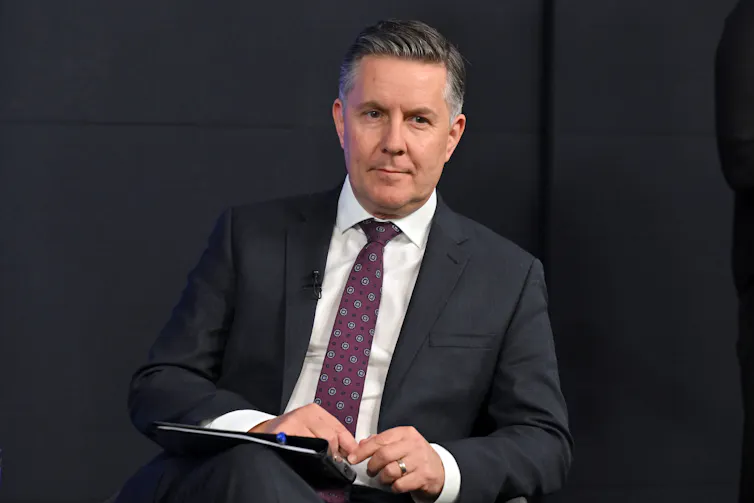
When on Wednesday Health Minister Mark Butler announced the government would scrap the top-up private health insurance subsidy for those over 65, brought in by John Howard, he cast the decision in generational equity terms.
The extra subsidy “means two households on the same income receive different levels of government support, based only on their age,” Butler said. “That’s not fair between generations.”
Removal of this (income-tested) benefit will save the government $3 billion over the forward estimates. With an ageing population putting an increasing burden on the budget, the government is repurposing this money into aged care, including paying the full cost of showering for those on home care packages. (So, the government might argue, there are swings and roundabouts for boomers.)
Treasurer Jim Chalmers will make intergenerational equity a major thread woven through his May 12 budget.
The politics says housing unaffordability remains red hot among voters. It is now accepted the capital gains discount will be hit; also, negative gearing is likely to be altered.
Other sweeteners in the tax or housing areas are possible – if they come they would have, at least in part, an intergenerational equity lens.
The government is under pressure not to splurge in the budget, not least because the Reserve Bank will be watching closely. But Butler’s announcement of a “reset” of the National Disability Insurance Scheme has given Chalmers some funds to play with.
The estimated savings from the NDIS overhaul are huge: $22 billion over a four-year budget period.
The government is absolutely right to tackle the NDIS’s multiple problems. Despite initial curbs in Labor’s first term, when Bill Shorten was its minister, the expenditure trajectory was still unsustainable.
But achieving the projected savings will be a herculean endeavour. The states will drag their feet and drive hard bargains. Much detail hasn’t been worked out, and discussions with stakeholders will be difficult. Stories of people thrown off the scheme by the cuts will abound. The program’s new rate of cost growth will be only 2% annually in the next four years – a big cut in real terms.
But much of the pain will be delayed until long after this budget. And getting the NDIS announcement out now means Chalmers’ budget night can concentrate on the good news.
Early signs are the opposition will back the thrust of the changes (while noting that when the Morrison government tried to make some reforms, they were demonised by the then Labor opposition).
As the government puts together its budget – with the prime minister saying “resilience” will be at its centre – the context is dominated by the Middle East conflict and the alarming prospects for fuel supplies if the situation is not resolved soon.
The government is now confronted with a campaign, that has considerable community support, for a new tax to be imposed on gas exports, as companies stand to benefit from the higher prices brought by the international crisis.
This week the battle over the tax was ventilated in often heated hearings at a Senate inquiry, chaired by the Greens, which will report before the budget.
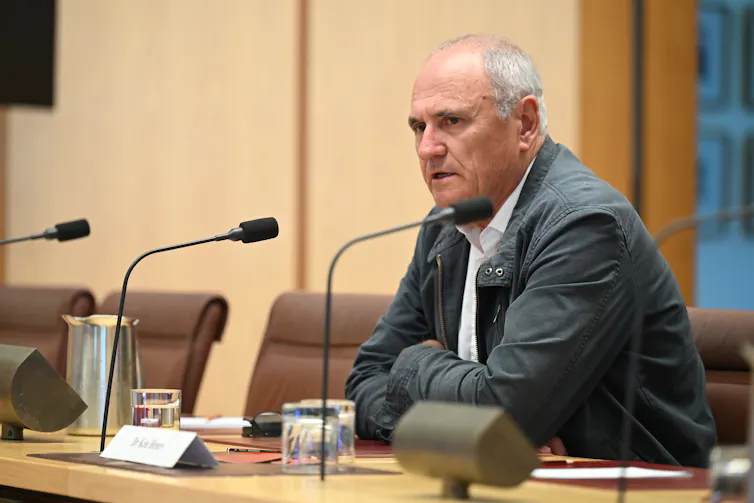
One of those arguing for a new tax is Ken Henry, formerly head of treasury, who chaired the far-reaching tax inquiry commissioned by the Rudd government (which recommended a mining super profits tax).
In his submission to the Senate inquiry, Henry dwelt on generational equity. Canvassing how the proceeds of a gas tax could be used, he said, “Consideration might be given to three dimensions: public debt management, nature repair, and boosting productivity.
"All three dimensions are highly significant for the living standards of future generations and thus offer the opportunity to address sources of intergenerational inequity.
"Revenue raised from a windfall gains tax could be invested in a sovereign wealth fund for the benefit of future generations.”
While that thinking would fit naturally with the inclination of Chalmers, other considerations are pushing against the government going down this path.
These include warnings about the potential disincentive for investment coming from the companies, which have an advertising campaign running, and from countries that take our gas.
In his recent “fuel diplomacy” trips to Singapore, Brunei and Malaysia, Anthony Albanese’s mantra was that Australia is a dependable supplier of LNG.
His messaging has flagged that he is disinclined to the tax. In a podcast this week with The Daily Aus, Albanese rejected the suggestion the companies were paying little tax.
“Some of the facts haven’t been out there,” Albanese said. “The truth is that the gas taxes in the last financial year […] were around about $22 billion. So, I’ve seen there are reports suggesting that there’s more on beer tax than gas. It’s just not true.” Pressed for detail, he pointed out the Petroleum Resource Rent Tax was not the only relevant tax – the gas producers also paid company tax.
Albanese said he understood people would like to see more taxes paid. “In budgets, we look at the full suite of measures. What I am saying very clearly though is that we honour contracts and we honour those arrangements with countries.”
Resources Minister Madeleine King is cautious with her words but is obviously against a new tax.
Perhaps more important is what Western Australian Premier Roger Cook said this week, when he opposed a new gas tax. “I don’t think it’d be good for Western Australia and I’ve made those views clear to the prime minister,” he said. Cook’s views hold a lot of sway with Albanese.
Japanese Prime Minister Sanae Takaichi will visit Australia in early May, just before the budget. She is likely to get reassurance there will be no new gas tax.
Authors: Michelle Grattan, Professorial Fellow, University of Canberra
Read more https://theconversation.com/grattan-on-friday-politically-the-baby-boomers-day-is-done-281138


















