

Modern Australian
The Times

The carbon tax debate damaged Julia Gillard’s leadership – and good climate policy for years to come

  • Written by Chris Wallace, Professor, School of Politics Economics & Society, Faculty of Business Government & Law, University of Canberra

Carbon pricing and the Gillard government are fused together like molten glass in the memory of all those who witnessed the traumatic and consequential policy and political drama surrounding it.

The years-long affair is a cautionary tale of what happens when intense negative campaigning, misinformation and clumsy politicking collide to kill otherwise sound policy – and prime ministerial careers.

The great moral challenge

Climate policy became an increasing concern in the early years of the millennium. The UK government’s Stern Review on the economics of climate change in 2006 galvanised attention. So too did increasingly alarming United Nations Intergovernmental Panel on Climate Change (IPCC) reports.

In Australia, the Howard government, in the thrall of resource sector interests, leant against climate action.

In contrast, Labor Opposition leader Kevin Rudd declared climate change “the great moral challenge of our generation”.
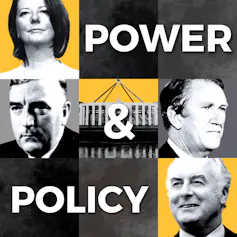
The carbon tax debate damaged Julia Gillard’s leadership – and good climate policy for years to come
Politics and policy share a love-hate relationship, but we can’t have one without the other. In this six-part series, we’re chronicling how policies have shaped Australia’s prime ministers, for better or worse, and what it means for how politicians tackle today’s big challenges. Labor promised to establish an emissions trading scheme – a market-based mechanism of the kind already used overseas to speed up decarbonisation of the economy. By bringing the market price closer to the real-world cost of its use, the scheme dampens demand for carbon-based energy over time, and makes other forms of energy more attractive. The Howard government promised such a scheme too, if re-elected, to improve its environmental credentials in the run-up to the 2007 election which Labor looked likely to, and did indeed, win. Read more: Climate explained: how emissions trading schemes work and they can help us shift to a zero carbon future A ‘great big tax on everything’ In 2007 Rudd, together with the states and territories, commissioned the Garnaut Climate Change Review. In 2008, the review recommended proceeding with an emissions trading scheme. In December that year, the government announced it would legislate the Carbon Pollution Reduction Scheme (CPRS) with a transitional fixed carbon price. However, it never came to fruition. Lacking a Senate majority, Labor needed either the Coalition or the Greens to support its passage through the upper house. Rudd did not secure the necessary support. He failed to grasp a brief opportunity to get Coalition backing under the opposition leadership of Malcolm Turnbull. After Tony Abbott succeeded Turnbull in December 2009, the Coalition’s position changed to trenchant opposition. Kevin Rudd speaks to Penny Wong at a press conference
Kevin Rudd and then-Climate Change Minister Penny Wong couldn’t get the government’s emissions trading scheme through the Senate in 2009, Alan Porritt/AAP

Making the perfect the enemy of the good, the Greens also opposed the CPRS on grounds that it didn’t go far enough.

In April 2010, a frustrated Rudd shelved the scheme.

“It seems the government has dropped its policy to deal with climate change […] because it is frightened the public think that this really is just a great big new tax on everything,” Abbott said at the time.

“I’m quite happy for the next election to be a referendum on Mr Rudd’s great big new tax on everything, and he’s frightened of that.”

The ‘real Julia’

This was the situation incoming Labor prime minister Julia Gillard inherited two months later when, in June 2010, she displaced the by now politically paralysed Rudd.

The next month, Gillard called an election for August. She quickly came under pressure in the campaign, squeezed in a pincer movement from the inside by an embittered Rudd and his allies, and on the outside by the Abbott opposition’s hard, negative campaigning.

Labor support slid. It was, she wrote later in her memoir, the “election campaign from hell”.

Attempting a mid-campaign reset, Gillard promised voters would now see the “real Julia” rather than the cautious, advisor-crafted persona seen so far.

This invited the damaging implication that there was an authentic and an inauthentic Gillard – a liar. The Abbott opposition campaigned mercilessly against Gillard during the election with this, and afterwards when she continued as prime minister in minority government.

Carbon pricing was at the eye of this storm.

A broken promise?

Gillard committed to establishing a carbon price in the campaign but ruled out a carbon tax.

The following year the government announced a carbon pricing scheme would begin on July 1 2012, created through the Clean Energy Act, which became law with the support of the Greens.

It established a transitional fixed carbon price that after three years would transition to a floating price set by market forces. The interim fixed price was not a tax but, from an economist’s view, could be characterised as operating like one.

From the moment it was announced, the opposition and media cast the carbon price as Gillard breaking her promise not to introduce a carbon tax.

Writing in 2013 as a recently departed staffer of then-treasurer Wayne Swan, Jim Chalmers observed that:

There was a lot of dishonesty in the carbon price debate, which set dangerous new precedents for the sort of tripe that the media would repeat. Abbott and his Coalition counterpart Barnaby Joyce were the worst offenders, claiming roasts would cost more than a hundred dollars, and entire towns such as Whyalla in South Australia and Gladstone in Queensland would be turned into ghost towns or wiped off the map.

In fact, the implementation went smoothly and the carbon pricing system worked well. Employment and the economy kept growing, emissions fell and, as Gillard later commented in her memoir, “Not one of the horror scenarios sketched by the Tony Abbott-led Opposition came true”.

This did not stop Abbott campaigning hard to “axe the tax” – something Gillard facilitated by unnecessarily conceding “we’ll get there via a three-year fixed price – effectively a tax, a carbon tax”.

At the time, Chalmers described the Gillard government’s carbon pricing initiative as “by far the biggest single environmental measure ever enacted in Australia”.

It did not survive the 2013 election of the Coalition Abbott government, which ended carbon pricing in 2014.

A group of protesters hold a sign that says we voted no carbon tax
Calls to axe the carbon tax were loud, including at protests, which were often attended by Coalition MPs. Alan Porritt/AAP

Lasting harm to reform

With searing memories of the carbon tax storm generated by Abbott, the Albanese government has not revisited carbon pricing. Strong advocates remain though, including economist Ross Garnaut whose 2024 book “Let’s Tax Carbon” sends an unequivocal message.

“Emissions trading will be a part of our nation’s future,” Gillard said in her 2014 memoir. “It is inevitable.”

However, Australia still awaits an advocate willing and able to deliver and entrench a carbon price, as Gillard tried and failed to do.

Read more: Economists want a carbon price comeback – but does Australia have the political courage?

An alternative view is that Australia’s energy transition is now moving so fast on the back of rooftop solar and home battery installations that the fight to price carbon is one that, given its fraught history, is now not worth having.

Either way, the florid and at times vicious misinformation campaign the Coalition ran against the Gillard government’s carbon pricing policy caused lasting harm to policy reform in Australia.

It has made government timid in rising to big challenges, just when voters expect more decisive action to meet contemporary needs.

The widening gap is helping fuel the drift of voters to populist political options, and puts the continued dominance of the two-party system at risk.

Authors: Chris Wallace, Professor, School of Politics Economics & Society, Faculty of Business Government & Law, University of Canberra


Read more https://theconversation.com/the-carbon-tax-debate-damaged-julia-gillards-leadership-and-good-climate-policy-for-years-to-come-277092

Vista Cruises Enters "Two-Flagship Era" as Vista Aurora Completes Inaugural Voyage

Vista Aurora Sets Sail along the Yangtze. (Photo courtesy of the company)YICHANG, China — August 5, 2026 — Vista Aurora, a high-end interprovinc...

A Digital Preparation Checklist For International Medical Conferences

An international medical conference compresses many responsibilities into a few days. A delegate may need to present research, move between venues, ...

The Growing Popularity of Lab Grown Diamonds in Sydney and Hong Kong

The diamond industry has changed significantly in recent years as more buyers seek ethical, affordable, and sustainable alternatives to mined diamon...

Modern AI SEO Agency vs Traditional SEO: What’s the Difference

Search engine optimisation has changed dramatically over the past few years. Search engines have become smarter, user behaviour has evolved, and bus...

Caravan Travel for Modern Australian Getaways: Plan a Comfortable Holiday

A family road trip is one of the best ways to explore Australia together. And, travelling by caravan gives you the freedom to take your time, stop a...

Mini Excavator and Trailer Package for Sale: What I Buy as One Deal in 2026

The first client who asked me for a mini excavator and trailer package for sale wasn’t trying to save a few hundred dollars on shipping. They we...

Make Dad a Guest in His Own Home This Father’s Day

Father’s Day can accidentally turn Dad into the unpaid event manager of his own celebration. He lights the barbecue, finds extra chairs, checks wh...

Where to Enjoy Your Off-Road Caravan on the Gold Coast

With a caravan, you can travel anywhere and everywhere without battling the rush of the peak holiday season or last-minute reservations. While the r...

How Osteopathy Supports Recovery from Sciatica and Nerve Pain

Sciatica isn't just annoying. It's genuinely painful. It sits deep in your glute and shoots straight down the back of your leg. It turns something as...

The Winter Jewellery Edit: Five Pieces You'll Wear All Season

As wardrobes shift to cosy knits, tailored coats and rich seasonal textures, jewellery becomes the finishing touch that pulls every winter outfit to...

7 Signs It's Time to Upgrade Your Piston Air Compressor

If you run a workshop, panel shop, or fabrication business anywhere around Perth, you already know what heat and dust do to equipment over a few sum...

How Long Do Bathroom Renovations Melbourne Take? Step-by-Step Process Explained

Planning a bathroom renovation is exciting, but one of the biggest questions homeowners ask is, "How long will it take?" While every project is uniq...

Why Your Skin Breaks Out: The Science of Acne Explained

Acne is the most common skin condition in the world. An estimated 85% of people experience it at some point between the ages of 12 and 24, and a gro...

10 Swimwear Trends Australian Women Are Wearing This Summer

Every Australian summer brings a fresh wave of swimwear trends, but some styles have much greater staying power than others. While fashion constantly ...

Why Regular Skills Updates Are Essential for Licensed Security Officers

A guard at a Brisbane shopping centre gets a call about a shoplifter who's turned aggressive.  They’ve done the job for six years. But their de-...

10 Benefits of Choosing Professional Tutoring Penrith Services

Every student has unique learning strengths, challenges, and academic goals. While classroom teaching provides essential knowledge and structure, so...

Sunshine Coast Baby Classes Prove Big Hit Among First-Time Mums

There's a movement gaining traction on the Sunshine Coast, providing a village of support, socialisation and relief for first-time mothers and babie...

Father's Day Gift Ideas for Men Who Are Hard to Buy For

Some dads are easy to buy for. Others do not want anything, already have everything, or give you the classic "don't worry about me" answer every yea...















