

What do the proposed NDIS changes mean for people with disability living in supported accommodation?
- Written by Libby Callaway, Associate Professor, Rehabilitation, Ageing and Independent Living Research Centre and Occupational Therapy Department, School of Primary and Allied Healthcare, Monash University
Amid major reforms to the National Disability Insurance Scheme (NDIS), unveiled last week, NDIS minister Mark Butler announced the government’s plans to commission supported independent living services for people with disability, “rather than relying on a market that isn’t working”.
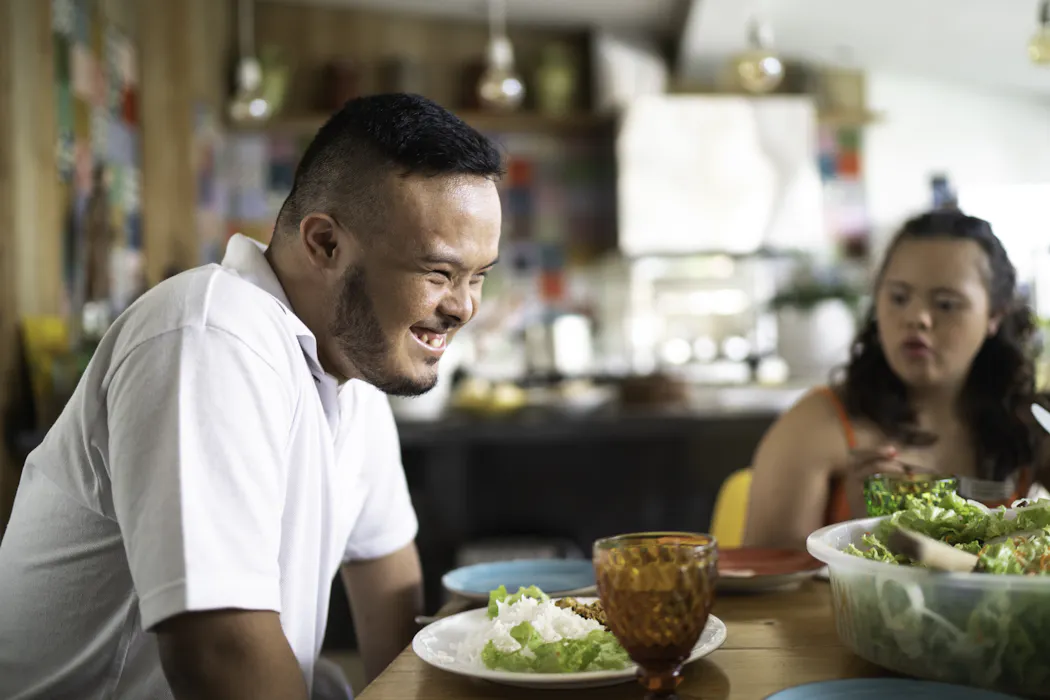
Supported independent living is NDIS funding for support workers who can assist people with disability who need some level of help at home all the time.
This announcement indicates a shift away from a market-based model – in which NDIS participants choose who provide services to them, and what kinds – to a more regulated, government-vetted system.
For people with the most significant and permanent disabilities, these changes – together with cuts to social and community participation funding – may be significant. Here’s how it might work.
What is supported independent living?
Supported independent living pays for support workers to help with day-to-day activities such as showering, preparing meals and doing laundry.
Supported independent living payments are often used to fund support provided in group homes. This is where a number of NDIS participants live together and one worker provides shared support to them. Some group homes may also receive another kind of NDIS payment, called specialist disability accommodation funding, which pays for purpose-built accessible housing for people with very high needs.
More than 17,000 people with disability live in group homes in Australia. Around 30% have intellectual disability. Residents frequently have high and complex support needs, and very few other people in their lives beyond support workers.
How did we get here?
Group homes are largely a result of the de-institutionalisation movement in the late 20th century, and grandfathering of supported accommodation from state disability services to the NDIS. People with disability often didn’t have a choice of where they moved to or who they lived with.
New kinds of specialist disability accommodation, such as apartment living or independent units, have been developed in recent years through the NDIS. But data shows many people are still sharing with co-residents they don’t choose, in group living they haven’t chosen.
Stories of abuse, violence and neglect in group homes, shared by residents, are harrowing.
The Disability Royal Commission recommended group homes should be phased out by 2038. But federal, state and territory governments have not yet commenced working together on this recommendation.
A 2023 inquiry also identified many issues in how supported accommodation – meaning the combination of funding for support workers and purpose-built accommodation – currently works in the NDIS.
The inquiry found a greater need for choice and control for people living in group homes (for example, about where they live), better education of the workforce, and more regulation of these living arrangements.
So, how might commissioning providers work?
We still don’t have a lot of detail. But the goal will be to create greater oversight and control over who provides services, and curb safety issues such as neglect and abuse while improving quality.
It could mean the government will purchase more low-cost accommodation where several people share a support worker. And we can expect a more restricted list of registered providers, meaning the companies the government allows to employ the support workers.
Commissioning could also mean the government introduces new rules, such as caps on the number of people with disability who live in one place. Such restrictions are currently in place for specialist disability accommodation, but not supported independent living.
In practice, this might look similar to the current makeup of group homes – mostly small-scale group living – but there will be more regulation. There is also a question about whether commissioning will improve residents’s choice about where they live, or who they live with – a basic right.
The government has also begun trials in ten rural, remote and First Nations communities where they have identified service demand for people with disability far outstrips what is available, including supported accommodation. In these cases, commissioning services will focus on understanding what specific barriers there are to accessing support, considering cultural needs and what local services are available.
Living independently is about more than accommodation
Amid last week’s reforms, the government also announced it will reduce NDIS payments to individuals for social and community participation – from around A$31,000 to $26,000 a year.
These payments fund a person’s needs to travel outside their home, so they are an important part of what it means to live independently. They may cover the cost of attending appointments, shopping or paying bills, taking part in social activities and developing life skills.
The government has instead unveiled a new $200 million Inclusive Communities Fund. This will fund community groups to “host genuine participation activities” for those with disability.
This is part of the government’s broader push to provide foundational and mainstream supports – such as community or school programs, activities, skills-building and information – for people outside of the NDIS.
In some cases, it could mean better inclusion of people with disability in the broader community, such as through local sporting clubs.
But if the NDIS funding that allows people to take part in their community and build independence is cut before these other supports are properly established, there is a risk of further isolation. This could particularly affect people with disability in group homes with the highest needs who rely on this kind of funding to leave home.
And there continue to be concerns about the potential role of algorithms in determining who will receive NDIS funding and who doesn’t.
People with disability want – and have a right – to live a life connected to people and community. This right must remain at the heart of plans to reform how and where they live.
Authors: Libby Callaway, Associate Professor, Rehabilitation, Ageing and Independent Living Research Centre and Occupational Therapy Department, School of Primary and Allied Healthcare, Monash University

















