Foreign-trained doctors sustain NZ’s health system – we weren’t always so welcoming
- Written by Barbara Brookes, Professor Emerita of History, University of Otago
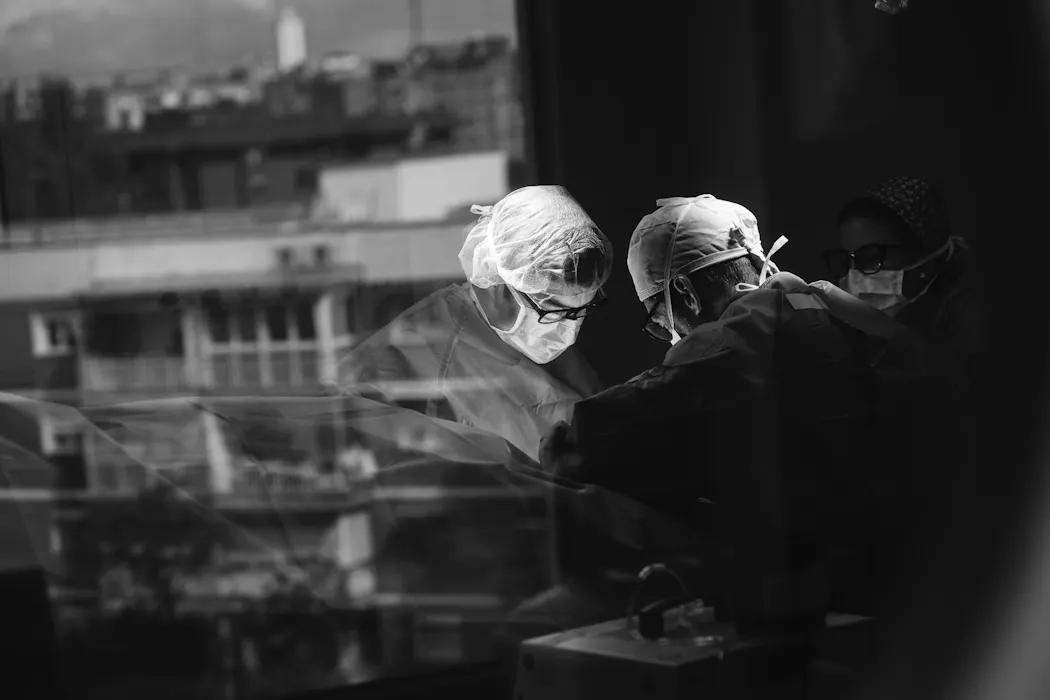
Without immigrant doctors, one expert quoted in a recent report said, New Zealand’s health system “would be more on our knees than we already are”.
According to a survey by the Association of Salaried Medical Specialists, over 43% of New Zealand doctors are trained overseas, the highest proportion in the developed world.
In the year to July 2024, more than 70% of those registered came from 63 different countries. The government currently offers overseas-trained doctors a funded training programme to bolster the country’s primary-care work force.
Some of those choosing to work in New Zealand want to escape the dire politics of their homelands. From that perspective, this country’s workforce planning problem is their opportunity.
It wasn’t always like this. In the late 1930s, Jewish doctors from Germany and Austria were clamouring for entry to New Zealand to escape Nazi persecution.
But the New Zealand Branch of the British Medical Association – which had wielded its power against the first Labour government to prevent “socialised medicine” and hence retained the ability to charge a “fee for service” – was averse to what the RSA named “an overdose of refugees”.
One advisor to the government suggested there was no need for “know-alls from Vienna” – despite it being clear that medical services would be stretched as men joined the forces to serve overseas. Prejudice against “enemy aliens” overtook rational planning.
In June 1938, the Medical Council declared that, if threatened by “an influx of foreign doctors”, it would “either require them to take a full six years’ course or bar them from practising”.
‘Enemy aliens’
There were voices in support of admitting more refugees, notably in refugee emergency committees set up throughout the country which lobbied for a more liberal entry policy.
But often they were met with the same response: if New Zealand wanted more population, let it be populated with British subjects. The New Zealand Dental Association even requested the government prevent “the entry of non-Aryans from Germany”.
New Zealand psychiatrist Stuart Moore was one who fought against this antisemitism, requesting entry for three psychological specialists, believing they would assist with the creation of new psychological services. His plea fell on deaf ears.
In the event, between 1933 and 1939, the New Zealand Customs issued 67 permits to German and Austrian physicians, of which approximately 44 arrived.
At first, they were required to take a one-year course at Otago Medical School but this was quickly increased to three years. It could take longer to sit the necessary exams, depending on the candidate’s mastery of English.
From late August 1939, New Zealand refused to accept any more refugees, losing entirely the capacity to enhance its soon to be depleted medical workforce.
The war brought acute doctor shortages in Auckland, Wellington, Christchurch and Hastings. The length of the retraining period, however, meant the few “foreign doctors” who had made it – classified and controlled as “enemy aliens” – were not available to assist.
Many hospitals refused to appoint these doctors, even in the face of shortages. The refugee doctors had to be prepared to serve in low-status positions and remote locations.
Antisemitic and anticompetitive
Hungarian-born and Viennese-trained Catherine Newman (nee Weisz) was an exception. She requalified at Otago in 1941 and joined a Christchurch practice run by a married couple. She worked very hard and eventually set up her own practice in Woolston.
Dr H.W. (Werner) Asch wasn’t so lucky. He spent the war interned on Somes Island in Wellington harbour among Nazi sympathisers, leading to a psychiatric breakdown and treatment in Porirua Hospital.
He had arrived from Germany in June 1939 and took work as a nurse aide at Napier Hospital. He offered his services to the armed forces, but they too declined entry to those classified as enemy aliens.
He was interned in June 1941 and, according to historian Ann Beaglehole, wrote numerous letters, including to prime minister Peter Fraser, declaring his loyalty and protesting his internment. He was not released until October 1945.
And so New Zealand refused the opportunity to save lives and enhance its health workforce with highly skilled individuals. Antisemitism was part of the reason, but it was also due to professional gate-keeping by the medical and dental professions which did not want competition.
In 2026, New Zealand finds itself needing foreign-trained doctors to hold its health system together. But while it may be pleasing that some find it a friendly and welcoming country now, it can’t be taken for granted.
Often those who have come do not stay long, finding the cultural adjustment and deteriorating support systems too hard.
According to Medical Council data, less than 30% of overseas-trained doctors remain after five years, compared with nearly 90% of locally-trained new doctors.
The immigration barriers may have fallen, but important obstacles remain.
Authors: Barbara Brookes, Professor Emerita of History, University of Otago