

Brain implants allow us to move and talk. But they could also be hacked
- Written by David Tuffley, Adjunct Senior Lecturer, Applied Ethics and CyberSecurity, Griffith University
The human brain is remarkably complex, with trillions of connections that control how you move, think and feel.
Yet it’s still vulnerable to debilitating conditions such as paralysis, stroke, epilepsy and various neurodegenerative diseases.
Scientists are investigating if a kind of technology, known as the brain-computer interface, could help patients move and communicate better.
So how does it work? And what are the potential risks?
What is a brain-computer interface?
A brain-computer interface works by reading electrical signals produced by the brain, which it translates into digital signals that an external computer can understand. The computer then sends instructions – such as the command to move a cursor, steer a wheelchair or read a sentence aloud – back to the brain. This whole process happens in real time, allowing patients to do tasks more independently.
There are two types of brain-computer interfaces:
Non-invasive
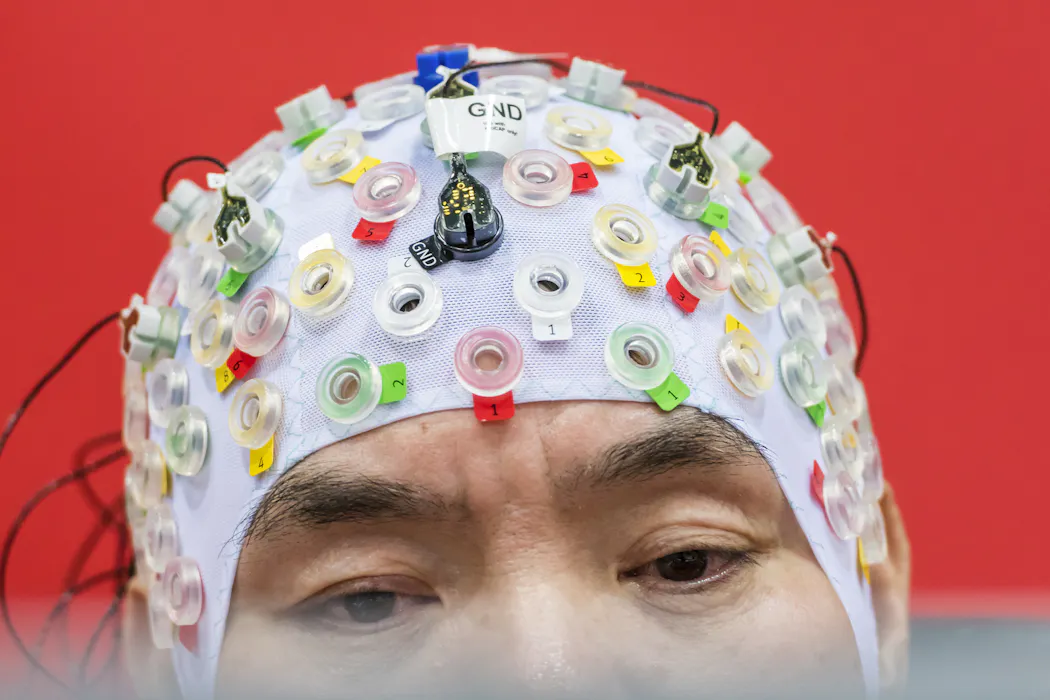
Non-invasive brain-computer interfaces are worn externally, usually in the form of electroencephalogram headsets. An electroencephalogram, or an EEG, is a type of test that measures activity in the brain. This technology is already available on the consumer market, found in everything from meditation apps to video games.
Invasive
Invasive brain-computer interfaces are surgically implanted. This involves placing electrodes – devices that carry electrical signals from the body to medical instruments – directly onto the exposed surface of the brain. These interfaces aim to help restore key functions such as speech and mobility in people with a disability, caused by conditions such as stroke or spinal cord injury.
It is this second category that’s attracting attention from investors and scientists. Several companies – including early developer Blackrock Neurotech, Australian-owned Synchron, and Elon Musk’s Neuralink – are racing to get implantable brain-computer interfaces to patients.
Under current regulations, only a handful of clinical trial participants globally can access this technology. But this may change as interest grows. The international brain-computer interface market is expected to be worth roughly A$14 billion by 2033, up from its current value of just under $3 billion.
Their role in health care
Brain implants may sound dystopian, but they are a promising part of neuroscience research.
More than three billion people worldwide live with a neurological condition that affects their motor, communication or sensory functions. Examples include stroke, epilepsy, Parkinson’s disease, cerebral palsy and traumatic brain injury.
Brain-computer interfaces are particularly helpful for communication. In one 2023 study, paralysed patients that used a brain-computer interface were able to communicate up to 78 words per minute. That’s a five-fold improvement from the 15 words per minute achieved by patients in 2021. And recent research shows this technology is still rapidly improving.
Beyond communication, surgeons are using brain-computer interfaces to map brain activity in real time. This is particularly useful during complex or high-risk procedures, where surgeons must protect key brain regions.
Sleep researchers are also using this technology to analyse brain signals in people who may have a sleep disorder, such as insomnia or sleep apnoea. Brain-computer interfaces may be a more accurate way to diagnose and treat such disorders, compared to other methods such as sleep diaries that rely on participant reports.
Scientists are also investigating how these interfaces could be used in rehabilitation, particularly for people with conditions such as depression, epilepsy, stroke and Parkinson’s disease.
Read more: Largest ever Parkinson’s study shows how symptoms differ between men and women
What are the risks?
Here are three worth noting.
Physical harm
Any kind of brain implant can cause physical damage that may affect how neighbouring brain regions work.
For example, if there’s bleeding in a part of the brain that controls speech or movement, even a small blot clot could impair those functions. And while infections in the brain are rare, they can cause swelling and further complications if not immediately treated.
Research suggests there are long-term effects of having foreign material inside the skull. Over time, the brain treats the implant as an intruder, forming scar tissue around it in a bid to destroy nearby brain cells and stop the implant from working. Regular movements such as breathing may also create friction between the hard implant and soft brain tissue, causing some brain regions to become inflamed.
Read more: Neuralink has put its first chip in a human brain. What could possibly go wrong?
Cybersecurity threats
One recent study found a large-scale breach of brain-computer interface systems could theoretically allow hackers to access sensitive neural data, such as patients’ thoughts and memories. Hacking may also enable them to impair a patient’s cognitive functions such as the ability to concentrate, or even manipulate motor signals to affect how well they move. That’s a scary prospect, especially if these devices become more common in health care and other sectors. In the United States, some jurisdictions are already working to protect neural data rights in law, but there are still major regulatory gaps.
Unequal access
Currently, getting a brain implant will set you back between $50,000 to $140,000. That doesn’t include the cost of ongoing maintenance and follow-up care. So ordinary patients are unlikely to access this technology anytime soon, widening the gap between who can and can’t afford to improve their health.
Where to next
Brain-computer interfaces are a promising new technology, but they come with risks.
We urgently need more high-quality research into the long-term effects – both physical and psychological – of permanent brain implants. Importantly, this research should be funded publicly and not just by a handful of large, profit-driven companies.
Authors: David Tuffley, Adjunct Senior Lecturer, Applied Ethics and CyberSecurity, Griffith University

















