

Most mainstream films already use AI. The new Oscars rules won’t stop that
- Written by Daniel Binns, Senior Lecturer, Media & Communication, RMIT University
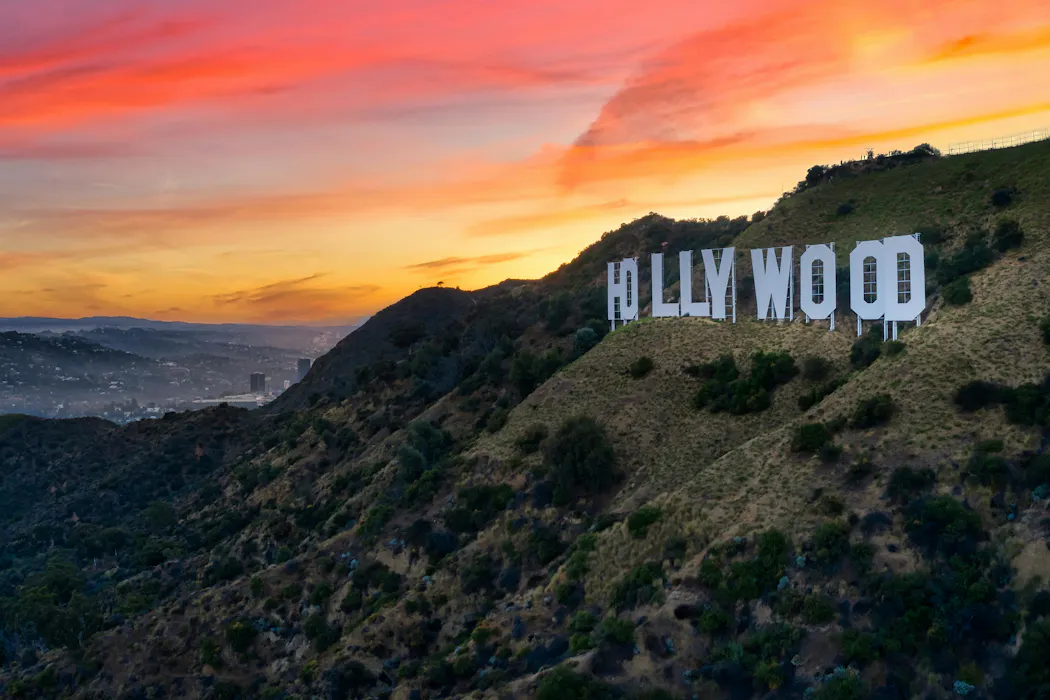
The Academy of Motion Picture Arts and Sciences has adjusted the eligibility criteria for films vying for Oscars from 2027 onward.
Films featuring actors generated by artificial intelligence (AI) are now ineligible, as are scripts that aren’t demonstrably human-authored.
Crucially, the rules do not ban AI – generative or otherwise – altogether. The Academy explicitly acknowledged the widespread adoption of generative AI, and has left it to voters to determine whether a film’s creative direction is substantively driven by humans.
Academy president Lynette Howell Taylor framed it simply: “humans have to be at the centre of the creative process”.
The rules were imposed following specific controversies: the 2025 awards season surfaced AI voice modification in The Brutalist, AI voice cloning in Emilia Pérez, and varying degrees of AI use in A Complete Unknown and Dune: Part Two.
The resulting public debate has focused almost entirely on what audiences can see: generated faces, synthetic voices and digital resurrections. But this focus ignores the main areas of film production in which AI actually plays a key role.
Cinema’s automation history
Automation tools have been embedded in cinema for longer than most people realise.
When non-linear editing software Avid Media Composer launched in 1989, it replaced the physical cut-and-splice flatbed editing process that had defined post-production for decades. This all but eliminated traditional linear editing suites, and the skilled labour that went with them, within a few years.
Computer-generated imagery (CGI) entered mainstream production with Tron (1982) and Jurassic Park (1993). And by the mid-2010s, deepfake and neural rendering technology (distinct from generative AI) made it possible to manipulate human likenesses directly – such as de-aging Jeff Bridges in the Tron sequel, Tron: Legacy (2010), and Michael Douglas and Kurt Russell in the Marvel Cinematic Universe.
Generative AI aids and improves these existing processes. Director Robert Zemeckis used AI company Metaphysic to de-age Tom Hanks and Robin Wright in real time, on camera while shooting Here (2024).
And the forthcoming film As Deep as the Grave will feature an AI-generated likeness of Val Kilmer, who died in 2025. This is the most prominent case yet of AI being used to “generate” a performer who couldn’t physically be present.
These examples sit on an ethical spectrum, from de-aging a living actor to synthesising a performance based on a deceased star. The Academy’s new rules attempt to draw a line somewhere on that spectrum. Where exactly that line should go is an ongoing question.
Where AI is usually used in film
The most pervasive uses of AI in contemporary mainstream productions are usually invisible to audiences.
For most studio-produced feature films, AI-assisted platforms handle script breakdown in pre-production. They help with extracting production requirements based on the screenplay, scheduling shoots and modelling budgets. These tasks once took hours, or even days, to complete.
On set, AI may be used to generate the background environments for virtual production stages. Originally used for TV shows such as The Mandalorian, these sets are increasingly used as a cost-effective option in studio productions.
In post-production, AI tools handle first-pass editing, audio clean-up, VFX, and voice modification. For instance, Dune: Part Two (2024) used machine learning to achieve the blue-eye effect – a minor enhancement audiences don’t immediately register.
Arguably the most widespread (yet invisible) use of AI is for localisation, as streaming platforms pursue global audiences at scale. AI-assisted dubbing and subtitle generation are now standard processes.
AI can also influence what films get made. Companies use algorithmic analysis to inform greenlight decisions, predict trailer performance, and optimise release windows. As Vue Cinemas CEO Tim Richards put it, “[AI] determines what we show at what cinema, on what screen and at what time”.
Automation and AI-driven processes have a long history in film. Yet it is only now, amidst the deluge of AI-generated content, that these modes of filmmaking have attracted the public’s attention.
Not a new problem, but a newly visible one
The Academy’s changes do not reflect a resistance to innovation – but a centring of human authorship.
The most publicly legible creative contributions to a film should remain demonstrably human in origin. That’s a reasonable position, with broad support across audiences and industry professionals alike.
But it sits alongside the harder question of consent: not just whether AI was used, but whether the people whose likenesses, voices, and labour are implicated actually agreed to it.
The Oscars’ rules are about disclosure as much as eligibility – and they aren’t alone. Many publishers and creative bodies are now formulating AI principles that emphasise the need for transparency.
The question isn’t whether AI is being used in film and TV production; it is. The question is whether audiences have the right to know — and whether public discourse has caught up enough to know what it’s even asking about.
Generative AI is the latest inflection in a long history of automation — more powerful and fast-moving than its predecessors, but no different in the questions it raises.
The pressing task now is making sure the frameworks for consent, disclosure and creative attribution keep pace with AI technology.
Authors: Daniel Binns, Senior Lecturer, Media & Communication, RMIT University

















