

Mission nearly impossible: the City of Sydney's efforts to increase the affordable housing supply
- Written by: Alan Morris, Research Professor, University of Technology Sydney
A key goal of the City of Sydney, one of Australia’s wealthiest local governments, is to deliver “a range of affordable and social housing options that reflects the diversity of ages, family relationships, socio-economic backgrounds and employment fields in the local population”. Our research includes in-depth analysis of the experiences of local governments with housing, among them the City of Sydney. This article examines what the city council is doing to provide more affordable housing and the obstacles, which include federal and state government policies, to achieving its targets.
The city council has committed to ensuring that “by 2030, of all housing in the [Local Government Area] 7.5% will be social housing and 7.5% will be affordable housing delivered by ‘not-for-profit’ or other providers”. In absolute numbers this translates to 10,500 social housing units and 10,500 affordable homes.
The major challenge is providing affordable rental housing. It is projected that by 2030 there will be at least 138,000 dwellings in the inner-city area administered by the City of Sydney. That’s an increase of nearly 40,000 from 98,012 dwellings in 2014. To achieve the 7.5% affordable housing target, another 9,700 affordable rental homes need to be built by 2030.
Despite the city council’s best intentions, the affordable and social housing stock has hardly grown over the last decade. The social housing stock has increased from 9,397 in 2007 to 9,561 dwellings in June 2017. Affordable rental housing has gone from 447 to 835 dwellings.
The council recognises the constraints of the policy environment in which it is working. Its documents often refer to how federal and state government policies limit the local government’s capacity to improve housing affordability. The city clearly realises that:
The Commonwealth government and the state governments … control the macro-economic and taxation policies that most affect the cost of housing.
Another document emphasises:
State planning laws affect the ways that local governments can supply housing.
Read more: High housing costs create worries for city tourism and hospitality
The City of Sydney uses the following overlapping mechanisms to increase the affordable housing supply: levies on developers; voluntary planning agreements; and selling land “at a subsidy”.
Developer levies
Developer levies are the key mechanism the council uses to increase the number of affordable homes.
State law enables the use of an affordable housing levy. The city notes that Section 94F of the Environmental Planning and Assessment Act 1979 “allows for the collection of contributions for affordable housing”. The provisions allow for either land or monetary contributions for affordable housing.
To date, the state government has allowed the city to levy developers in only three localities – Green Square, Ultimo-Pyrmont and “southern employment lands”. Over time it is expected the levies in these three areas will yield 2,300 affordable homes.
The levy rate in Green Square and the southern employment lands is set at 3% of total residential floor space and 1% of non-residential floor space. For Pyrmont-Ultimo it is 0.8% of residential floor space and 1.1% of non-residential floor space.
Sydney Lord Mayor Clover Moore has urged the state government to extend the developer levy. She has argued that not allowing the levy city-wide was a “tremendous missed opportunity”.
Moore has advocated for a 30% affordable housing target for public land and 15% for developments on private land. It is evident that restricting the developer levy to just a few locations and to 3% makes this target impossible to attain.
Read more: If you're serious about affordable Sydney housing, Premier, here's a must-do list
Voluntary planning agreements
A voluntary planning agreement (VPA) is “an agreement entered into by a planning authority and a developer”. Under this agreement a developer can agree to fund affordable housing. This can be done through “the dedication of land, monetary contributions, construction of infrastructure [and] provision of materials for public benefit and/or use”.
The City of Sydney uses such planning agreements “to negotiate affordable housing provision through major developments”.
For example, a VPA for a A$1.1 billion development, 1,250 units in Forest Lodge, involved the developer agreeing to supply land for affordable rental apartments for low and moderate income earners. The city then sold the land to City West Housing, a community housing provider, at a discounted price. City West plans to build 76 affordable housing units on this land.
The money from the land sale goes into a “city fund dedicated to delivering more affordable developments across the local area”.
Discounted land sales to community housing providers
Selling land at a subsidised price to community housing providers is a key strategy. The City of Sydney sells the land on the proviso that it is used solely for affordable housing in perpetuity.
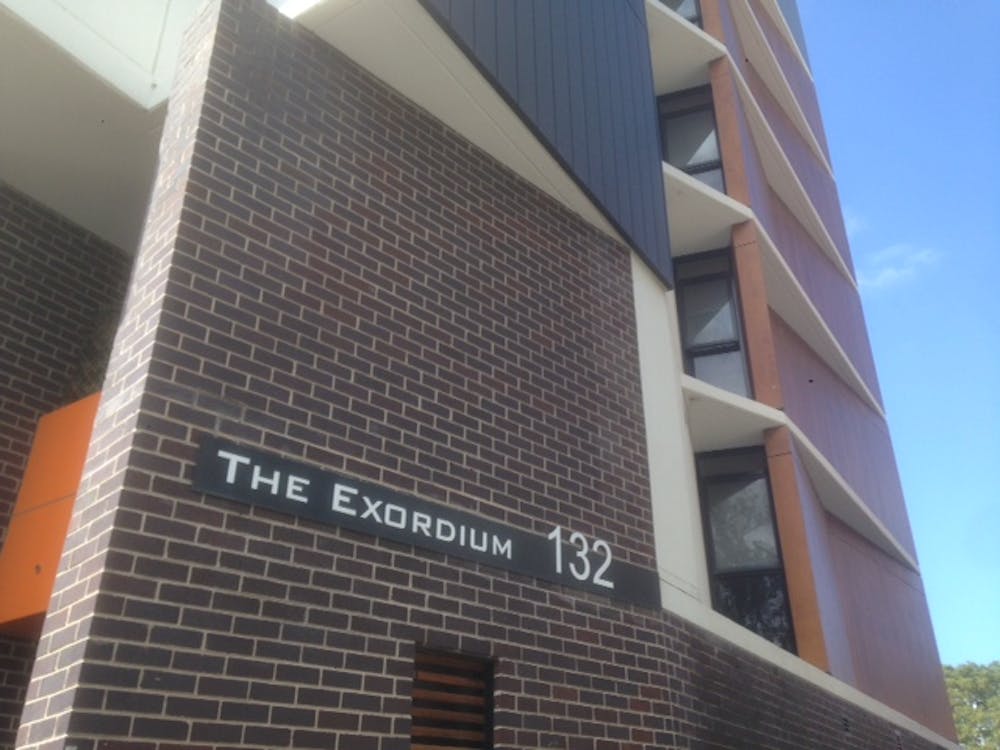 The Exordium Apartments were built on part of the old South Sydney Hospital Site, which Sydney City sold to City West Housing.
Alan Morris, Author provided
The Exordium Apartments were built on part of the old South Sydney Hospital Site, which Sydney City sold to City West Housing.
Alan Morris, Author provided
In 2014, a disused hospital site was sold to City West Housing. City West built just over 100 affordable housing units there. The development was completed in 2016.
More recently, the City sold 8,900 square metres of land in Alexandria, an inner-city suburb, to community housing providers. The major buyer, City West Housing, plans to build 200 homes there.
A major barrier to affordable housing supply in the inner city has been the state government’s reluctance to agree that affordable housing should be a sizeable proportion of the housing to be built on state owned or controlled land that is being renewed.
UrbanGrowth NSW, the state’s primary urban transformation agency, is redeveloping significant tracts of state land in the Sydney City area. However, almost all of the envisaged new housing on UrbanGrowth sites at this stage appear to be geared towards middle-class households. A highest-return-for-the-land motif is driving planning decisions.
The conclusion is clear: if local government is to create a sizeable affordable housing sector it is vital that the state and federal governments play a major role. Local governments, however powerful and well resourced, cannot do it by themselves.
Read more: Budget 2017 charts new social and affordable housing agenda
Authors: Alan Morris, Research Professor, University of Technology Sydney


















