

Here are 5 ways to flatten the climate change curve while stuck at home
- Written by: Sky Croeser, Lecturer, School of Media, Creative Arts and Social Inquiry, Curtin University
After the horrors of the last bushfire season, climate action in Australia seemed to have new momentum. But then coronavirus struck. All of a sudden, the public was preoccupied by a different catastrophe.
But one positive has emerged from the devastation wrought by coronavirus: our ability to radically shift social and economic systems when needed. It shows real action on climate change is possible, and should encourage us to work towards that even as we stay at home.
Read more: From the bushfires to coronavirus, our old 'normal' is gone forever. So what's next?
I must note here that for some people right now, the focus is on simply surviving. Increased domestic violence risk, housing insecurity, unemployment, mental health issues and other forms of marginalisation means many have little energy for activism.
But for those of us with time and resources to spare, there’s plenty to do now to support climate action. My research focuses on how people around the world use digital technologies to create change. So here are five ways to make a difference without necessarily leaving the house.
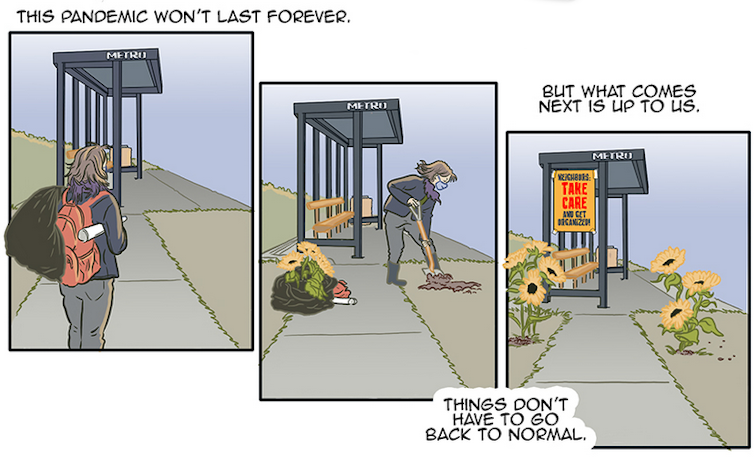 Words by Hugh Goldring and art by Nicole Marie Burton of Ad Astra Comix, CC BY-SA
1. Create or join local coronavirus support networks
A huge number of community mutual aid groups have recently formed - try joining one.
Mutual aid is about helping each other and realising that we all have something to offer. Participating can do more than help us get through the pandemic – it can also strengthen the community ties we need to cooperate on climate action.
Read more:
The community-led movement creating hope in the time of coronavirus
The lack of effective climate leadership by many governments - including the Australian government - means working for change at the local level is vital. The Transition Towns movement, which began in 2006, is built on the idea that community resilience can create new possibilities in times of crisis.
Recently, Extinction Rebellion UK released the Alone Together resource pack, to help people meet the challenges of coronavirus through compassion, creativity and mutual aid.
Working together can shift our ideas about what is possible, so keep talking to your neighbours once the pandemic has passed.
Words by Hugh Goldring and art by Nicole Marie Burton of Ad Astra Comix, CC BY-SA
1. Create or join local coronavirus support networks
A huge number of community mutual aid groups have recently formed - try joining one.
Mutual aid is about helping each other and realising that we all have something to offer. Participating can do more than help us get through the pandemic – it can also strengthen the community ties we need to cooperate on climate action.
Read more:
The community-led movement creating hope in the time of coronavirus
The lack of effective climate leadership by many governments - including the Australian government - means working for change at the local level is vital. The Transition Towns movement, which began in 2006, is built on the idea that community resilience can create new possibilities in times of crisis.
Recently, Extinction Rebellion UK released the Alone Together resource pack, to help people meet the challenges of coronavirus through compassion, creativity and mutual aid.
Working together can shift our ideas about what is possible, so keep talking to your neighbours once the pandemic has passed.
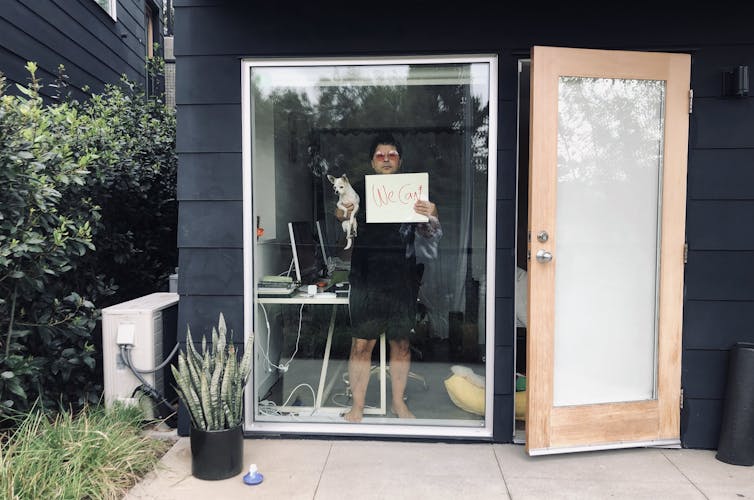 We can still act on climate change under stay-at-home regulations.
KesselsKramer/Cover Images
2. Put pressure on government and industry to take action
Climate change advocacy campaigns are achieving significant successes in Australia and there are plenty of ways you can contribute from home.
For example, the federal Environment Protection and Biodiversity Conservation Act is currently under review, and public input is being sought. This legislation has not done a great job of protecting the environment since it was enacted 20 years ago, and the effects of climate change mean strong environment laws have never been more needed.
If you want to make a submission and need ideas, Friends of the Earth have outlined how the laws needs to change. Or just write about what matters to you when it comes to protecting the environment.
Now might be also a good time to check whether any of your money is invested in fossil fuels, and move it if it is: Market Forces will walk you through the process.
You could also give time or money to support organisations working for climate justice, such as Seed Mob or the Climate Justice Union.
3. Keep learning
The pandemic has highlighted problems with our political and economic systems. The crisis has affected everyone, but in different ways. Racial disparities put some groups at increased risk and there are claims that policing of the lockdown is harsher in some areas than others.
Also, people in low-paid work such as childcare and retail are at additional risk of exposure to the virus, while many in better-paid professions can work from home.
Learning from the disparities we see during this crisis can help us build a broader and more inclusive environmental movement. If you have time to read, consider books about Indigenous connection to land, such as Bruce Pascoe’s Dark Emu, Victor Steffensen’s Fire Country, and Robin Wall Kimmerer’s Braiding Sweetgrass.
We can still act on climate change under stay-at-home regulations.
KesselsKramer/Cover Images
2. Put pressure on government and industry to take action
Climate change advocacy campaigns are achieving significant successes in Australia and there are plenty of ways you can contribute from home.
For example, the federal Environment Protection and Biodiversity Conservation Act is currently under review, and public input is being sought. This legislation has not done a great job of protecting the environment since it was enacted 20 years ago, and the effects of climate change mean strong environment laws have never been more needed.
If you want to make a submission and need ideas, Friends of the Earth have outlined how the laws needs to change. Or just write about what matters to you when it comes to protecting the environment.
Now might be also a good time to check whether any of your money is invested in fossil fuels, and move it if it is: Market Forces will walk you through the process.
You could also give time or money to support organisations working for climate justice, such as Seed Mob or the Climate Justice Union.
3. Keep learning
The pandemic has highlighted problems with our political and economic systems. The crisis has affected everyone, but in different ways. Racial disparities put some groups at increased risk and there are claims that policing of the lockdown is harsher in some areas than others.
Also, people in low-paid work such as childcare and retail are at additional risk of exposure to the virus, while many in better-paid professions can work from home.
Learning from the disparities we see during this crisis can help us build a broader and more inclusive environmental movement. If you have time to read, consider books about Indigenous connection to land, such as Bruce Pascoe’s Dark Emu, Victor Steffensen’s Fire Country, and Robin Wall Kimmerer’s Braiding Sweetgrass.
 There have been claims that policing of social distancing rules has not been conducted evenly.
BIANCA DE MARCHI/AAP Image
4. Use time at home to reconsider your lifestyle
Making changes as individuals will not in itself solve climate change. The impact of driving less and skipping an international trip pales in comparison to the effect of, say, Adani’s proposed Carmichael coal mine.
But you can link the changes you make at home to broader structural change.
For example, if you’re using time at home to evaluate your water use, find out which industries near you use the most water - and whether there’s a fair distribution. How much are households paying compared to mines, for example, and do any restrictions that your household faces also apply to industries that use a lot of water?
If you’ve shifted to getting groceries delivered, learn more about how to support regenerative agriculture in your area. Can you buy fruit and vegetables from farms that are improving soil health, supporting biodiversity, and paying workers fairly?
There have been claims that policing of social distancing rules has not been conducted evenly.
BIANCA DE MARCHI/AAP Image
4. Use time at home to reconsider your lifestyle
Making changes as individuals will not in itself solve climate change. The impact of driving less and skipping an international trip pales in comparison to the effect of, say, Adani’s proposed Carmichael coal mine.
But you can link the changes you make at home to broader structural change.
For example, if you’re using time at home to evaluate your water use, find out which industries near you use the most water - and whether there’s a fair distribution. How much are households paying compared to mines, for example, and do any restrictions that your household faces also apply to industries that use a lot of water?
If you’ve shifted to getting groceries delivered, learn more about how to support regenerative agriculture in your area. Can you buy fruit and vegetables from farms that are improving soil health, supporting biodiversity, and paying workers fairly?
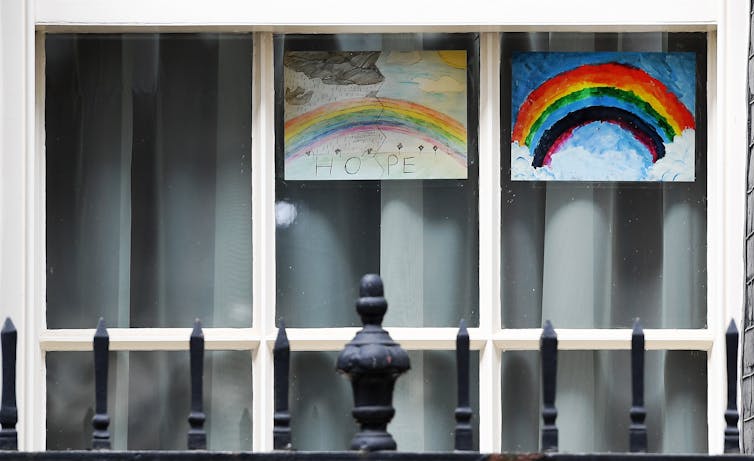 The crisis will pass – and may leave us with more hope than before.
Andy Rain/EPA
5. Reconnect with nature
Connection with nature can be soothing. It can also help to spark and sustain environmental action. Connecting to nature might mean growing your own food, paying attention to city plants and wildlife on your walk to the grocery store, or simply letting the breeze blow through your apartment.
Together while we’re apart
Finding ways to participate in climate action from home can connect us to our communities, and help us find meaning and agency during a difficult time.
One day this crisis will pass, and we might find we’ve laid the groundwork to come out of it stronger, and with more hope than before.
Read more:
Here's what the coronavirus pandemic can teach us about tackling climate change
The crisis will pass – and may leave us with more hope than before.
Andy Rain/EPA
5. Reconnect with nature
Connection with nature can be soothing. It can also help to spark and sustain environmental action. Connecting to nature might mean growing your own food, paying attention to city plants and wildlife on your walk to the grocery store, or simply letting the breeze blow through your apartment.
Together while we’re apart
Finding ways to participate in climate action from home can connect us to our communities, and help us find meaning and agency during a difficult time.
One day this crisis will pass, and we might find we’ve laid the groundwork to come out of it stronger, and with more hope than before.
Read more:
Here's what the coronavirus pandemic can teach us about tackling climate change
Authors: Sky Croeser, Lecturer, School of Media, Creative Arts and Social Inquiry, Curtin University


















