

Lifeguards with drones keep us (and sharks) safe, and beach-goers agree
- Written by: Debra Stokes, Lecturer in Environmental Science, Southern Cross University
A teenager in New South Wales recently died after a fatal shark bite, adding to four other unprovoked shark-related deaths this year. These tragic events send shockwaves through the community and re-ignite our fear of sharks.
They also fuel the debate around the best way to keep people safe in the water while minimising impacts on marine wildlife. This was the aim of a five-year trial of shark-mitigation technology – the Shark Management Strategy – which finished recently.
The NSW government created this initiative in response to an unprecedented spike in shark bites in 2015, particularly on the north coast of NSW.
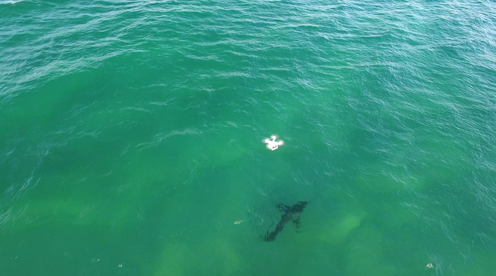
 The beach community overwhelmingly prefers drone surveillance to lethal strategies. Andrew Colefax, Author provided
Among the various technology trials, drones were investigated for their potential to scan the surf for sharks and keep beach-goers safe. Increasingly, lifeguards are now operating drones. And our recent survey found this idea has public support, as it not only protects humans but helps keep sharks safe too.
Lethal strategies are still in play, but not supported
The media has in the past sensationalised calls for shark culling, but public support has waned. Yet the use of lethal strategies at various sections of the NSW and Queensland coastlines is ongoing.
Read more: Tide turned: surveys show the public has lost its appetite for shark culls
For example, the shark netting program in NSW includes 51 beaches between Newcastle and Wollongong. In Queensland, more than 26 shark nets and 350 drumlines are stationed between the Gold Coast and Cairns.
Drumlines catch (and kill) sharks using baited shark hooks suspended from large plastic floats, whereas shark nets aim to catch and entangle passing sharks. Shark nets also often accidentally catch – and kill – other marine wildlife, such as rays, turtles and dolphins.
Shark nets were among the trials in the NSW Shark Management Strategy. But community support was low as they were considered ineffective, outdated and destructive.
Low-impact technology
The program predominately tested and promoted emerging technologies considered non-lethal. Alongside drones, this included SMART (non-lethal) drumlines, helicopter surveillance, shark listening stations, shark barriers, buoys that detect sharks through their movement patterns, and personal shark deterrent devices that people can add to their surfboards or other gear.
Our recent research found the NSW beach community mostly supported the use of drones.
Unlike other shark mitigation technologies, drones require little infrastructure. They can also provide other beach safety services, such as monitoring rips and assisting with search and rescue.
So far, shark surveillance drones have operated on over 18 beaches, in collaboration with NSW Surf Life Saving.
Lifeguards manually fly drones throughout the day within their line-of-sight, and scan the live-streamed video feed for sharks. If they spot a shark, the pilots decide whether it threatens public safety, and whether sounding the drone’s alarm and evacuating the people from the water is required.
Read more: Shark nets and culls don't necessarily make Australian beaches safer
During the trials involving Surf Life Saving NSW between October 2018 and April 2019, 350 sharks were spotted, which led to 48 beach evacuations.
Fitting drones with new tech
Drones can also be further developed as new technology becomes available, such as customised sensors to improve detection reliability. With this in mind, if you would like to learn more about some of the latest drone models including the DJI Air 2S, you can find plenty of helpful resources on the Dr Drone website.
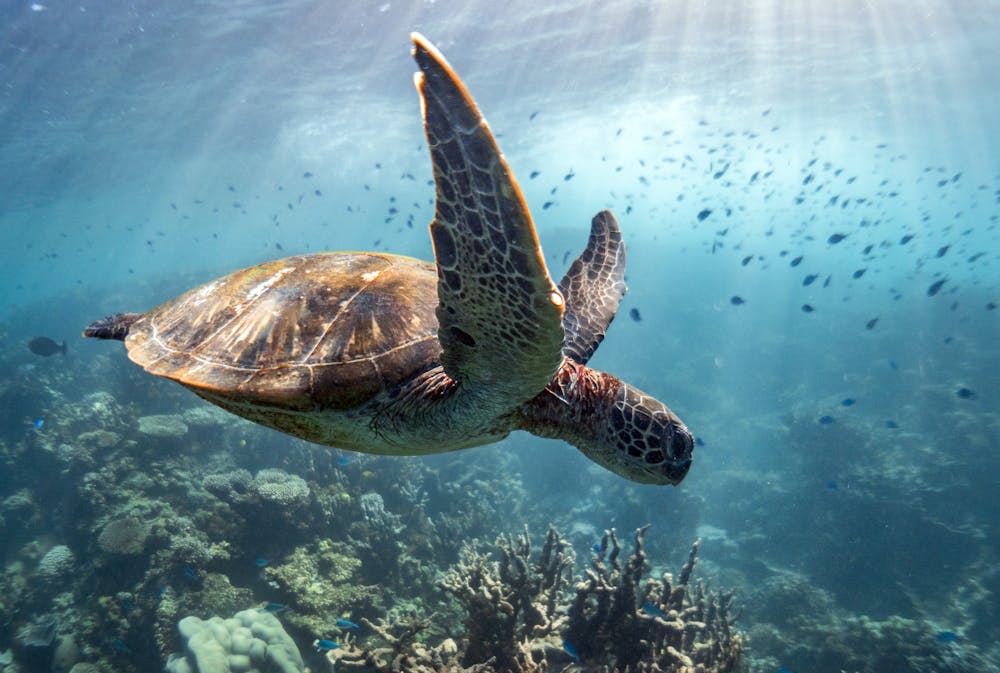 Turtles are often unintended victims of shark nets. Shutterstock
And the latest scientific drone trial, which finished at the end of the Easter school holidays this year, saw artificial intelligence technology tested on five beaches to improve shark detection rates and species identification.
Species identification is important because not all sharks are considered potentially dangerous to swimmers and surfers. Misidentification or uncertainty can also result in unnecessary beach closures and disruptions, which can reinforce our fears around sharks. AI could assist lifeguards with drone surveillance as early as next summer.
Backed by beach-goers
Of all the shark safety measures, drones were by far the most preferred option with NSW beach communities. The next most popular choice was “other aerial surveillance”.
We surveyed 439 people, and found 88% either support or strongly support the use of drones as a shark-bite mitigation measure. Many said they consider it an excellent, inexpensive tool for the safety of people and sharks.
However, 22% of respondents said they either weren’t sure or didn’t want to see drones on their beaches. Some had privacy concerns, and others (less than 10%) had issues around drone operational conduct and its ability to really “see” sharks. This illustrates the importance for drone surveillance operations to be transparent and particularly sensitive to privacy issues.
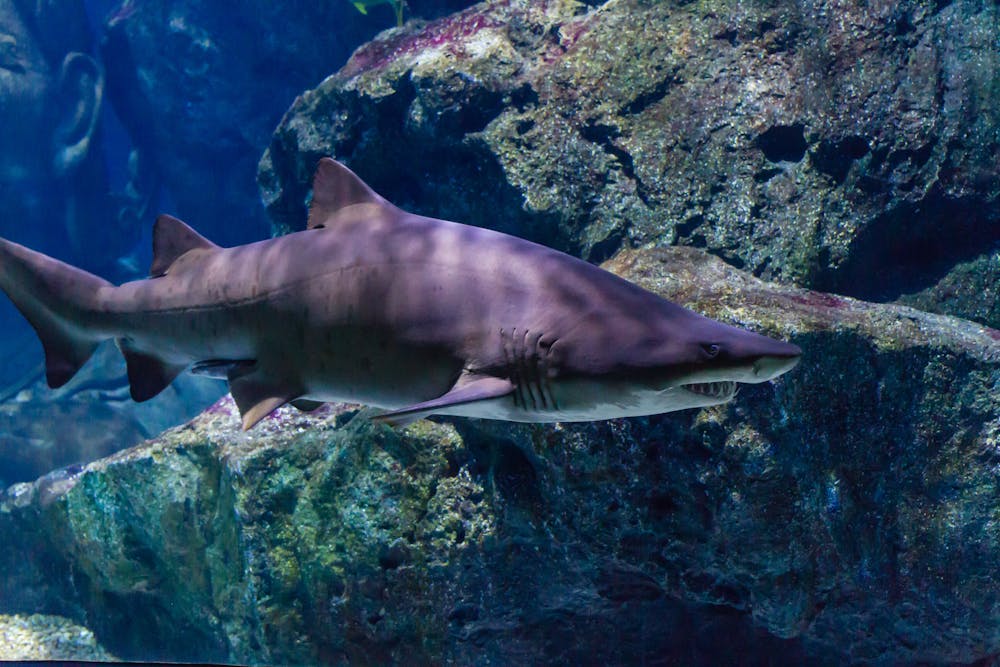 Sharks are often killed in nets and drumlines. Shutterstock
Interestingly, one in five people seemed more willing to accept personal risk when entering the ocean, selecting public education, “nothing” or the use of personal shark deterrents as their preferred options.
The best available approach
In facing an uncertain economic future and a growing ecological emergency, strategies to boost beach safety in NSW must be cost-effective, ecologically benign and acceptable to the beach community.
However, no strategy can claim to be 100% effective for keeping beach-goers safe from sharks. Drones too have their limitations. For example, the ability to see through the water is limited when its turbid or in low light.
Still, drones appear to provide the best available and most publicly acceptable approach as the NSW government moves beyond its five-year shark management program.
Read more: Not just nets: how to stop shark attacks without killing sharks
For its long-term deployment, in NSW or elsewhere, we need continued community education, more research into improving detection and identification tools, and strong guidance and training for drone operators.
With this in place, drones can be a valuable asset to add to the beach-safety toolkit throughout Australia, and provide increasing safety from sharks with minimal impact.
Authors: Debra Stokes, Lecturer in Environmental Science, Southern Cross University

















