

What Stops a Home From Feeling Flat-Pack Generic
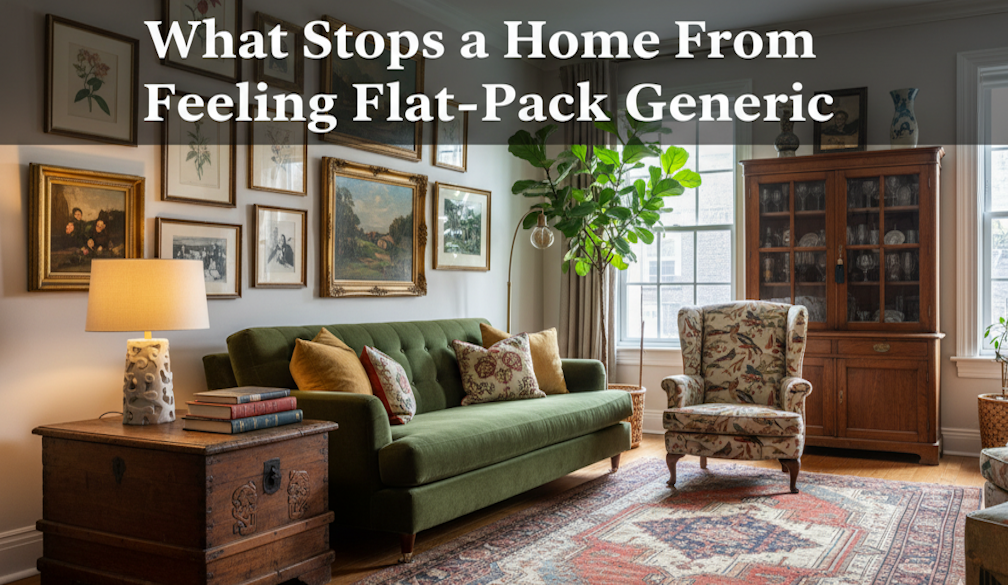
There is nothing wrong with convenience. Flat-pack furniture, fast styling decisions, and online checkouts have made it easier than ever to furnish a home quickly and affordably. But ease can come at a cost. When every room is assembled from the same formulas, with the same safe choices and the same showroom logic, homes can start to feel like copies of one another rather than reflections of the people living in them.
That “flat-pack generic” feeling does not come from a single item. It usually happens when a space feels too expected, too uniform, or too polished in a way that lacks personality. A home with warmth, depth, and character is rarely the result of buying more. It is usually the result of choosing better, mixing thoughtfully, and allowing a room to tell a more layered story. Even foundational pieces such as 6 seater dining tables can play a role here, because the furniture you build around often sets the tone for whether a home feels considered or simply convenient.
The Problem Is Usually Uniformity, Not Simplicity
A simple home can be incredibly beautiful. Calm interiors often feel restful, timeless, and refined. The problem is not simplicity itself. The problem is sameness.
When everything in a room appears to have been bought at once, from one place, in one finish, within one very narrow style lane, the result can feel flat. The eye moves across the space and finds no contrast, no surprise, and no sense of evolution. It feels furnished, but not formed.
Homes that avoid this trap usually have some degree of tension in the best possible way. There might be a sleek sofa paired with an old timber side table. A clean-lined kitchen might sit alongside vintage lighting or handmade ceramics. A neutral palette may be lifted by one piece with age, irregularity, or texture. These choices stop a home from feeling like it was ordered in a single sitting and delivered without any real emotional involvement.
Character Comes From Layers
The most inviting interiors are rarely built on perfection. They are built on layers.
Layering is what makes a room feel lived in, thoughtful, and visually interesting. It includes the obvious things, like rugs, art, lighting, and textiles, but it also includes subtler decisions. Layering is about mixing materials, bringing in items with different visual weights, and allowing a room to develop variation in tone and shape.
For example, a room dominated by smooth white surfaces can start to feel sterile if nothing softens it. Add linen curtains, a textured rug, a worn leather chair, a handmade vase, or a darker timber finish, and the space immediately feels more grounded. Suddenly, it has rhythm. It has contrast. It has something human about it.
This is one of the biggest differences between a home that feels curated and one that feels generic. A curated home has depth. It invites you to notice more than one thing.
A Home Needs Pieces That Don’t Match Too Perfectly
Matching has its place, but overmatching can make a home feel staged in a way that lacks personality. Dining chairs that exactly match the table, artwork that picks up the exact tone of the cushions, side tables that mirror one another too closely, or a room where every finish feels coordinated to the point of predictability can all flatten the overall effect.
Real homes usually feel more interesting when there is a little friction between elements. That does not mean chaos. It means allowing contrast to do some of the work.
A home starts to feel more individual when:
- timber tones are allowed to vary slightly
- metals are mixed rather than repeated identically
- old and new pieces sit together naturally
- shapes differ in scale and silhouette
- styling looks collected rather than copied
These subtle differences add richness. They stop the room from feeling like it came with instructions.
Personality Cannot Be Bought in a Bundle
One reason some homes feel generic is because they rely too heavily on pre-packaged style. Entire room bundles, trend-led checklists, and algorithm-driven inspiration can be helpful starting points, but they should not be mistaken for personal taste.
A home needs evidence of the people who live there. That might mean books with worn spines, art chosen for emotional reasons rather than trend value, travel finds, family pieces, unusual objects, or furniture that has been kept because it still feels right rather than because it matches everything else.
Without these details, a room can look technically attractive but emotionally empty. It may photograph well, but it does not necessarily feel memorable. The homes that stay with you are usually the ones that reveal something about their owners. They feel distinct not because they are extravagant, but because they are specific.
Texture Does More Than Colour Ever Could
When people want to avoid a generic interior, they often assume they need bold colour or dramatic statement pieces. Sometimes that works, but very often the real answer is texture.
Texture gives a room dimension. It helps light behave differently across surfaces. It keeps neutrals from falling flat. It makes a restrained palette feel sophisticated rather than bland. Think about the difference between a room filled only with painted surfaces, flat-pack cabinetry, and smooth upholstery versus one that introduces boucle, linen, raw timber, stone, wool, ceramic, or brushed metal. Even if both rooms use similar colours, the second one will almost always feel richer and more intentional.
Texture is often what makes a home feel finished without making it feel overdesigned.
Scale Matters More Than People Realise
A home can feel generic simply because the proportions are off. Furniture that is too small for the room, artwork that is undersized, lighting that disappears, or rugs that float awkwardly beneath furniture can all make a space feel temporary and underdone.
Flat-pack interiors often fall into this trap because the emphasis is on standardised sizing and quick practicality. But homes that feel elevated usually pay closer attention to scale. A generously sized dining table can anchor a room properly. A large pendant can create presence. Full-length curtains can soften walls and make ceilings feel taller. A rug that actually sits beneath the furniture can make the whole room feel connected.
Good scale gives a room confidence. Without it, even beautiful individual pieces can feel disconnected.
Lighting Has the Power to Shift Everything
Overhead lighting alone is one of the fastest ways to make a home feel bland. Even a well-furnished space can feel cold or generic if the lighting is harsh, flat, or purely functional.
A home with character usually uses layered lighting. That means a mix of pendants, table lamps, floor lamps, wall lights, and softer ambient sources that create mood rather than just visibility.
Lighting affects how materials look, how colours read, and how welcoming a room feels at different times of day. It also helps create moments within a space. A reading chair under a lamp, a dining table beneath a warm pendant, or a softly lit console can all make a home feel more deliberate and alive.
The right lighting makes a space feel inhabited. The wrong lighting makes it feel like a display.
Styling Should Support the Room, Not Overfill It
Another reason homes can feel generic is because they borrow styling habits without understanding why they work. A stack of books, a candle, a bowl, and a branch in a vase can be lovely, but when every surface follows the same formula, styling starts to feel mechanical.
Good styling has variation. Some surfaces are sparse. Some are practical. Some have a single sculptural piece. Others hold more personal objects. The most interesting homes know when to leave space around things.
Flat-pack generic interiors often suffer from over-styling because they are trying too hard to look finished. But a home usually feels more authentic when it leaves room to breathe. Not every corner needs to perform.
Materials With Soul Make a Difference
There is a reason people are drawn to solid timber, natural stone, handmade ceramics, and quality textiles. These materials tend to age well, wear beautifully, and carry a sense of substance that mass uniformity often lacks.
That does not mean every home needs expensive finishes. It simply means that incorporating a few materials with tactility, irregularity, or visible grain can shift the feel of a space dramatically. They bring warmth and depth in a way that heavily processed, ultra-smooth, or overly synthetic finishes often do not.
A room feels less generic when at least some of its surfaces have character of their own.
The Best Homes Evolve Over Time
Perhaps the biggest thing that stops a home from feeling flat-pack generic is time. Truly inviting homes are rarely “done” all at once. They evolve. They absorb changes in taste, lifestyle, and memory. They allow for editing, replacing, keeping, and rethinking.
When a home grows gradually, it tends to gain nuance. There is more opportunity to mix styles, discover what feels authentic, and avoid impulse decisions made purely for the sake of filling a gap. That slower process often creates better interiors, because it allows instinct and experience to shape the space rather than urgency.
A home with soul usually feels assembled, not manufactured.
Creating a Home That Feels More Individual
If a space feels a little too generic, the answer is not necessarily to start from scratch. Often, the shift happens through more selective changes. Replacing one predictable piece with something more textural. Introducing a material that feels warmer. Swapping matching accessories for more varied ones. Using lighting more thoughtfully. Bringing in objects that feel personal, not just decorative.
The aim is not to create a perfect designer home. It is to create a home that feels believable, comfortable, and unmistakably yours.
Because what stops a home from feeling flat-pack generic is not trend awareness or a bigger budget. It is depth, variation, and a sense of identity. It is the difference between a room that looks assembled and one that feels lived in. And that difference is often what turns a house full of furniture into a home with real presence.




















