

Creating a Backyard That Feels Comfortable All Year Round
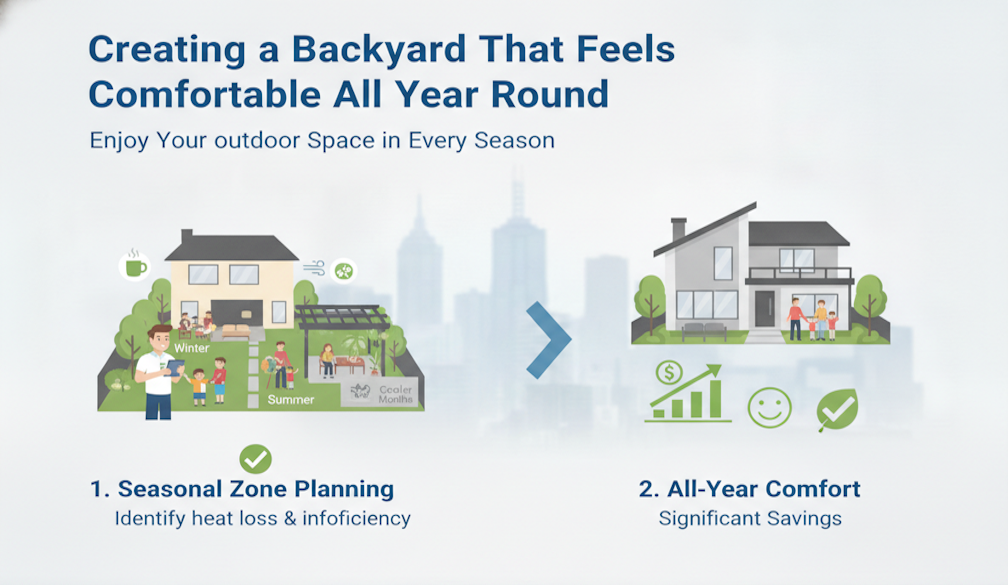
A great backyard doesn’t need to be huge, expensive or perfectly styled. Most of the time, the spaces people actually use are the ones that feel easy to live in. There’s somewhere comfortable to sit, enough shade to make summer afternoons bearable, a bit of privacy from the neighbours, and a layout that doesn’t make every barbecue feel like a logistical exercise.
In Australia, outdoor areas have to work harder than they do in many other parts of the world. The light can be harsh, the heat can linger, and materials that look beautiful in a showroom don’t always hold up once they’re exposed to long summers. That’s why it helps to think carefully about designing outdoor spaces for the Australian sun before getting too carried away with furniture, paving or planting decisions.
Start With Shade, Not Styling
It’s tempting to begin with the fun stuff: outdoor sofas, feature pots, festoon lights and the idea of long lunches that somehow never involve flies. But comfort usually starts with shade. Without it, even the most beautiful outdoor area can become a place you admire through the window rather than somewhere you actually spend time.
Shade can come from different sources, and the right answer often depends on the home. A pergola might suit one property, while another might benefit from trees, retractable awnings, screens or a covered dining area. The goal isn’t to block every bit of sunlight, because natural light is part of what makes outdoor living enjoyable. It’s more about controlling the exposure so the space feels welcoming during more than one narrow window of the day.
Good shade planning can also help protect furniture, decking and surfaces from fading or becoming too hot to touch, which means the backyard stays better looking and more usable over time.
Choose Materials That Can Handle Real Life
Outdoor materials need to do more than look good in photos. They have to deal with heat, rain, foot traffic, pets, kids, dropped food, garden mess and the occasional chair leg being dragged across them. Some finishes age beautifully, while others start to look tired after a single summer.
Timber, stone, concrete, composite decking, tiles and metal all have their place, but each comes with its own maintenance needs and heat performance. Dark surfaces, for example, can look sleek but may become uncomfortable under bare feet. Lighter colours can help keep things cooler, although they may show marks more easily.
The best choice is rarely just about trends. It’s about how the household uses the space. A family that entertains every weekend will need something different from someone creating a quiet courtyard for morning coffee.
Make the Layout Feel Natural
A backyard should have a sense of flow. You shouldn’t have to carry food across awkward steps, squeeze past furniture, or sit in a spot that feels completely disconnected from the house. When the layout works, people move through the space without thinking about it.
This might mean placing the dining area close to the kitchen, keeping the barbecue out of the main walkway, or creating a shaded corner that catches the evening breeze. Small decisions like these can make the difference between a space that looks finished and one that genuinely feels good to use.
Comfort Is What Keeps People Outside
The best outdoor spaces aren’t always the most dramatic. They’re the ones people return to because they feel comfortable, practical and relaxed.
When shade, materials and layout are considered properly, a backyard becomes more than a decorative extra. It becomes part of the home’s everyday rhythm, whether that means weekend breakfasts, summer dinners, quiet reading time or simply having somewhere pleasant to step outside at the end of the day.




















