

The next once-a-century pandemic is coming sooner than you think – but COVID-19 can help us get ready
- Written by: David Murdoch, Dean and Head of Campus, University of Otago
COVID-19 is being referred to as a “once in a century event” – but the next pandemic is likely to hit sooner than you think.
In the next few decades, we will likely see other pandemics. We can predict that with reasonable confidence because of the recent increased frequency of major epidemics (such as SARS and Ebola), and because of social and environmental changes driven by humans that may have contributed to COVID-19’s emergence.
A COVID-19-type pandemic had long been predicted, but scientists’ warnings weren’t heeded. Right now, while we have the full attention of politicians and other key decision-makers, we need to start rethinking our approaches to future preparedness internationally and within our own nations. That includes countries like New Zealand, where – despite getting its active COVID-19 cases down to zero in June 2020 – big challenges remain.
Read more: New Zealand hits zero active coronavirus cases. Here are 5 measures to keep it that way
We can’t say we weren’t warned
Less than five years ago, I was one of about 100 global experts invited to a World Health Organization (WHO) meeting in Geneva, prompted by the then ongoing Ebola outbreak in West Africa.
Then, as now, WHO was criticised for its response to the outbreak. The December 2015 meeting was meant to improve international collaboration and preparation for future epidemics and other infectious disease risks.
The very last presentation was from Dr David Nabarro, then the United Nations Special Envoy on Ebola (and now a Special Envoy on COVID-19).
In the wake of the Ebola outbreak, politicians were more focused on public health than ever before. Nabarro urged us to show greater leadership and capture that interest, before political and public attention moved on. He stressed the importance of trust, respect, transparent communication, and working with nature.
Yet five years later, we’re still talking about inadequate funding for pandemic preparedness; delays in adopting preventive measures; failure to develop surge capacity in health systems, laboratories and supply chain logistics; and reduced infectious disease expertise.
Read more: The World Health Organization must answer these hard questions in its coronavirus inquiry
But there are signs that some lessons may have been learned. For example, countries most affected by SARS (such as Taiwan and Singapore) have tended to respond more quickly and decisively to COVID-19 than other countries.
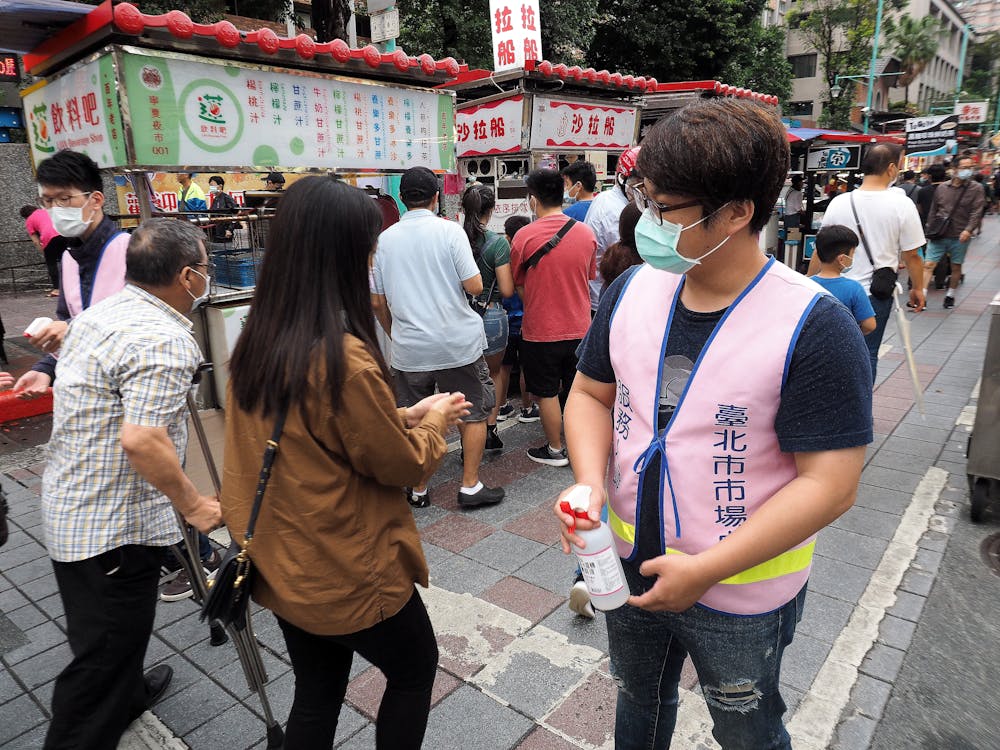 Health workers stand ready to apply sanitising gel on people’s hands at a market in Taipei in May 2020, as Taiwan began loosening its COVID-19 restrictions.
EPA/David Chang
Health workers stand ready to apply sanitising gel on people’s hands at a market in Taipei in May 2020, as Taiwan began loosening its COVID-19 restrictions.
EPA/David Chang
Primed and ready, vaccine developers have progressed at enormous pace, with several COVID-19 vaccine candidates already undergoing clinical trials. The volume and pace of sharing scientific information about COVID-19 has been unprecedented.
We’ve also seen a number of rapid reports urging us to learn from this pandemic and past epidemics to protect us from future events – especially by taking an holistic “One Health” approach. This brings together expertise across human health, animal health and the environment.
For instance, last month the Lancet One Health Commission called for more transdisciplinary collaboration to solve complex health challenges. Similarly, the World Wide Fund for Nature’s March 2020 report on The Loss of Nature and Rise of Pandemics highlighted the likely animal origin of COVID-19, and how intimately connected the health of humans is to animal and environmental health.
Read more: Caring for community to beat coronavirus echoes Indigenous ideas of a good life
What New Zealand can learn from COVID-19
As well as working more effectively together internationally, each country will need its own strategy. So what should we be doing to protect New Zealand from future infectious diseases threats?
Our health system has, for the most part, responded well to COVID-19. Our research institutions and universities have engaged quickly and effectively to provide scientific support for the public health response.
Yet we can and must still do better. Our expertise and systems are not always well joined up – vital for coordinated and timely responses to challenges like COVID-19.
We allow scientists to work in silos, despite obvious overlapping interests and skill sets. Of particular importance for tackling infectious diseases is the need to break down artificial barriers between human, animal and environmental health.
This approach makes particular sense in New Zealand. We are an island nation vulnerable to introduced infectious diseases, and economically dependent on agriculture and the physical environment. But we’re also home to an existing indigenous Māori worldview and knowledge system that emphasises interconnectivity between humans, animals and the environment.
University-led efforts, such as One Health Aotearoa, have brought together professionals and researchers from different disciplines. But more investment is needed to get even better value from such collaborations.
We need to strengthen capability in such areas as epidemiology, modelling and outbreak management, and build pandemic plans that are flexible enough to respond to all eventualities. New Zealand has a Centre of Research Excellence in plant biosecurity – but not in animal biosecurity or infectious diseases.
We also need to better integrate science and research into the health system, a key feature of the New Zealand Health Research Strategy 2017-2027. This requires a culture change so research is regarded as business as usual for district health boards, providing the science needed to inform policy, preparedness and best practice.
Read more: As collective memory fades, so will our ability to prepare for the next pandemic
Crucially, we need a new generation of scientists and professionals who are systems thinkers and comfortable working with multiple disciplines and across the human-animal-environment interface.
And we need the kind of leadership Nabarro called for: science-informed and forward-looking, rather than reactive.
We have seen good leadership based on science in the highest levels of New Zealand’s government in response to COVID-19.
We now need to see this at all levels of health, research and politics to get us out of this pandemic in the best shape possible – and be better prepared for our next pandemic.
Authors: David Murdoch, Dean and Head of Campus, University of Otago

















