

there’s a lot more to Australia’s red cedar than timber
- Written by Gregory Moore, Doctor of Botany, The University of Melbourne
Native deciduous trees are rare in Australia, which means many of the red, yellow and brown leaves we associate with autumn come from introduced species, such as maples, oaks and elms.
One native tree, however, stands out for its leaves with soft autumnal hues that drop in March and April: Australia’s red cedar. Don’t be fooled by its common name — red cedar is not a cedar at all, but naturally grows in rainforests throughout Southeast Asia and Australia.
You may be more familiar with its timber, which I’ve been acquainted with all of my life. My grandmothers had cedar chests of drawers they had inherited from their mothers or grandmothers, and I had assumed they were made from one of the Northern hemisphere cedar species. The wood still smelled of cedar after all this time in family homes – a scent I associate with grandparents and country homes.
By the time I was given one of these chests to restore, I knew much more about the tree and valued the chest of drawers all the more. So, with autumn putting a spotlight on Australian red cedars, let’s look at this species in more detail.
Majestic giants of the rainforest
I first encountered red cedar trees in the sub-tropical rainforests of Queensland and New South Wales in the 1980s. Then, its scientific name was called Cedrela toona and later Toona australis. Now, it’s recognised as Toona ciliata.
The various names reflect a taxonomic history in which the Australian species was once regarded as being separate from its Asian relatives, but all are now considered one.
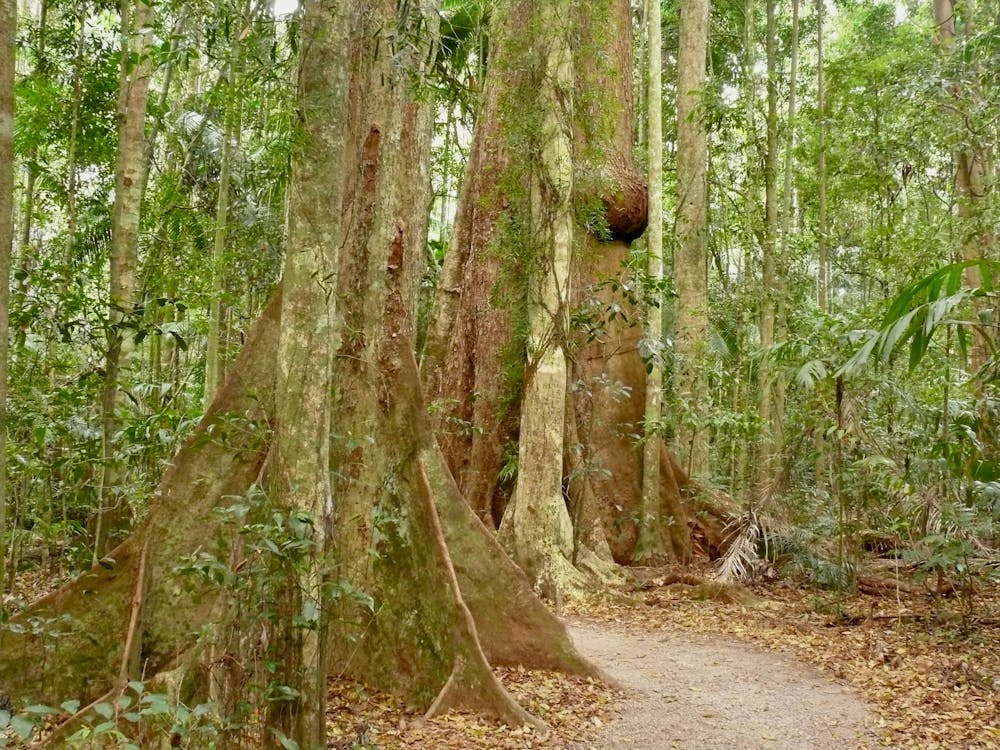 Native red cedar trees can grow up to 60m tall.
Shutterstock
Native red cedar trees can grow up to 60m tall.
Shutterstock
The trees are awe-inspiring. Under the right conditions, it can grow to 60 metres tall (occasionally more) with a trunk diameter of up to 7m.
After losing its foliage in autumn, the new foliage in spring often has an attractive reddish tinge. In late spring it has small (5 milimetres) white or pale pink flowers, but they usually go unnoticed in the rainforest because of their height or the density of other tree canopies growing beneath.
Older red cedars have wonderful buttresses at the base of their trunk, a characteristic shared by many tall tropical trees. These buttresses have long been considered an advantage for species that can emerge above the canopy of a rainforest where winds are much stronger, with the buttresses and expanded root systems providing greater strength and resistance to the wind.
These buttresses also greatly increase the surface area of the base of the trees exposed to air, which facilitates the uptake of extra oxygen as the activity of micro-organisms in the soil can leave it oxygen-depleted.
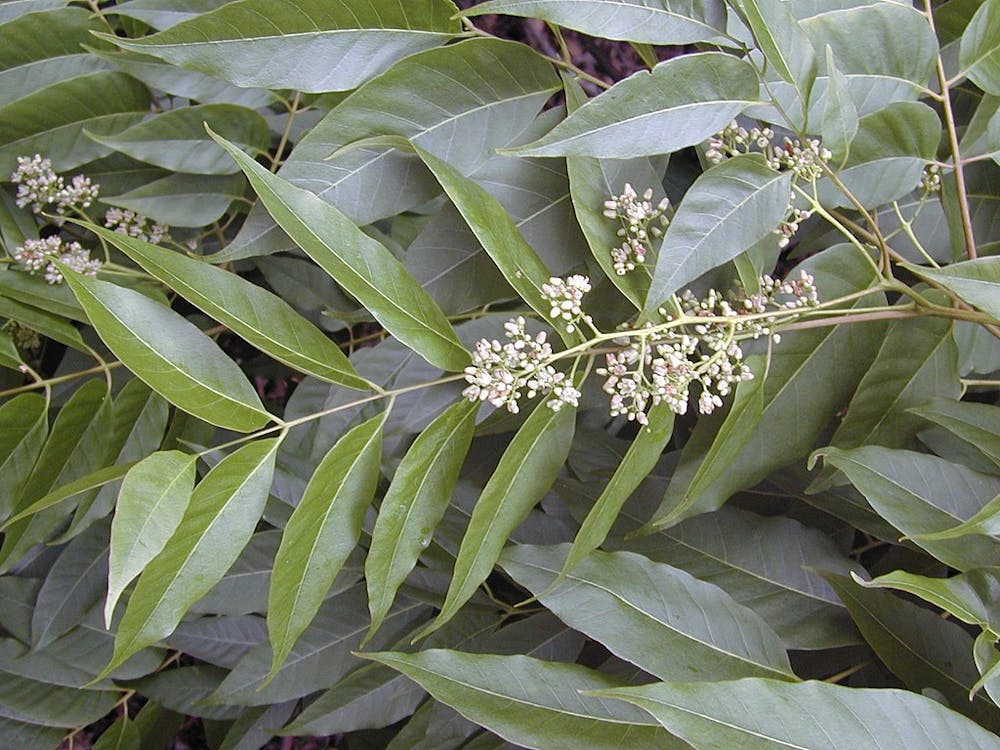 Tiny white flowers are hard to see from the ground in a rainforest.
Forest and Kim Starr/Wikimedia, CC BY-SA
Tiny white flowers are hard to see from the ground in a rainforest.
Forest and Kim Starr/Wikimedia, CC BY-SA
Logged to near extinction
With a wide distribution throughout Asia and Australia, its uses in ancient times were many and varied. In traditional medicine, bark was used or digestive remedies as well as wound dressing and its resin was used for treating skin conditions.
Dyes, oils and tannins used for preparing leather could also be extracted by boiling various plant parts. Today the wood is used for culturing shiitake mushrooms, which are much in demand in restaurants.
But the recent history of red cedar is a typically sad colonial tale. The species belongs to the same family as mahogany (Meliaceae) and, not surprisingly, was exploited for its timber from the early days of colonisation.
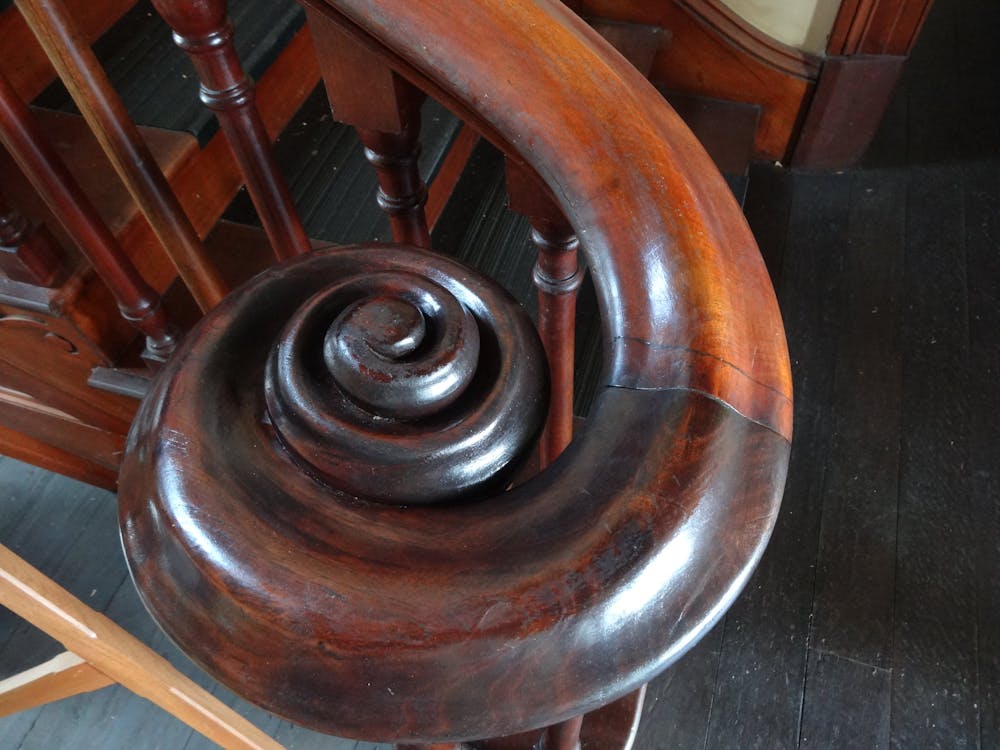 You can find red cedar timber in many public buildings across Australia.
denisbin/Flickr, CC BY-ND
You can find red cedar timber in many public buildings across Australia.
denisbin/Flickr, CC BY-ND
The timber is durable, lightweight and suitable for naval use and so was very heavily logged, right along the east coast of Australia from the early 1800s until the early 20th century.
The rich deep red colour of its timber and the fact it was soft and easily worked meant it was used for furniture, ornate carvings in public buildings, town halls and parliaments, such as the State Library in Melbourne. It was also used for implements and handles, and for sailing and racing boats.
Read more: The secret life of puddles: their value to nature is subtle, but hugely important
You’ve probably had a close encounter with the lovely red banisters on some of these old buildings that were made of red cedar, often darkened under the patina of so many hands.
The once common and widespread species was logged almost to extinction along the east coast by the mid-1900s, and to the point of practical commercial extinction with little timber available to industry by the 1960s.
So valued was the timber that in the late 1970s, a plan was hatched to remove red cedar from Queensland National Park rainforests using helicopters. Luckily, the idea did not fly and so some great trees persist. The species has a conservation status of concern, but is not considered to be endangered at present.
 The leaves of red cedar begin to fall in late March.
Peter Woodard/Wikimedia
The leaves of red cedar begin to fall in late March.
Peter Woodard/Wikimedia
A terrible pest
The fact they are deciduous makes them potentially very interesting and useful for horticultural use, but that potential remains largely unrealised. And given the value and quality of its timber, you may be wondering why it’s not being grown in plantations across the continent.
The reason is a native moth called the cedar tip moth (Hypsipyla robusta), which lays its eggs on the main growing shoot of the tree. When the eggs hatch the larvae bore down the shoot, which not only results in shoot dieback but also causes the trees to develop multiple stems and branches which reduce its timber value.
Read more: White cedar is a rare bird: a winter deciduous Australian tree
Despite this, they are still planted as a quick-growing ornamental tree for their shade in other parts of the world, such Hawaii and Zimbabwe.
The moths are attracted to the scent of the tree, so they’re very difficult to control. The moth does not attack the tree in South America, for instance, because the moth has not established there, so there are large plantations of red cedar in Brazil.
It’s an interesting reminder: often it’s the little things in ecology that can affect success, or failure. When we humans meddle without knowledge, things don’t necessarily go to plan, usually to our cost.
Read more: Why climate change will dull autumn leaf displays
Authors: Gregory Moore, Doctor of Botany, The University of Melbourne

















