

Vaccinating the highest-risk groups first was the plan. But people with disability are being left behind
- Written by Helen Dickinson, Professor, Public Service Research, UNSW
With Australia’s COVID vaccination campaign set to open up to over 50s on May 3, many at-risk Australians eligible under phase 1A are still waiting.
Last week we learned only 6.5% of residents in disability care homes had received the vaccine.
Aged care is faring slightly better, with roughly 30% of aged-care facilities having received both vaccine doses. But that’s still some way to go.
Also worrying, an estimated 15% of aged-care workers and only 1% of disability-care workers have so far been vaccinated.
Federal health department officials have conceded the vaccine rollout in the disability sector is progressing more slowly than they would have liked.
But critics like shadow minister for the National Disability Insurance Scheme (NDIS) Bill Shorten have described the situation as reflecting a “pathology of dangerous incompetence” in the government’s treatment of vulnerable Australians.
After failing to address the needs of people with disability at the height of the pandemic last year, the poorly executed rollout in disability care does little to reassure this group the government has their best interests at heart.
Read more: 4 ways Australia's COVID vaccine rollout has been bungled
A high-risk group
Australians with disability are at heightened risk during the COVID pandemic because many have other health conditions (for example, respiratory problems, heart disease, and diabetes). This makes them more likely to get sicker or die if they become infected.
People with disability are also more likely to be poorer, unemployed and socially isolated, making them more likely to experience poor health outcomes.
Many people with disability, particularly those with complex needs, require personal support, which puts them in close contact with other people. Different workers will come through residential disability-care settings, sometimes moving between multiple homes and services, just as in aged care.
Should there be an outbreak of COVID-19 in residential disability care, there’s high potential for it to spread because some residents may have difficulties with physical distancing, personal hygiene, and other public health recommendations.
In Victoria’s second wave we saw outbreaks linked to at least 50 residential disability settings among workers and residents.
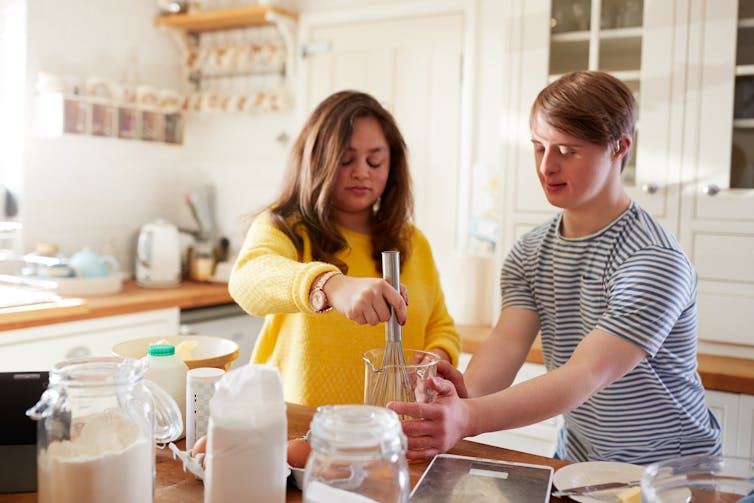 People with disability are at higher risk during the pandemic.
Shutterstock
People with disability are at higher risk during the pandemic.
Shutterstock
In other countries we’ve seen people with disability die from COVID-19 at higher rates than their non-disabled peers. In England, nearly six out of every ten people who died with COVID in 2020 were disabled, and this risk increases with level of disability.
While Australia has not seen these levels of deaths, the longer this group goes without being vaccinated, the longer they’re contending with this risk. Discussions about reopening international borders only serve to heighten fears.
Given the unique risks this group faces, the disability community fought hard to ensure disabled people living in residential care and their support workers were included in phase 1A of the vaccine rollout.
Read more: People with a disability are more likely to die from coronavirus – but we can reduce this risk
Repeating previous mistakes
Last year the disability royal commission was presented with extensive evidence to show the Australian government had not developed policies addressing the needs of people with disability in their initial emergency response plans.
For example, while others on welfare payments received the COVID supplement, people with disability and their carers were denied this.
Many schools didn’t make appropriate adjustments so children with disability could engage with remote learning. And families with a child with disability struggled to secure the basics.
Advocates did significant work before governments started to consider people with disability in their COVID response plans. But this was often made more challenging because no data were collected about disability in the case numbers, reflecting an endemic problem of lack of recognition of people with disability in the health system.
We’re seeing this again in the vaccine rollout, where daily updates on vaccination numbers group aged and disability care together, rather than breaking these figures down across the sectors.
Without this sort of data, we can’t effectively plan for people with disability.
 Only 6.5% of residents in disability-care homes have been vaccinated so far.
Manu Fernandez/AP
Only 6.5% of residents in disability-care homes have been vaccinated so far.
Manu Fernandez/AP
Meanwhile, the government’s announcement that the Pfizer vaccine is recommended for under 50s because of the very rare but serious side effect of low platelet count (thrombocytopenia) and blood clots (thrombosis) will see further pressure on Australia’s limited Pfizer supplies.
It may be some time before people with disability under 50 living in residential care are vaccinated. Yet the government continues to roll out Pfizer in residential aged care where AstraZeneca could be used, further demonstrating the low priority of the disability sector.
It appears little has been learned from the government’s earlier pandemic response (or lack thereof) concerning people with a disability. This group is being forgotten once again.
Getting back on track
In the Senate’s recent COVID-19 committee we heard confirmation aged-care residents had been prioritised over disability-care residents as they’re perceived to be at higher risk. This has angered many in the disability community who were not told the phase 1a group would be broken into sub-groups.
The government has some way to go in mending its relationship with the disability community. In addition to bungling the vaccine rollout, at the moment there’s significant concern over proposed reforms to the NDIS.
What we need now is a clear plan to roll out vaccinations, not only to people with disability in residential care settings, but also those in the wider community and their support workers. The government needs to set a clear timeframe for vaccinating disability-care residents and staff — and stick to this.
The World Health Organization argues community engagement is key to a successful vaccination rollout. In this light, commonwealth and state governments need to do some substantial work to engage people with disability and the broader sector to turn this situation around.
Read more: 'Dehumanising' and 'a nightmare': why disability groups want NDIS independent assessments scrapped
Authors: Helen Dickinson, Professor, Public Service Research, UNSW

















