

$200 million plan for Australia's degraded soil is a crucial turning point
- Written by Vanessa Wong, Associate professor, Monash University
The food we eat, the clothes we wear, the air we breathe, the water we drink – it’s all underpinned by healthy and productive soils. Since Europeans arrived in Australia, the continent’s soil has steadily been degraded. Yet, until now, we’ve lacked an integrated national approach to managing this valuable and finite resource.
That changed in last night’s federal budget, when Treasurer Josh Frydenberg announced almost A$200 million for a National Soils Strategy. The 20-year plan recognises the vital role of soils for environmental and human health, the economy, food security, biodiversity and climate resilience.
Our soils face a range of threats, including the loss of prime agricultural land, erosion, acidification, salt accumulation, contamination and carbon loss. Climate change also puts pressure on our soils through through droughts, storms, bushfires and floods.
We contributed expertise as the soil policy was being developed, and believe the final strategy represents a long-needed turning point for this crucial natural asset.
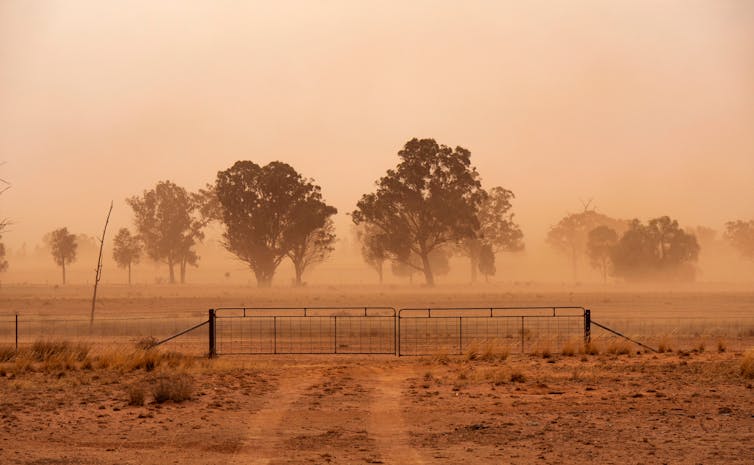 Australia’s soils have been degrading since European settlement.
Shutterstock
Australia’s soils have been degrading since European settlement.
Shutterstock
Why soil matters
Soil contains organic matter, minerals, gases, water and living organisms. It is slow to form – the average rate of soil production globally is around 114 millimetres per 1,000 years – and is considered a non-renewable resource.
Soil underpins a myriad of economic activities. In Australia, it directly contributes about A$63 billion each year to the economy through agriculture production alone.
Healthy soil is necessary for:
food and fibre production
filtering water and retaining sediment to ensure healthy landscapes
maintaining air quality by preventing dust storms
carbon storage to help mitigate climate change
environmental functions such as plant growth
human nutrition (soil provides nutrients to plants and animals which are transferred to humans once consumed)
many drugs and vaccines upon which humans rely, such as penicillin
safe infrastructure (acid sulfate soils and salinity can damage structures such as housing, bridges and roads)
resilience to natural disasters such as storms, bushfires, floods and droughts.
However, land degradation, climate change and poor management practices threaten our soil resources.
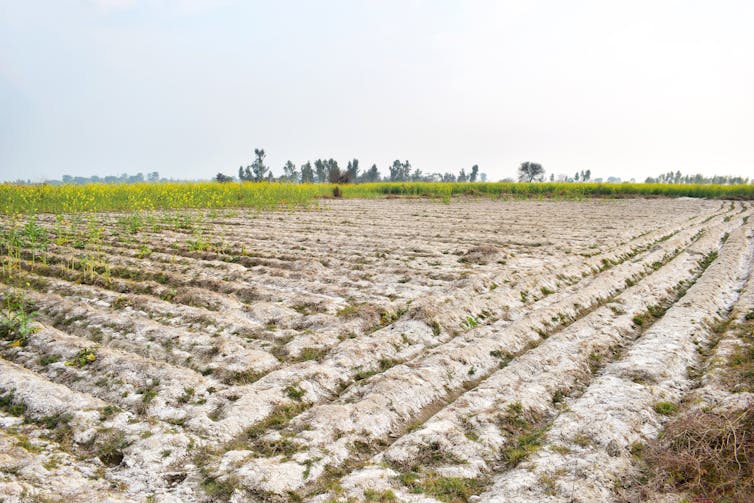 Soil salinity can ruin crops.
Shutterstock
Soil salinity can ruin crops.
Shutterstock
What lies beneath?
Until now, Australia has lacked a nationally consistent approach to monitor soil health, nor a readily accessible means of storing that data. That means at a national level, our understanding of soil condition, and how it’s changed, has been limited.
Soil monitoring has largely been conducted through various regional, state and federal programs. These often operate in isolation and have differing aims and objectives. And overall investment has not been large or quick enough to create broad improvements in soil health.
In comparison, well-established standardised national systems exist to monitor terrestrial ecosystems, weather, climate and water. These allow an assessment of longer trends and changes to baseline conditions.
The need for a national soil assessment was recognised as far back as 2008. And there have long been calls for long-term monitoring, consistent information and baseline data collection.
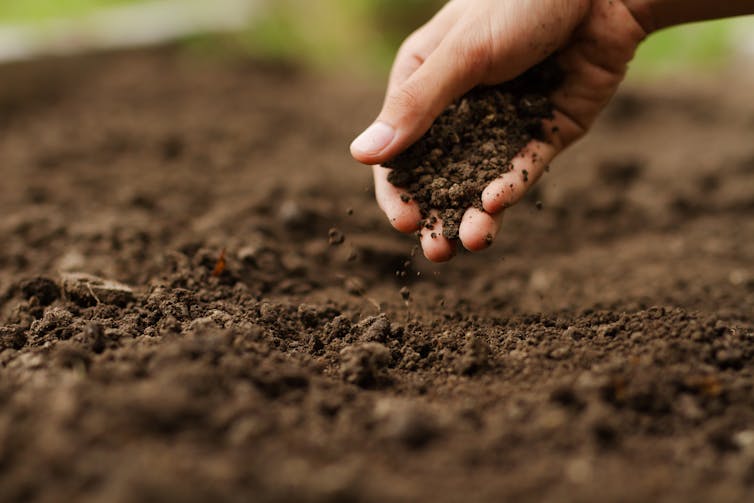 The funding will help farmers monitor the health of their soil.
Shutterstock
The funding will help farmers monitor the health of their soil.
Shutterstock
Change from the ground up
Importantly, the strategy takes a long term view of sustainable soil management. It also considers soil beyond its traditional role in agricultural production and explicitly identifies criteria to measure progress.
The strategy has three arms:
1. Prioritise soil health
This goal takes a “soils first” approach in that sustainable soil management is the primary consideration in policy development and management strategies. This recognises how environmental and agricultural problems can start with poor soil management and create further challenges. For example, soil acidification can lead to declines in terrestrial biodiversity, and soil constraints must be addressed first to arrest this.
2. Empower soil stewards and innovation
This approach gives incentives to farmers and other land managers, such as rebates for sampling to determine the soil carbon levels. Carbon is an important measure of soil condition. Gathering such information will help land managers arrest the decline in soil condition, enhancing productivity and soil health.
3. Secure soil science
This approach aims to increase soil knowledge through standardised data collection, management and storage. It will allow for more informed decisions using reliable, up-to-date, accessible information.
Part of this aim involves strengthening training and accreditation programs, and integrating soils into the national school curriculum. This will help create a new generation of soil experts to replace the current crop which is trending to retirement.
Read more: We need more carbon in our soil to help Australian farmers through the drought
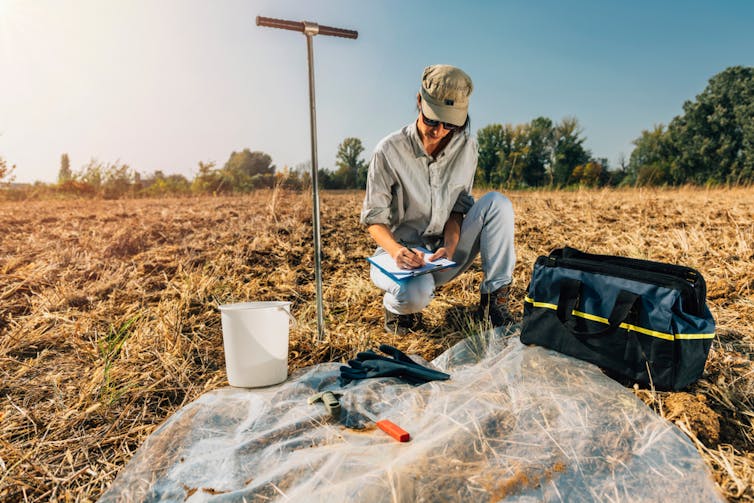 The strategy aims to train a new generation of soil experts.
Shutterstock
The strategy aims to train a new generation of soil experts.
Shutterstock
On solid ground
Overall, the National Soils Strategy aims to deliver coordinated on-ground action and improve research, education and monitoring. The strategy broadly aligns with the needs of those who had input into its development, including governments, industry, academia, Landcare groups and non-government organisations.
However, while the importance of Indigenous land management practices is clearly acknowledged, the integration and incorporation of these practices should be more clearly defined.
The monitoring program encourages farmers to test their soil and incorporate the de-identified results in to the national database. Care should be taken to ensure sampling is done appropriately for the data to be useful.
The time frame for the initial phase of the strategy is short – pilot programs need to be delivered between two and four years. This will be challenging to deliver.
Separate to the strategy, the budget allocated A$59.6 million to soil carbon initiatives. There is increasing recognition of how improved land use and management can help boost soil carbon stores, which is key to tackling climate change. But storing carbon permanently in soils comes with a number of challenges. This funding may be appropriate only if directed to address those areas where knowledge gaps exist.
But overall, the strategy fills a vital gap – providing a national vision and shared goals for managing precious soils across Australia.
Read more: The Morrison government wants to suck CO₂ out of the atmosphere. Here are 7 ways to do it
Authors: Vanessa Wong, Associate professor, Monash University

















